
Quiz
Which Chair Would You Sit In? Your Answer Reveals Your Personality
May
Have you ever wondered what your instincts quietly reveal about you?
Sometimes, the smallest decisions say the most about who we are. A choice we make in seconds—without logic, planning, or explanation—can uncover hidden parts of our personality.
Imagine this:
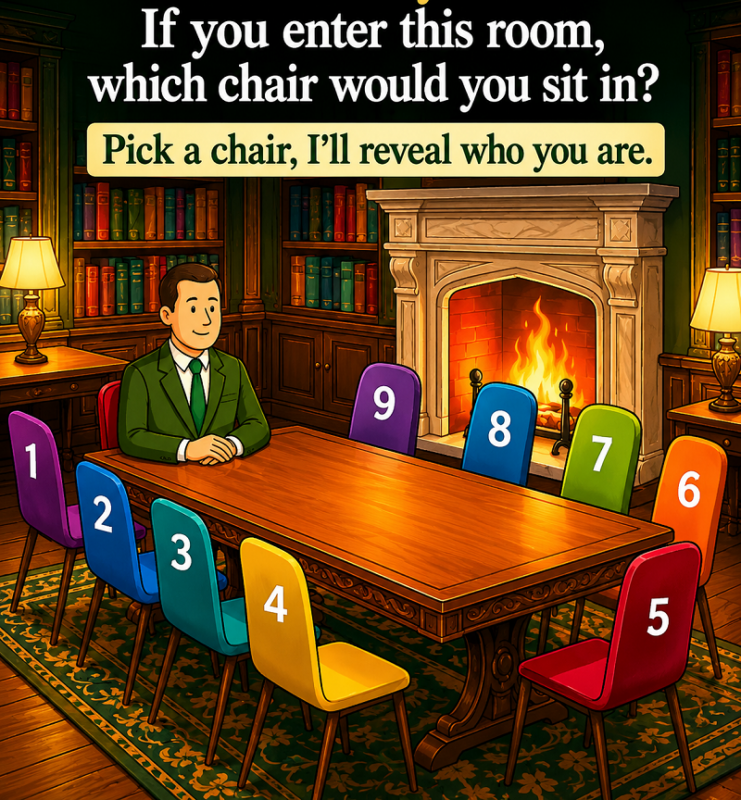
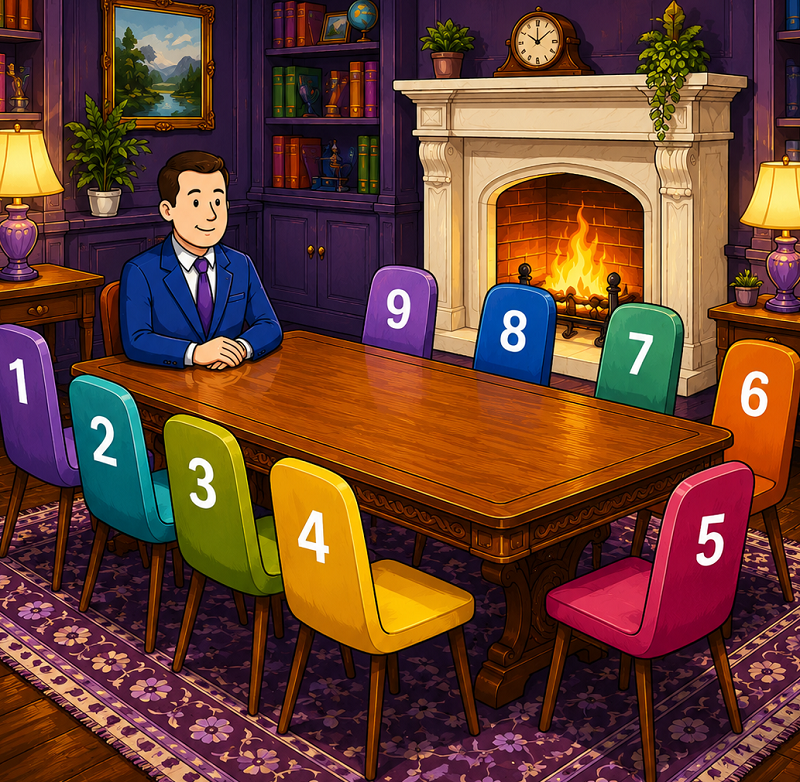
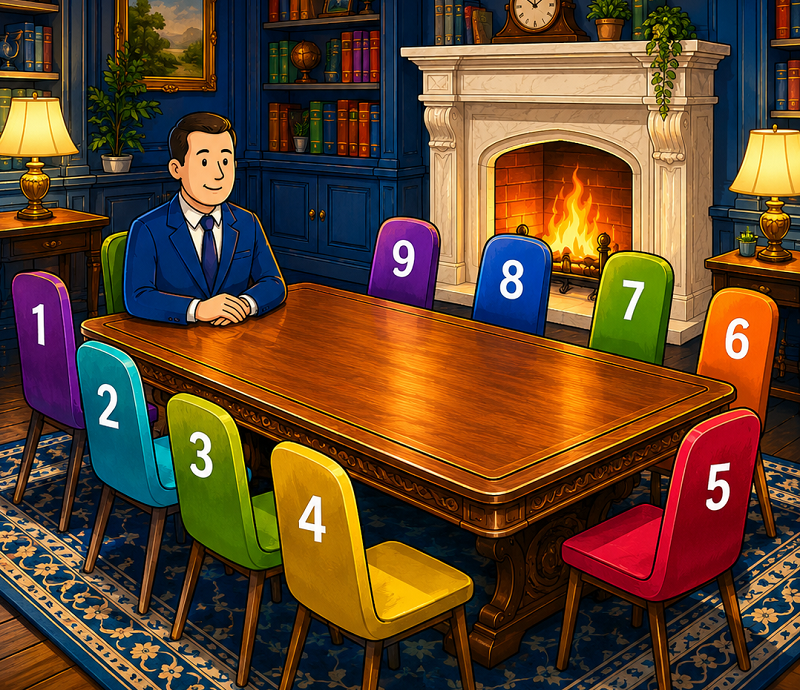
You walk into a quiet room. A long table stretches across the center. A fire crackles softly in the fireplace, filling the room with warmth. Books line the walls. One person is already seated, calmly waiting.
Around the table are nine empty chairs.
Without overthinking it… which chair would you choose?
Your answer may seem random at first. But psychologists have long believed that people naturally choose spaces based on comfort, emotion, confidence, and social instinct. The seat that feels “right” to you may actually reveal how you approach relationships, trust, boundaries, and even power.
That’s what makes this personality test so fascinating.
Why This Simple Test Feels Surprisingly Accurate
Most personality tests ask dozens of questions. This one asks for a single instinctive decision.
And that’s the key.
When people don’t have time to carefully analyze themselves, they tend to reveal their authentic preferences naturally. Your subconscious begins working before logic steps in.
The chair you feel drawn to often reflects:
- How socially open you are
- Whether you value closeness or distance
- How comfortable you feel with attention
- Your need for security, independence, or control
- The emotional energy you seek in a room
Even something as ordinary as seating choice can mirror patterns you follow every day without realizing it.
Chairs 1–2: The Social Connectors
If you chose Chair 1 or 2, you are likely someone who values human connection deeply.
Sitting close to the other person suggests openness, curiosity, and emotional accessibility. You probably don’t enjoy emotional distance and may naturally try to make people feel comfortable around you.
You are often:
- Friendly and approachable
- Good at starting conversations
- Comfortable in social situations
- Emotionally expressive
- Drawn to teamwork and companionship
People with this choice tend to dislike awkward silence. They often become the “bridge” in social settings—the person who keeps conversations flowing and helps others feel included.
At your core, you probably believe that life feels richer when shared with others.
Chairs 3–4: The Balanced Observers
If you selected Chair 3 or 4, your personality likely reflects balance, awareness, and emotional intelligence.
You enjoy connecting with people, but you also value personal boundaries. You don’t rush into situations emotionally. Instead, you prefer to observe, understand the atmosphere, and engage naturally when it feels right.
You are probably:
- Thoughtful and calm
- Social, but selective
- Respectful of personal space
- A careful listener
- Emotionally balanced
Rather than seeking attention, you prefer authentic interactions. You may enjoy deep conversations more than loud social gatherings.
People often see you as dependable because you rarely overreact or force yourself into situations. You know how to be present without overwhelming others.
Chairs 5–6: The Independent Thinkers
If you chose Chair 5 or 6, independence is likely one of your strongest traits.
Sitting farther away doesn’t mean you dislike people—it often means you feel secure enough not to rely on constant interaction. You enjoy having room to think, breathe, and exist comfortably in your own space.
You may be:
- Self-reliant
- Quietly confident
- Introverted or reflective
- Creative and thoughtful
- Protective of your personal freedom
You probably prefer meaningful connections over large social circles. Instead of seeking validation from others, you trust your own judgment.
Many people who choose these seats are highly observant. They notice details others miss because they spend more time watching than speaking.
Your independence can sometimes be misunderstood as distance, but in reality, you simply value peace and authenticity.
Chairs 7–8: The Comfort Seekers
The chairs near the fireplace often attract people who crave emotional warmth and inner peace.
If you selected Chair 7 or 8, you likely prioritize comfort, harmony, and emotional safety. The fire symbolizes security, relaxation, and calm energy.
You may naturally seek environments that feel emotionally “safe.”
You are likely:
- Compassionate and gentle
- Sensitive to emotional tension
- Calm and nurturing
- Peace-loving
- Deeply intuitive
You probably dislike conflict and may avoid unnecessary drama whenever possible. Rather than chasing excitement, you value stability and emotional connection.
Others may see you as someone who creates warmth wherever you go—a person people trust during difficult moments.
Your greatest strength is often your ability to make others feel emotionally understood.
Chair 9: The Confident Leader
Choosing Chair 9 is one of the boldest decisions in the room.
Sitting directly across from the other person creates immediate eye contact and natural interaction. It reflects confidence, self-assurance, and a willingness to engage directly.
If this was your choice, you may be:
- Assertive and fearless
- Naturally influential
- Comfortable being noticed
- Competitive or ambitious
- A strong communicator
You likely don’t avoid challenges. In fact, you may feel energized by situations that require leadership or quick thinking.
People who choose this seat are often comfortable taking initiative. They don’t wait for permission to speak or act.
At the same time, this choice can also reflect someone who values honesty and directness. You prefer clear communication over guessing games.
There Is No “Best” Chair
What makes this test meaningful is that no answer is right or wrong.
Every chair represents a different kind of strength.
Some people seek connection.
Some seek balance.
Some value independence.
Others seek comfort or control.
None of these traits are negative. They simply reflect different ways people move through the world.
And interestingly, your answer could change depending on your mood, experiences, or the situation you imagine in your mind.
A person who normally chooses distance may sit closer when they feel safe.
A confident person may choose comfort after a difficult day.
That’s because personality is not fixed—it’s fluid, emotional, and deeply human.
What Your Choice Quietly Reveals
In everyday life, we make choices like this constantly without realizing it.
Where we sit at school.
Where we stand in a group photo.
Which seat we choose in a classroom.
How close we stand to someone we trust.
Whether we sit near the exit, near friends, or alone.
These tiny decisions quietly communicate our emotions, confidence, fears, and desires.
Body language often speaks long before words do.
And sometimes, the smallest habits reveal the biggest truths about us.
Final Thought
So… which chair did you choose?
More importantly—why did that seat feel right to you?
Did you seek warmth?
Connection?
Distance?
Control?
Peace?
Confidence?
The answer may reveal more than you expected.
Because sometimes, understanding yourself doesn’t begin with huge life decisions.
Sometimes, it begins with something as simple as choosing a chair.
* Information is for reference only.
