
Stories
My Stepmother Sold My House To “Teach Me Respect” — Then My Late Father’s Secret Plan Destroyed Her Overnight

May
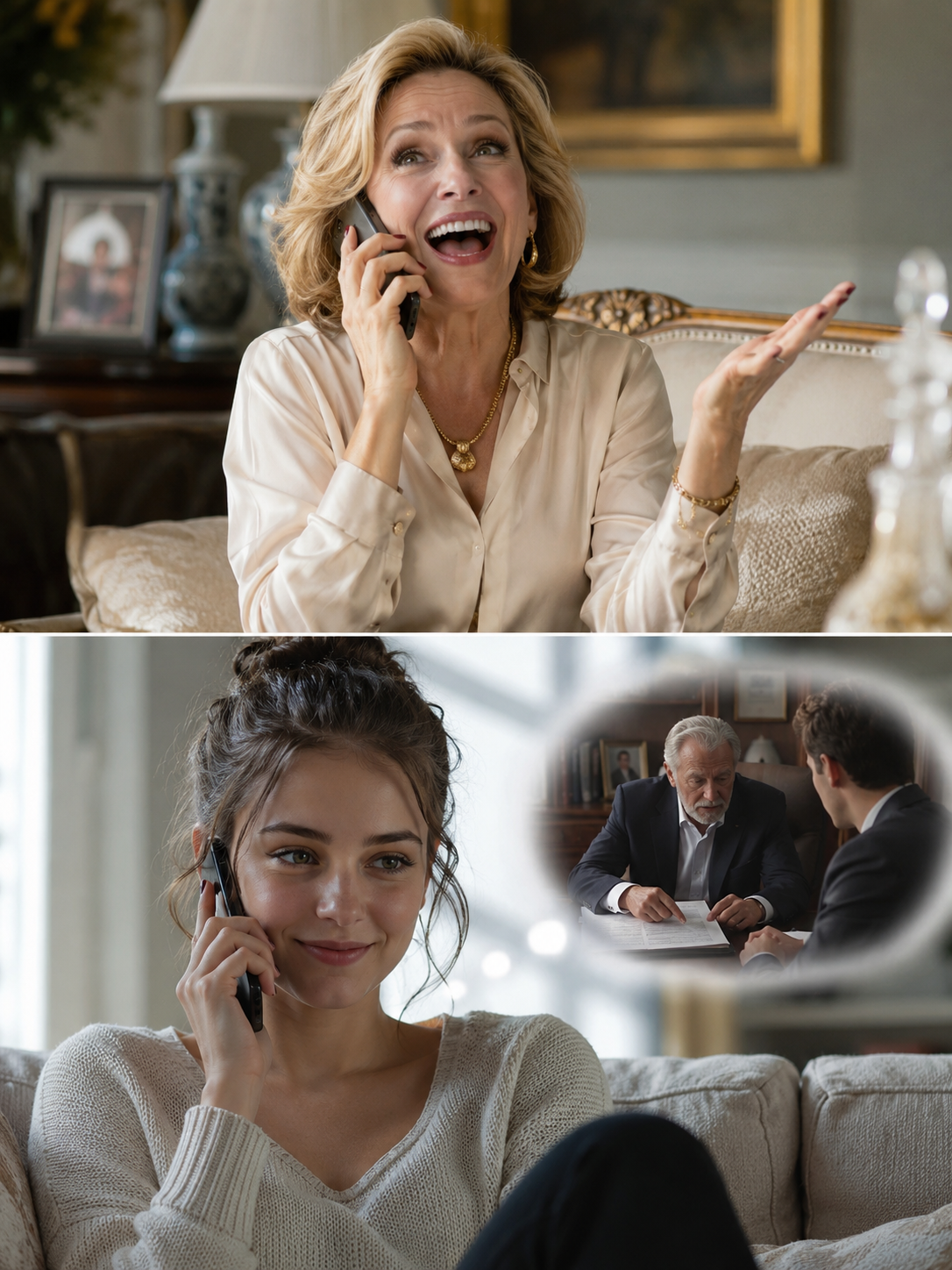
The morning my stepmother called to tell me she had sold my house, she sounded delighted with herself.
Not relieved. Not nervous.
Proud.
“I finally taught you what respect looks like,” she said, her voice smooth with satisfaction. “The new owners move in next week.”
I stood frozen outside the back entrance of the dental practice I managed in Richmond, Virginia, my hand still gripping the key halfway to the lock.
For a moment, I honestly wondered if I had heard her wrong.
Not because Camille was incapable of cruelty. Cruelty was practically her native language. But this? This crossed into something bigger. Something reckless. Dangerous.
And incredibly stupid.
“What did you just say?”
She laughed softly, savoring the silence on my end like a victory she had waited years to enjoy.
“You heard me, Claire. Maybe now you’ll stop treating me like I’m temporary. That house was never really yours.”
The house.
Five wooded acres outside Charlottesville. White brick. Long wraparound porches. A sloping backyard where my father once spent entire summers trying to teach me baseball even though I was terrible at it. Every time I missed, he still smiled and told me I had a good swing.
He bought that house after my mother died, when I was twelve years old and barely speaking from grief. It was the first place that ever felt safe again.
Long before paperwork existed, that house had become mine.
After Dad died eighteen months earlier, Camille moved into a luxury condo in Richmond and mostly abandoned the property—except when she needed it as leverage. A threat. A reminder that she believed she still controlled every piece of my father’s life, including me.
Three months earlier, she demanded partial access to the remaining estate accounts. When I refused to sign anything over, she called me selfish, ungrateful, immature. Then she warned me I had “no idea how vulnerable” I was without her protection.
Apparently, she had decided to prove it.
I leaned against the doorway outside the office and closed my eyes for a second.
Then I smiled.
Not because I was calm.
Because suddenly, vividly, I remembered a private meeting six weeks before my father died. A meeting so carefully hidden that Camille never even knew it happened.
“Good luck with that,” I told her.
Silence.
Then her tone sharpened instantly.
“You think this is funny?”
“No,” I said quietly. “I think it’s going to become very expensive for you.”
I hung up before she could answer.
Inside the office, my receptionist looked up immediately.
“You okay?”
“Fine,” I said.
But my pulse hadn’t slowed.
I locked myself in my office, shut the blinds halfway, and called the one person my father trusted more than anyone else in the world.
Thomas Reardon.
His estate attorney.
The man who knew exactly what my father had prepared before he died.
And the man who was about to turn Camille’s triumph into a catastrophe.
Thomas answered on the second ring.
When I explained what Camille had done, he didn’t sound shocked.
He sounded tired.
“Well,” he sighed, “that took longer than I expected.”
That sentence steadied me more than reassurance ever could.
Because it confirmed the thought that had flashed through my mind the instant Camille made her announcement:
Dad knew she would eventually try something like this.
Six weeks before cancer finally overtook him, my father asked me to drive him to Thomas’s office in Charlottesville.
I still remember how frail he looked that day.
The July heat was brutal, but he wore a camel-colored coat anyway because the treatments left him cold all the time. His hands trembled slightly when he reached for the elevator railing. I held the door open longer than necessary so he wouldn’t have to struggle in front of strangers.
Inside Thomas’s office, Dad spoke more honestly than he ever had before.
“Camille doesn’t love security,” he told me quietly. “She loves control. And once I’m gone, she’ll use everything I leave behind to prove she still has it.”
So he prepared.
Not emotionally.
Legally.
My father was never dramatic. He didn’t scream or threaten or play games. He built traps with paperwork and patience.
The house had already been quietly transferred eighteen months earlier into a protected residential trust connected to an old land-preservation agreement Camille had never seen. Publicly, it still appeared connected to the estate. But legally? Ownership had moved elsewhere long before Dad died.
I retained permanent residency rights.
But the property itself could not be sold without trustee approval and compliance with strict preservation conditions my father intentionally strengthened.
Camille never knew.
Which meant the house was mine to live in.
But never hers to sell.
Thomas explained it all again over the phone while I sat behind my desk taking notes.
“If she signed documents claiming ownership authority,” he said carefully, “then she didn’t sell your house.”
“She committed fraud,” I finished.
“Yes.”
I let that sink in slowly.
“Can she actually get far with this?”
“Far enough to create damage,” he said. “Not far enough to survive it.”
By noon, Thomas confirmed Camille had already submitted paperwork through a local title company using outdated estate summaries and false surviving-spouse authority claims. She had intentionally omitted all trust documentation and pushed the transaction quickly, hoping confidence and speed would prevent anyone from looking too closely.

Maybe that tactic worked on people unfamiliar with her.
But my father built his entire life assuming charm meant nothing without documentation.
By three o’clock, Thomas had filed emergency notices of trust interest and title dispute with the county recorder.
By four, the buyer’s attorney was demanding answers.
By five, Camille had called me seven times.
I ignored every single one.
There’s a certain kind of terror that only arrives when someone realizes their lie has started collapsing publicly.
I wanted her to sit inside that feeling for a while.
That morning, she called believing she had destroyed me.
By sunset, the sale was already unraveling around her.
And the people she lied to were no longer speaking to her like family.
They were speaking to her like a liability.
Two days later, Camille arrived at the house.
And she brought witnesses.
A black Mercedes rolled down the gravel driveway carrying Camille, a realtor, and the buyers—a nervous couple in their fifties accompanied by their teenage son.
I was sitting on the back porch when I heard the tires crunch over stone.
For one brief moment, the afternoon looked peaceful. Golden light through the trees. Wind moving softly across the yard my father once mowed himself every Sunday morning.
Then Camille stepped out smiling.
And immediately stopped.
Because Thomas Reardon was standing beside me.
He had driven down personally that morning carrying a thick box of certified trust records, title notices, affidavits, and enough legal documentation to bury her.
The realtor approached first, visibly uncomfortable.
“Ms. Vale,” she said carefully to Camille, “you told us the property would be vacant.”
Thomas stepped forward before Camille could answer.
“It won’t,” he said calmly. “Because your client had absolutely no legal authority to sell it.”
The husband’s face drained of color.
Camille forced out a brittle laugh.
“This is ridiculous. He’s twisting old paperwork.”
Thomas handed the realtor the certified trust memorandum.
Then the county dispute filing.
Then the title affidavit acknowledging Camille’s lack of authority.
I watched Camille’s expression change piece by piece.
Confidence.
Annoyance.
Irritation.
Calculation.
Then finally, the devastating realization that her bluff hadn’t just failed.
It had created evidence against her.
The buyer turned toward her slowly.
“You took our deposit.”
Camille straightened instantly. “It will be returned.”
His wife folded her arms tightly.
“Returned from where?”
Silence.
A terrible silence.
Because by then, the truth had already surfaced.
Thomas later confirmed she had spent part of their deposit money almost immediately—condo fees, overdue credit cards, luxury expenses, even a cruise reservation she hadn’t taken yet.
She hadn’t sold property.
She had borrowed money against a lie.
The realtor physically stepped away from her.
The buyers followed after Thomas quietly advised them to contact their attorney.
Only the teenage son looked back at me before climbing into the car. His expression wasn’t angry.
Just embarrassed.
Embarrassed for the adults standing in front of him.

Camille was left alone in the driveway.
For the first time in years, she looked at me without performance or superiority.
“Your father wouldn’t have done this to me.”
I walked slowly off the porch toward her.
“Yes,” I said. “He would have. That’s why he made sure it was done before he died.”
Something inside her cracked then.
Not remorse.
Not guilt.
Something worse.
Certainty.
The certainty that she could always overpower people through intimidation, confidence, and manipulation.
My father had understood exactly who she was long before I did.
And before cancer took him, he made sure the law understood too.
The fallout became brutal almost immediately.
The buyers sued.
The title company filed claims.
The county referred the case for fraud investigation.
Her financial accounts were frozen pending review.
Within months, her Richmond condo quietly went up for sale under circumstances far less glamorous than the lifestyle she pretended to have.
At first, she called constantly.
Then came long emails.
Then handwritten letters.
Some furious.
Some begging.
Some strangely soft, as though changing her tone might somehow erase what she had done.
I never answered.
Not once.
Because in the end, the story wasn’t about revenge.
It was about recognition.
I stayed in the house my father protected. I walked through the same quiet hallways Camille believed she had sold out from under me. Some nights I sat on the back porch listening to the trees move in the dark and finally understood what my father had truly been trying to give me before he died.
Not money.
Not property.
Peace.
He knew exactly who Camille was.
He knew exactly what she would eventually try to do.
And he made sure that when she finally crossed the line, the consequences would belong only to her.
So yes, when she smugly called me that Tuesday morning and proudly announced she had sold my house “to teach me respect,” I smiled and wished her luck.
Because by then, the lesson had already been written.
She just hadn’t realized her name was the one attached to it.
Note: This story is a work of fiction inspired by real events. Names, characters, and details have been altered. Any resemblance is coincidental. The author and publisher disclaim accuracy, liability, and responsibility for interpretations or reliance. All images are for illustration purposes only.
