
Stories
HE THOUGHT HE ERASED 52 YEARS IN ONE SIGNATURE—UNTIL THE TRUTH CAUGHT UP WITH HIM

May
PART 1
At seventy-eight, I left the courthouse with a single suitcase and a document that erased fifty-two years of my life.
My name is Margaret Ellis. Until that morning, I believed stability was something you earned—through time, patience, and endurance. The house on Cedar Hollow Drive held every version of me: a young bride arranging furniture, a mother chasing toddlers, a woman who stayed because staying felt like commitment.
By the time the divorce was finalized, none of it was mine. Not the house. Not the accounts. Not even the future I thought I had secured.
Robert stood outside the courthouse like a man closing a deal. No guilt, no hesitation—just quiet satisfaction.
As I passed him, he adjusted his coat.
“You’ll be fine. You’ve always managed.”
I kept walking.
Then he leaned closer, his voice low.
“You won’t be seeing the grandchildren anymore.”
He smiled—not dramatically, just enough to show he meant it.
I didn’t respond. I didn’t turn back. Because something inside me had already shifted. Not anger. Not even grief yet.
Awareness.
This hadn’t happened overnight.
It had been built.
That same afternoon, I drove north to my sister’s farm in Vermont. The silence there was different—no polished conversations, no quiet cruelty. Just space.
For two weeks, I did almost nothing. I slept. I sat by the window watching the fields change with the light. Slowly, the noise in my head began to settle.
Grief, if you let it sit, becomes pattern.
I started remembering what I had ignored.
The mailing address changed to a P.O. box months earlier. Bank statements stopped arriving. His laptop closed too quickly when I entered the room. Weekend errands with no groceries, no explanation.
And the scent—subtle, unfamiliar—on his jacket.
I hadn’t confronted him. Not because I didn’t notice, but because I wasn’t ready to confirm what I already knew.
So I watched.
In December, I found proof.
A card. Expensive, plain paper. Four careful lines. Signed with a single letter:
L.
That was enough.
Not for what it said—but for what it confirmed.
When I finally spoke to him, I didn’t raise my voice.
“I know.”
He didn’t ask what I meant. Didn’t deny it.
“I want out,” Robert said, pouring his coffee as if it were any other morning. “My attorney will contact you.”
Fifty-two years ended in a sentence.
Everything moved quickly after that. Too quickly.
Papers filed. Accounts “restructured.” The house transferred before I understood how.
By the time we reached court, the truth was clear.
This wasn’t a sudden decision.
It was a plan.

PART 2
The moment I stopped grieving was the moment I started asking better questions.
I wrote everything down—dates, changes, conversations that once felt small but now carried weight.
It no longer felt like chaos.
It felt intentional.
So I made one call.
Her name was Claire Donovan. She didn’t offer sympathy. She listened.
When I finished, she said, “We start with the company.”
“What company?”
“The one that owns your house now.”
That was the first time I heard the name:
Cedar Ridge Holdings LLC.
Generic. Forgettable. Designed not to stand out.
Six weeks later, Claire sent me a file—thick, organized, precise.
Emails. Transfer records. Corporate filings.
And one thing that mattered most:
Pattern.
I sat at my sister’s kitchen table and read every page.
“This needs to be moved out of the marital estate before filing.”
The sentence appeared more than once.
Not rushed.
Planned.
That’s when everything clicked.
Robert hadn’t decided to leave and then rearranged things.
He rearranged everything first—quietly, carefully—so when he finally left, there would be nothing left for me to claim.
This wasn’t emotional betrayal.
It was strategy.
Years of it.
Claire called that evening.
“This qualifies as fraudulent conveyance,” she said. “If we can prove intent.”
I looked at the documents.
“We can.”
We filed quietly. No confrontation. No warning.
Just precise legal action.
A month later, my phone rang.
Unknown number.
“Mrs. Ellis? My name is Daniel Price. I’m working with your legal team. There’s something you need to know.”
I sat down.
“What is it?”
“Your husband filed a medical petition this morning. He’s claiming cognitive decline.”
I almost laughed. Robert had been doing crossword puzzles in ink for forty years.
He wasn’t declining.
He was building a defense.
“That’s not why I’m calling,” Daniel added.
I went still.
“The woman he’s involved with—her name is Lillian Cross.”
I didn’t react.
“She’s not just his partner,” he continued.
Pause.
“She’s the registered owner of Cedar Ridge Holdings.”
Everything stopped.
“And she’s currently under federal investigation for financial fraud.”
That was when the story changed.
Not because of the affair.
Not because of the divorce.
But because of what Robert had tied himself to.
He hadn’t just hidden assets.
He had moved them—
into the hands of someone already under investigation.
And just like that, the system he built began to collapse.
PART 3
What followed wasn’t dramatic.
No explosion. No confrontation.
Just quiet unraveling.
Claire moved quickly.
“We don’t chase him anymore,” she said. “We let the paper speak.”
And it did.
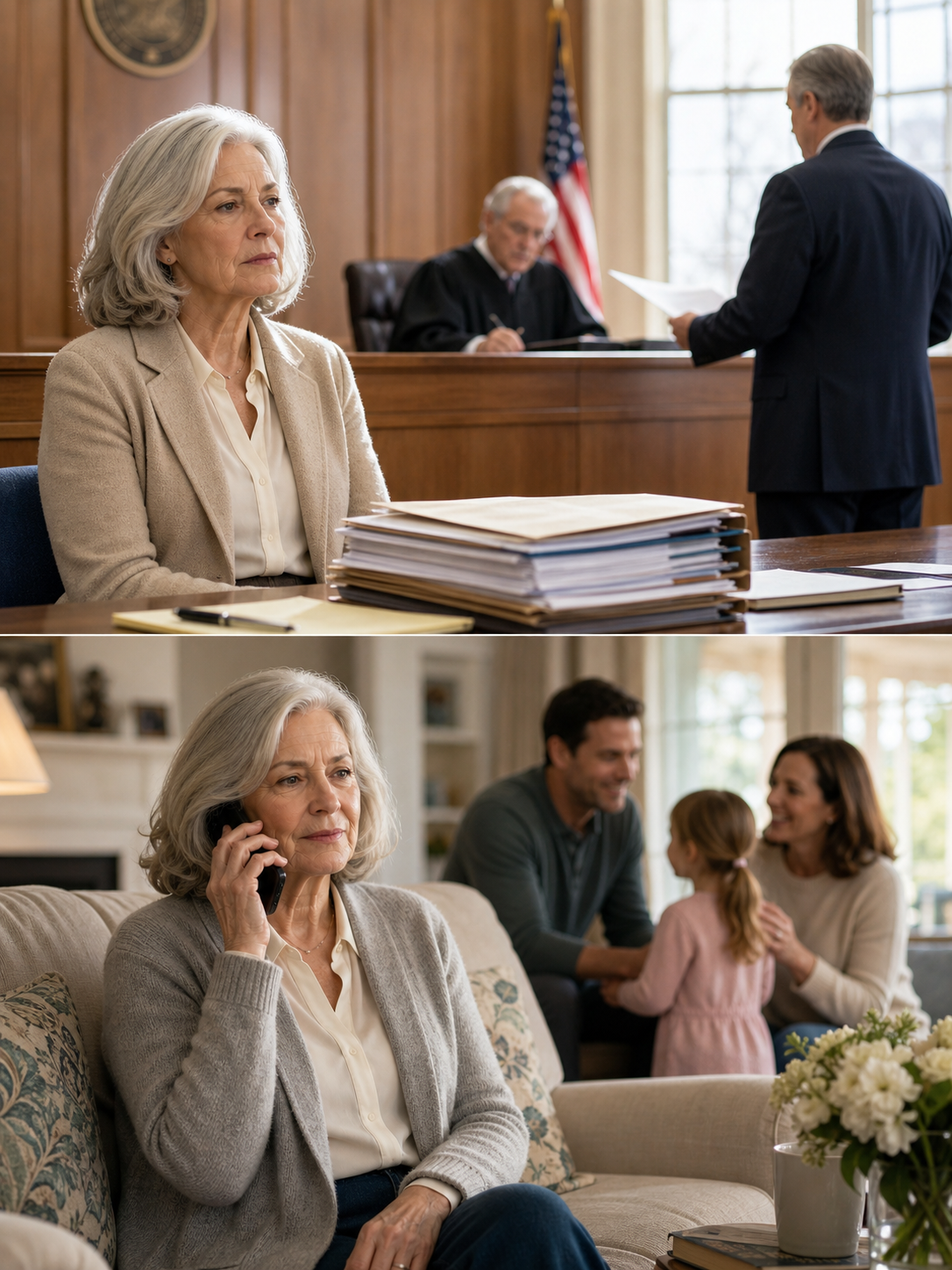
Every transfer, every signature, every timestamp formed a clear picture:
Intent.
When we filed to reverse the property transfer, Robert didn’t fight.
He stalled.
More time. More documents. More review.
Not defense.
Delay.
Meanwhile, the federal investigation widened.
Cedar Ridge wasn’t just one shell company—it was part of a network. Money moved through layers, across accounts, disguised as legitimate transactions.
Robert hadn’t just hidden my share.
He had stepped into something much bigger.
The hearing came three months later.
Quiet courtroom. No theatrics.
The judge reviewed everything carefully.
Emails. Records. Filings.
Then he spoke.
“This demonstrates intentional removal of marital assets to avoid equitable distribution.”
No emotion.
Just conclusion.
The transfer was reversed.
The house returned to the marital estate.
Penalties applied.
The truth officially recognized.
But it didn’t end there.
The investigation accelerated.
Robert made a decision—to cooperate.
He testified.
Against Lillian. Against the system he had used.
In doing so, he revealed everything.
Cedar Ridge was part of a larger network—entities designed to move money, avoid taxes, and hide ownership.
What he thought was private became evidence.
He didn’t go to prison.
But he came close enough to understand.
And he lost nearly everything else.
By then, the house no longer mattered to me.
What mattered was what came next.
My son called first.
“We didn’t know.”
I didn’t ask him to explain.
My daughter called later.
“I’m sorry.”
“I know,” I told her.
That was enough.
Robert’s threat about the grandchildren disappeared without confrontation.
Because it had never truly been his to control.
PART 4
A year later, my life looks nothing like it did.
And that’s why it feels real.
I never moved back into the house.
It had become something else—not a home, but a record.
So I stayed in Vermont.
At first in my sister’s farmhouse, then in a small place of my own. Simple. Quiet.
For the first time in decades, my days weren’t shaped by someone else.
Robert vanished from my life just as cleanly as he had tried to remove me from his.
I heard things—downsized, quieter, less certain.
We never spoke again.
There was nothing left to say.
What surprised me wasn’t his absence.
It was how little I needed answers.
Because I had already seen everything.
My grandchildren returned quietly.
No dramatic reunion.
Just presence.
The first time they visited, it was summer. They ran through the fields, their laughter carrying freely.
No tension.
Just life.

One evening, my oldest granddaughter sat beside me.
“Grandma… are you sad you lost your house?”
I thought about it.
Then I said, “No. I didn’t lose it.”
She frowned. “Then what happened?”
I smiled.
“I stopped letting someone else decide what it was worth.”
That was the truth.
Not the court decision.
Not the legal victory.
But that clarity.
People think loss happens when something is taken.
It doesn’t.
Loss happens when you accept the value someone else assigns to what you’ve built.
Robert tried to reduce fifty-two years into paperwork.
And for a moment, it worked.
But paper holds ownership—
not meaning.
What I built never disappeared.
It simply stopped belonging to him.
Now, when I sit outside in the evening, watching the light move across the fields, I don’t think about what I lost.
I think about what remained.
Peace.
Clarity.
And the quiet realization that the moment someone believes they’ve taken everything from you…
is often the moment you understand how much of it was never theirs at all.
Note: This story is a work of fiction inspired by real events. Names, characters, and details have been altered. Any resemblance is coincidental. The author and publisher disclaim accuracy, liability, and responsibility for interpretations or reliance.
