
Stories
Poor Little Girl Finds Injured Millionaire Hidden In A Recycling Yard — What Happened Next Changed Everything
May
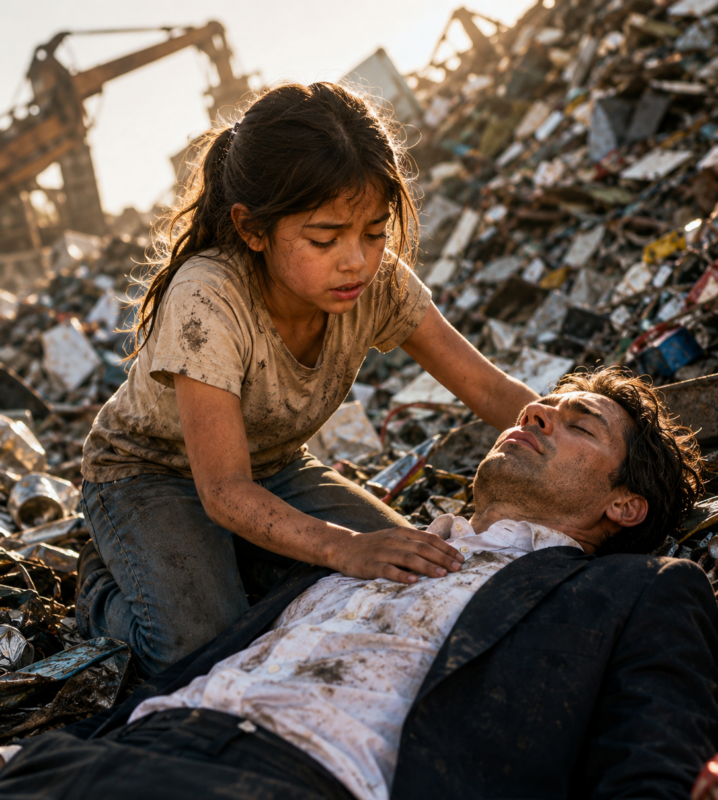
Late afternoon sunlight stretched across the outskirts of Fresno, casting long golden shadows over a massive recycling yard that seemed to go on forever. Rusted refrigerators, broken televisions, twisted metal pipes, and mountains of discarded cardboard stood like uneven towers beneath the fading sky. The air smelled of dust, oil, and heated metal, while the distant sounds of clanging scrap echoed across the empty ground like tired ghosts refusing to rest.
Nine-year-old Lucia Moreno moved carefully through the narrow paths between those towering piles, stepping slowly to avoid shattered glass and jagged wires hidden beneath the dirt. Although she was still only a child, there was a quiet maturity in her face that often unsettled adults. Her dark eyes carried the kind of exhaustion that usually belonged to people decades older.
Lucia was not there searching for toys or treasures the way children sometimes imagined when they wandered through junkyards in stories. She searched for aluminum cans, scraps of copper wire, and anything else the recycling center might buy before closing time. Every small piece mattered. A handful of copper could mean dinner for two days. A few extra dollars could pay for medicine.
Especially now.
The image of her grandmother coughing violently through the previous night still lingered painfully in Lucia’s mind. Elena Moreno’s breathing had worsened every week, and the colder evenings made it harder for her chest to rise without pain. Lucia had promised herself that she would not return home empty-handed again.
The sun had already begun dipping lower when Lucia stepped around a mountain of broken washing machines and old car parts. Suddenly, her shoe struck something softer than metal.
She froze.
At first she thought it might be a pile of clothing hidden beneath the debris. But when she looked down, her heart skipped violently.
A man lay half-covered beneath torn cardboard and scraps of fabric.
Lucia instinctively stepped backward.
The stranger wore an expensive charcoal-gray suit, now stained with dirt and streaked with dust. One sleeve had been ripped near the shoulder, exposing bruised skin underneath. Blood had dried near his temple where a deep scrape cut across his forehead. His polished black shoes were scuffed, and a gold watch glimmered faintly beneath the dirt on his wrist.
Nothing about him belonged in a place like this.
For one frightened second, Lucia considered running.
Poor people learned early not to involve themselves in dangerous situations.
But then she remembered her grandmother’s words.
“Even when the world becomes cruel,” Elena always said softly, “you must never allow kindness to disappear from your heart.”
Lucia swallowed hard and slowly crouched beside the stranger. Her small fingers trembled as she reached toward his neck.
There.
A pulse.
Weak.
But alive.
“Sir?” she whispered nervously. “Can you hear me?”
The man didn’t answer immediately. His breathing was uneven, shallow, like someone trapped inside a terrible dream. Lucia quickly pulled the small plastic water bottle from her worn backpack and carefully touched a little water against his lips.
A moment later, his eyelids fluttered open.
Green eyes stared back at her with complete confusion.
“Where…” he muttered weakly. “Where am I?”
Lucia glanced around the empty yard uneasily before answering.
“You’re in the recycling yard,” she said quietly. “And if someone else finds you first, they might steal everything you have.”
The man tried to sit up but immediately winced, pressing a hand against the side of his head.
“I…” His voice cracked painfully. “I can’t remember anything.”
Lucia frowned.
“What do you mean?”
The stranger stared at her helplessly.
“My name. How I got here. Nothing.” He closed his eyes briefly as though forcing himself to remember. “It’s all blank.”
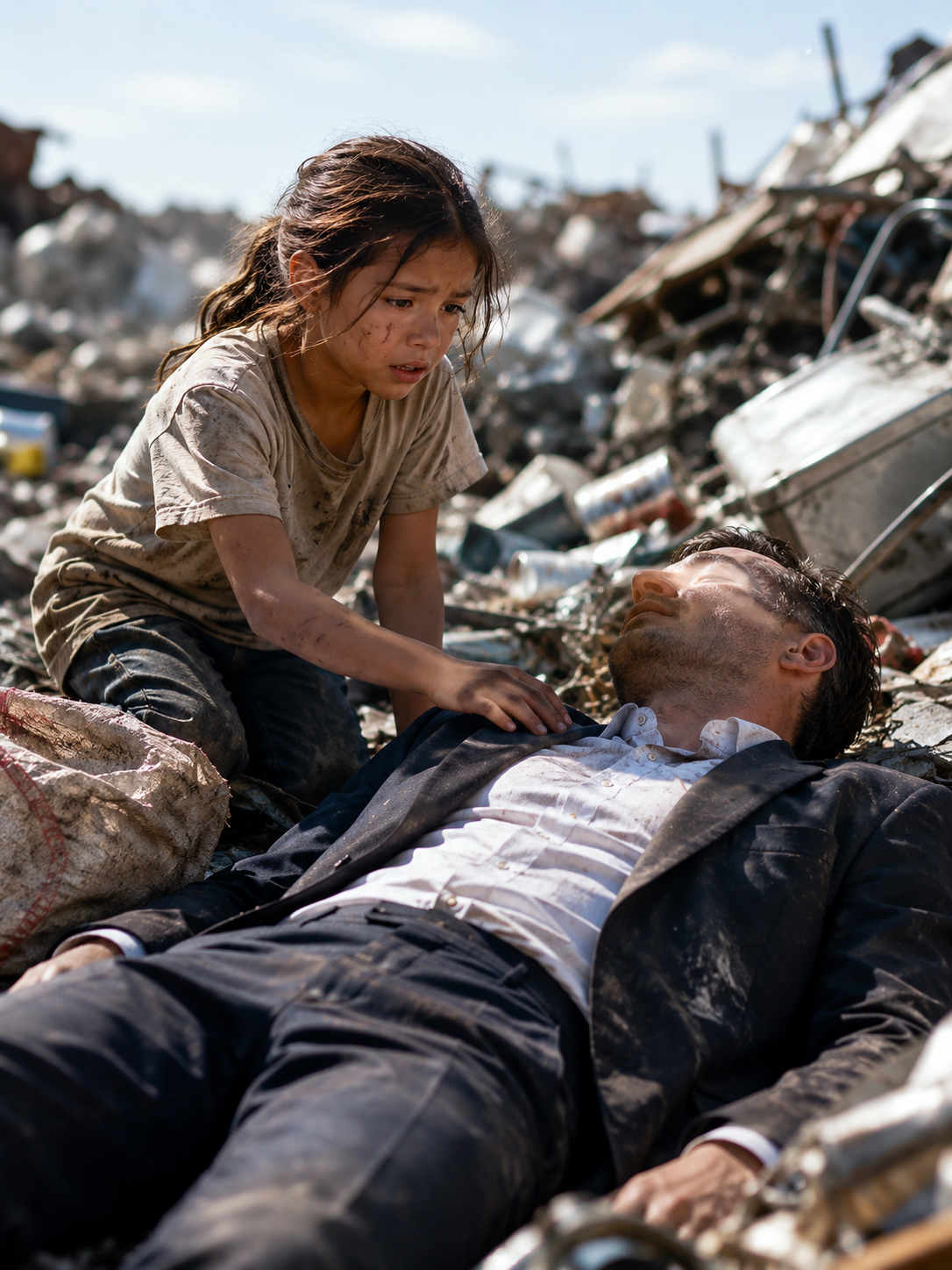
Fear crept into Lucia’s stomach.
Night would arrive soon. Once darkness covered the yard, dangerous people often wandered through searching for valuables. If they found a wealthy-looking stranger alone and injured, he would not survive long.
Lucia looked down at the gold watch shining faintly on his wrist.
Then she made a decision.
She slipped beneath his arm and tried to help him stand.
The man blinked in surprise.
“You’re helping me?”
“You can barely walk,” Lucia replied. “Talking won’t fix that.”
Despite his size, weakness forced him to lean heavily against her tiny frame. Step by step, they slowly moved through the maze of scrap piles while the evening wind whistled softly through broken metal around them.
By the time they finally reached the road outside the recycling yard, streetlights had already begun flickering on across the neighborhood.
The man looked exhausted.
“What’s your name?” he asked quietly as they walked.
“Lucia.”
He nodded slowly.
“Thank you, Lucia.”
She didn’t answer.
Part of her still feared she was making a mistake.
But another part of her — the part shaped by poverty, loneliness, and her grandmother’s kindness — simply could not leave him behind.
Eventually they reached a narrow alley lined with aging homes patched together with faded paint, mismatched wood, and rusted fences. Dogs barked behind chain-link gates while curious neighbors peeked through curtains at the sight of a little girl helping an injured stranger home.
Lucia stopped in front of a tiny house built from patched metal sheets and old wooden boards. Warm yellow light glowed softly through the cracks around the door.
She pushed it open.
“Grandma,” she called carefully. “I’m home.”
A weak voice answered from inside.
“You’re late tonight, mija.”
Then Elena Moreno appeared from the kitchen doorway holding a sewing needle and half-repaired shirt.
The elderly woman froze immediately when she saw the stranger leaning against Lucia.
“Lucia…” Elena whispered. “What happened?”
“I found him at the recycling yard,” Lucia explained quickly. “He’s hurt. And he doesn’t remember anything.”
Elena studied the man carefully.
Even beneath the dirt and blood, his expensive clothing was impossible to miss.
For a moment, worry flickered across her tired face. They barely had enough food for themselves. Bringing a stranger into their home could mean trouble.
But then she noticed how weak he truly looked.
Without another word, Elena sighed softly and moved toward the stove.
“We may be poor,” she murmured quietly, “but nobody dies at our door.”
The stranger lowered himself carefully onto the old couch while Elena cleaned the wound on his forehead using warm water and a faded towel. Lucia quietly placed a simple plate of beans and tortillas onto the table.
When she noticed Elena secretly sliding the larger portion toward the stranger, Lucia pretended not to see.
The man looked down at the meal in silence.
Something about the tiny kitchen, the dim light, and the quiet kindness surrounding him felt strangely unfamiliar yet comforting at the same time.
That night, he slept on the couch beneath a thin blanket while rain tapped softly against the roof.
Sometime after midnight, his fingers brushed accidentally against the side of his watch.
A hidden button clicked.
Suddenly, a woman’s recorded voice filled the dark room.
“For Adrian… with all my love. Helena.”
The stranger’s eyes opened instantly.
Adrian.
The name echoed painfully through his mind.
Was that him?
The next morning, Lucia greeted him with a bright smile despite the exhaustion beneath her eyes.
“Good morning, Adrian.”
The name sounded strange but familiar.
Elena handed him a chipped mug filled with coffee.
“You can rest here a few days,” she said gently. “But not forever. People in this neighborhood ask too many questions.”
Adrian nodded.
“I understand.”
He tried standing, but weakness still spread through his body almost immediately.
Lucia crossed her arms stubbornly.
“He can help while he gets stronger.”
Elena raised an eyebrow.
“Help with what?”
“With everything.”
Adrian stared at the child standing protectively beside him and, for the first time since waking up in the recycling yard, he smiled slightly.
“I’ll do whatever work I can.”

Over the following days, Adrian slowly became part of their routine.
He repaired loose boards on the roof. He carried water buckets. He fixed broken hinges on the kitchen cabinet. He even helped Elena tend the tiny vegetable garden behind the house, though his lack of experience quickly became obvious.
“You pulled out tomatoes instead of weeds,” Lucia laughed one afternoon.
Adrian looked horrified.
“They looked identical.”
Lucia burst into laughter so hard she nearly fell into the dirt.
For reasons Adrian could not explain, hearing her laugh made something inside his chest feel lighter.
But what affected him most was watching how Lucia cared for her grandmother.
She reminded Elena to take medicine before Elena could ask. She adjusted blankets while her grandmother slept. She quietly ate smaller portions whenever food ran low.
One evening, Adrian watched Lucia pretending she wasn’t hungry so Elena could finish the last tortilla.
The sight hit him harder than any returning memory.
“You know,” Adrian said softly later that night, “you’re both richer than most people I’ve ever known.”
Lucia looked genuinely confused.
“We don’t even own a car.”
Adrian smiled faintly.
“That’s not the kind of wealth I mean.”
Weeks passed peacefully until everything changed again.
One afternoon Lucia returned home carrying an old newspaper she had discovered beneath a stack of cardboard at the recycling yard.
“Look,” she said casually. “This man looks like you.”
Adrian took the paper.
The moment his eyes landed on the photograph, his entire body went still.
A sharply dressed businessman stood beside a glamorous blonde woman during a corporate event.
The headline beneath them read:
MISSING CONSTRUCTION EXECUTIVE ADRIAN KELLER STILL NOT FOUND
Suddenly memories slammed back into him like crashing waves.
Board meetings.
Luxury hotels.
Private offices.
Helena.
His wife.
And beside her in the photograph stood another man.
Marcus Hale.
His business partner.
Then came the final memory.
The argument.
The betrayal.
The push.
Darkness.
Adrian’s breathing became uneven.
Lucia immediately grabbed his hand.
“Adrian?”
His voice turned cold with realization.
“They tried to get rid of me.”
Lucia looked frightened.
“Who?”
“My wife,” Adrian whispered painfully. “And the man I trusted most.”
The room fell silent.
Elena slowly sat down.
“What are you going to do?”
Adrian stared at the newspaper for a long moment.
Then he looked toward Lucia.
“No matter what happens next,” he said quietly, “I won’t let their choices harm either of you.”
But before Adrian could decide his next move, disaster struck again.
One evening Elena suddenly collapsed in the kitchen while preparing soup.
The bowl shattered across the floor.
“Grandma!” Lucia screamed.
Elena clutched her chest, struggling desperately to breathe.
Without hesitation Adrian lifted her into his arms and rushed outside while Lucia cried beside him. He waved frantically until an old taxi finally stopped near the corner.
At the hospital, doctors immediately rushed Elena into emergency treatment.
Lucia sat trembling in the waiting room while Adrian paced the hallway restlessly.
Hours later, a physician approached them with tired eyes.
“Her heart is very weak,” the doctor explained carefully. “She needs surgery immediately. Without it…” He paused. “The outcome will not be good.”
Lucia’s face turned pale.
“How much does it cost?”
The doctor hesitated before answering.
Far more money than they could ever afford.
Adrian looked silently down at the gold watch still wrapped around his wrist.
The last remaining piece of his old life.
Without saying a word, he stood up and walked out of the hospital.
That night, beneath flickering neon lights, Adrian entered a pawn shop several blocks away.
When he returned hours later, the watch was gone.
Lucia noticed immediately.
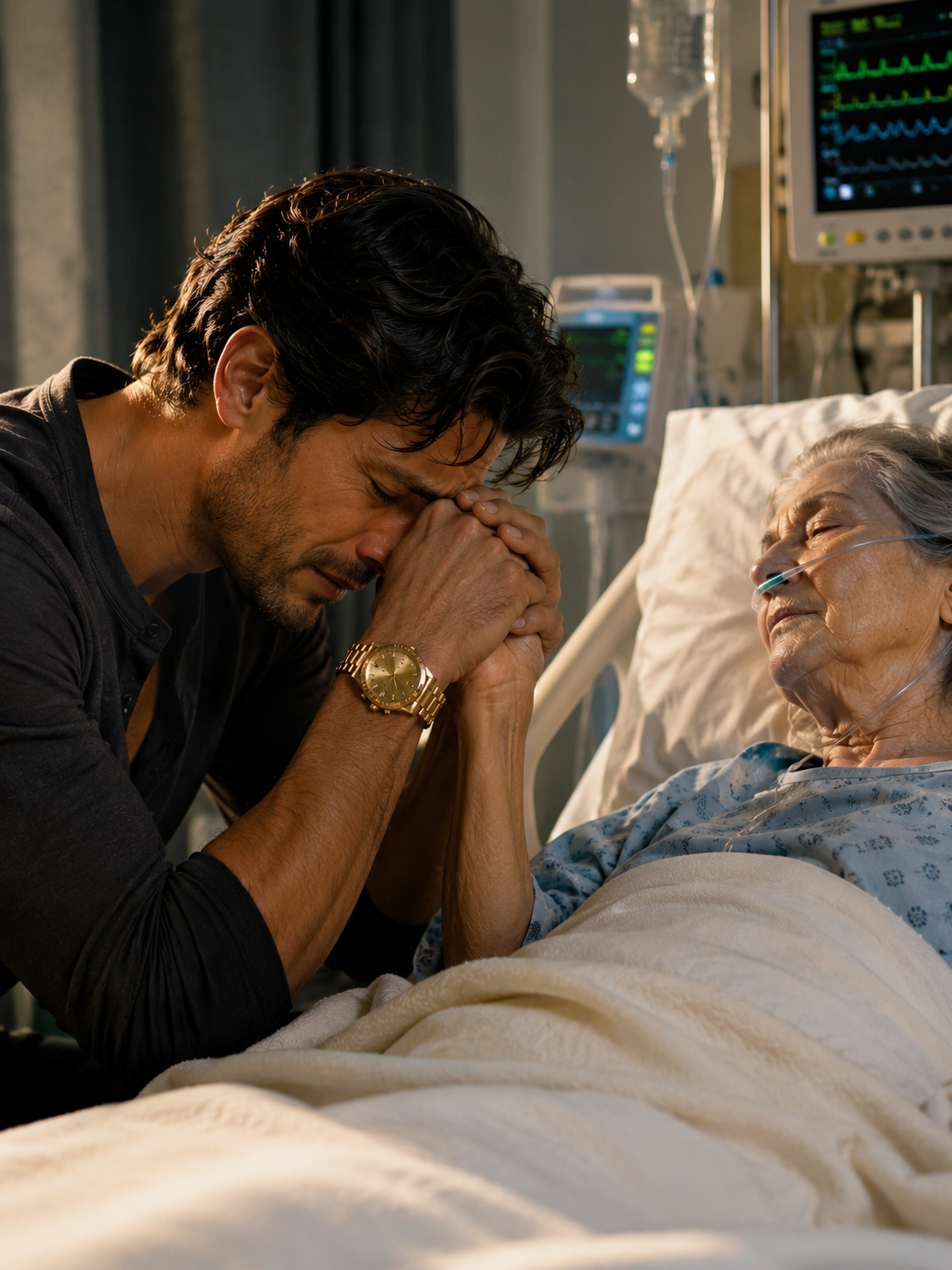
“You sold it.”
Adrian sat beside her quietly.
“It was only a thing.”
“But it belonged to your old life.”
Adrian looked toward the operating room doors.
“Some things matter more.”
Lucia’s eyes filled with tears.
The surgery lasted all night.
At some point near dawn, exhaustion finally overtook Lucia and she fell asleep against Adrian’s shoulder in the silent hospital hallway.
Adrian looked down at the little girl resting beside him and felt something break open inside his heart.
For years he had chased wealth, status, and power so obsessively that he had barely noticed his own teenage daughter growing distant. Even before the betrayal, his life had already been empty — he had simply been too blind to admit it.
But somehow, in the middle of a recycling yard filled with discarded things, a poor little girl had reminded him what human value actually looked like.
As sunrise slowly brightened the hospital windows, the doctor finally returned.
“The procedure was successful,” he said with a tired smile.
Lucia burst into tears of relief.
Adrian closed his eyes briefly, overcome by gratitude.
And in that quiet moment, standing in a hospital corridor with a child who had once searched through garbage just to survive, Adrian Keller made a promise to himself.
He would rebuild everything.
But not the way he had before.
This time, he would not spend his life worshipping money while neglecting the people who truly mattered.
Years later, reporters and business magazines would often ask Adrian Keller how he survived the darkest chapter of his life.
He always answered the same way.
“It began with a little girl in a recycling yard,” he would say softly with a grateful smile. “A child the world overlooked… who somehow saw value in a broken man when even he had forgotten he still had any left.”
Note: This story is a work of fiction inspired by real events. Names, characters, and details have been altered. Any resemblance is coincidental. The author and publisher disclaim accuracy, liability, and responsibility for interpretations or reliance. All images are for illustration purposes only.
