
Stories
5 Years After Losing My Husband and Sons, One Hidden Note Exposed the Truth
May
Five years ago, I was told that my husband and our three sons had died in a terrible storm. The police said it was a tragic accident, and for a long time, I forced myself to accept that version of events—even when something about it never quite felt right.
Then one night, everything changed.
My youngest daughter woke me in the middle of the night, trembling, clutching her old teddy bear. Inside it, she had found something—a note written in my husband’s handwriting. And from that moment on, the truth I thought I knew began to unravel.
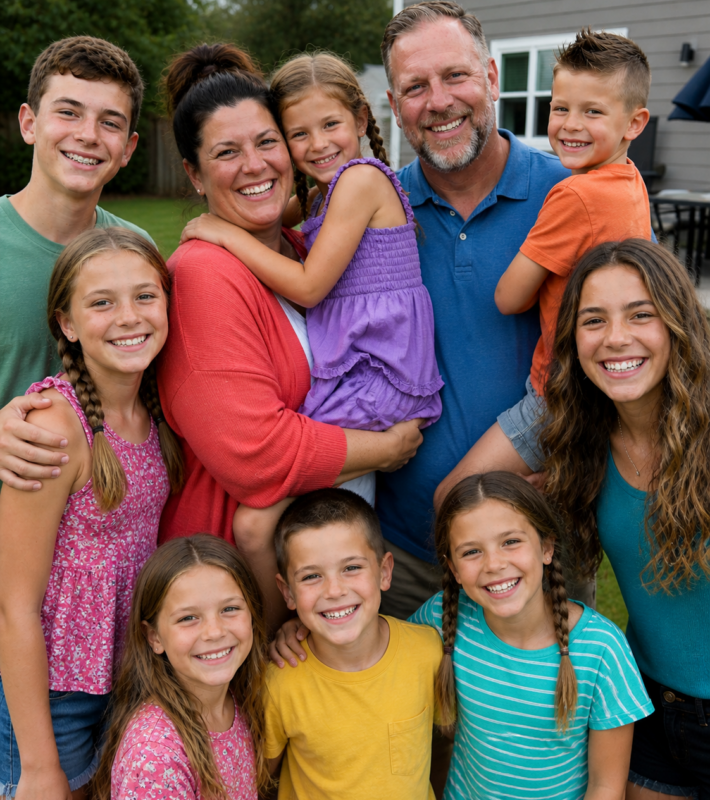
My husband, Ben, and I had eight children—five girls and three boys.
Our home was always loud, chaotic, and full of life. It was exhausting at times, but I wouldn’t have traded it for anything.
As the boys grew older, Ben started a tradition—taking them away for weekend trips to a small cabin in the woods that had once belonged to his grandfather. It became their special bonding time.
Five years ago, I stood at the door and waved goodbye as they left for one of those trips.
I didn’t know it would be the last time I’d ever see them.
That evening, I was at the kitchen sink, watching rain streak down the window, when a police car pulled into our driveway. At first, I didn’t think much of it. Our family friend Aaron was an officer, and he sometimes stopped by.
But when I opened the door and saw his face, I knew instantly something was wrong.
“I’m so sorry, Carly,” he said, his voice heavy. “There’s been an accident.”
The words that followed shattered my world.
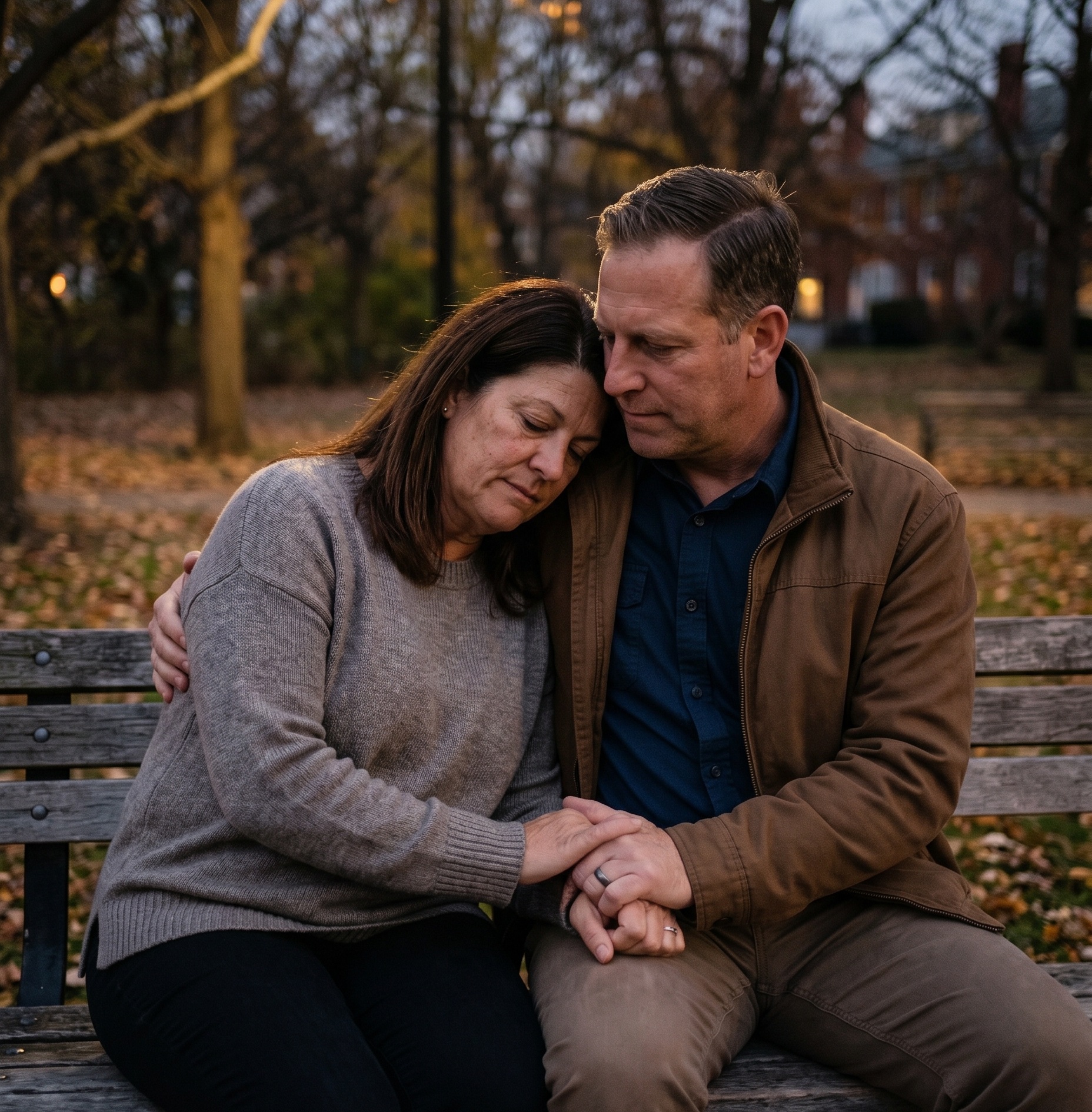
Ben’s SUV had gone off a cliff during the storm. It had rolled down the hill.
No one survived.
I couldn’t accept it. “No… that doesn’t make sense. He knows that road. He always checks the weather.”
Aaron’s expression tightened. “I know.”
But that didn’t make it any easier to believe.
The funeral came and went in a blur of tears and numbness. My daughters clung to me, and I tried to stay strong for them, even as everything inside me broke.
Aaron was there for all of it. He handled the investigation, explained the reports, and stayed close as I struggled to hold our family together.
Over time, he became someone I leaned on. Someone I trusted.
A month after the funeral, we placed a memorial marker where the accident had happened. After that, I never returned.
Until recently.
It started the night Lucy woke me up.
She stood beside my bed, shaking, holding her worn teddy bear.
“Mom,” she whispered, “I found something inside Mr. Buttons. It fell out.”
She handed me a folded piece of paper.
“Dad hid it,” she said, her voice trembling. “I think I know what really happened.”
At first, I didn’t understand. I thought maybe her imagination had gotten the better of her—she had been asking more questions about her father and brothers lately.
But when I unfolded the paper and saw Ben’s handwriting, my hands began to shake.
If anything happens to me, don’t believe what they tell you. I made a mistake. Go to the cabin. Look under the rug.
I read it again. And again.
My heart pounded harder each time.
Lucy started crying. “The police didn’t tell the truth. It wasn’t what Aaron said.”
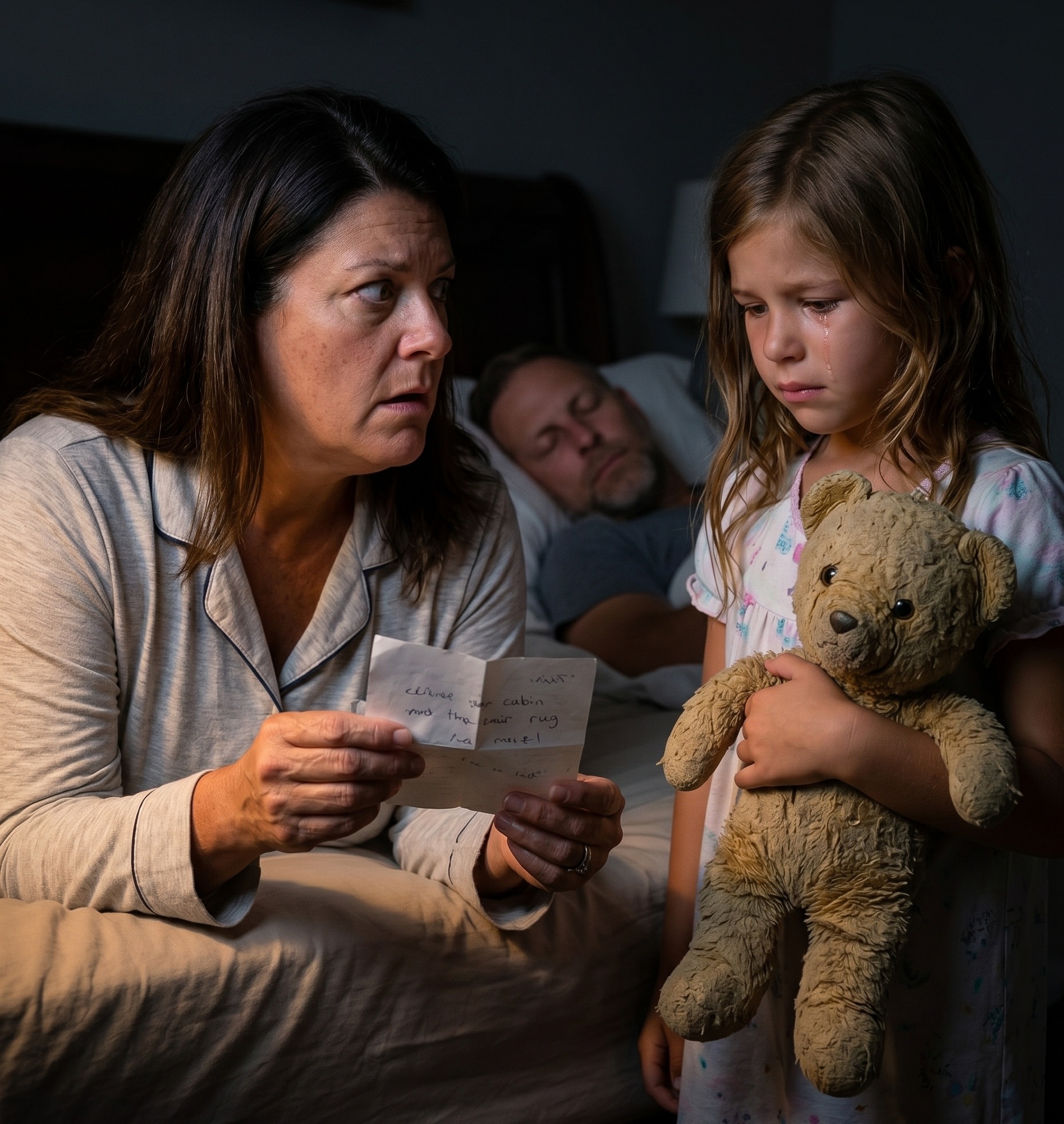
She looked past me.
I turned—and saw Aaron asleep beside me.
At first, Aaron had just been someone helping me survive the aftermath. He was kind to my daughters, and his presence made the house feel less empty.
Months turned into years.
Eventually, something shifted between us. We resisted at first, unsure if it was right. But grief has a way of blurring lines.
We had only been together for three months when Lucy found the note.
And suddenly, looking at him no longer felt comforting.
It felt terrifying.
I didn’t sleep that night.
By morning, I had made my decision.
I told my oldest daughter, Jenna, that I needed to run an errand and asked her to watch her sisters. I didn’t tell her where I was going.
I didn’t tell Aaron either.
The drive to the cabin felt endless. When I passed the memorial marker, my throat tightened painfully.
When I finally arrived, I stood on the porch, staring at the door.
“Just go in,” I whispered to myself.
Inside, the air was stale. Everything looked the same—the old couch, the fireplace, Ben’s magazines.
But something felt off.
There wasn’t enough dust.
Someone had been there.
My stomach dropped.
I pulled back the rug.
At first, nothing. Then I noticed a loose floorboard. I pried it open and found a small hidden space.
Inside was a recording device sealed in a plastic bag.
My hands trembled as I turned it on.
Then I heard Ben’s voice.
“If you’re listening to this… something went wrong. I didn’t want to talk about this at home. Not around the kids.
Aaron is in serious trouble. He altered a case report—left things out. He says he had reasons, but if the truth comes out, it’ll destroy him.
I told him if he didn’t come clean, I would report it.
I think… that was a mistake.”
The recording ended.
And everything fell into place.
Aaron had lied before.
Had he lied about the accident too?
When I got home, I acted like everything was normal. I made dinner, spoke to the girls, tried to hold myself together.
But inside, I was unraveling.
I texted Aaron, asking him to come over the next morning.
He agreed immediately.
When he arrived, he brought coffee—like always.
But this time, I didn’t smile.
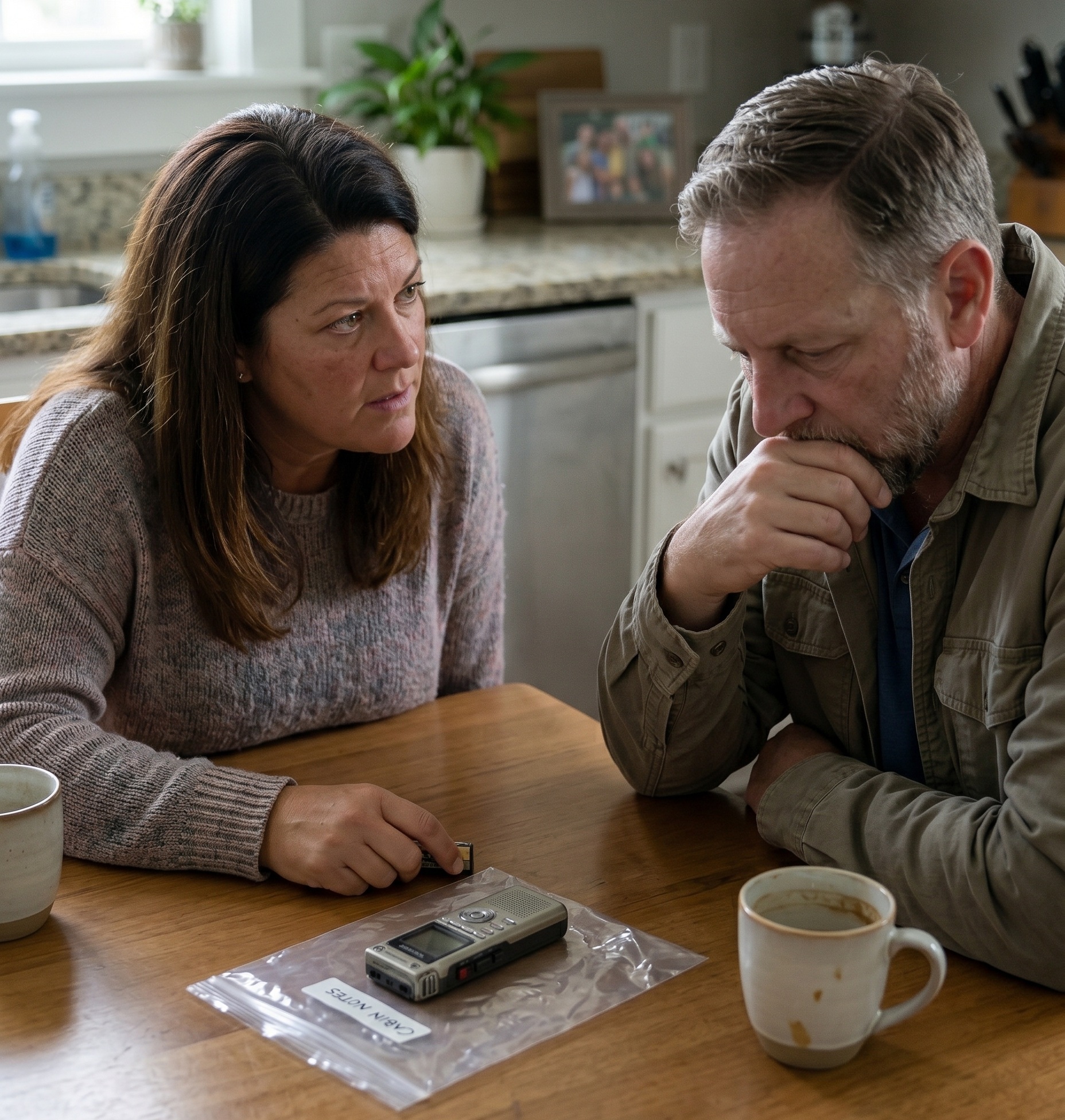
“Sit down,” I told him.
I placed the recorder on the table and pressed play.
As Ben’s voice filled the room, Aaron’s face drained of color.
When it ended, he looked sick.
“It’s not what it sounds like,” he said quickly. “I didn’t hurt him. I just wanted to talk. He saw me following him and sped up—”
“You were there?” I interrupted. “You chased him during a storm?”
“I didn’t mean for anything to happen! I went to the cabin, but he never arrived. I didn’t know about the crash until later!”
“But you lied,” I said. “You stood in my home, looked at my children, and lied. And now my husband is dead because of your secret.”
“It wasn’t a big deal!” he insisted. “Just a small detail in a case. I was protecting a family!”
“And Ben found out.”
Aaron nodded.
“And he refused to stay silent,” I said.
I took a breath.
“I gave the recording to your superiors this morning. Internal Affairs is already involved.”
A knock came at the door soon after.
Two officers stood outside.
Aaron didn’t resist.
“I’ll go quietly,” he said, holding out his hands.
He looked at me one last time, as if he wanted to say something—but didn’t.
Then they took him away.
By evening, everyone in the neighborhood knew.
Since then, I’ve given statements, answered questions, and tried to process everything.
This morning, I took my daughters back to the memorial.
We brought fresh flowers.
Standing there, I told them the truth—that their father hadn’t made a careless mistake.
“He discovered something wrong,” I said. “And he chose to do the right thing.”
Grief washed over me again—both old and new.
Lucy leaned gently against me and whispered, “Dad was good.”
I looked at the cross, at the flowers moving in the wind.
And I answered softly, “Yes… he was.”
Note: This story is a work of fiction inspired by real events. Names, characters, and details have been altered. Any resemblance is coincidental. The author and publisher disclaim accuracy, liability, and responsibility for interpretations or reliance. All images are for illustration purposes only.
