
Stories
“Did I Do Something Wrong?” My 6-Year-Old Asked After Being Removed From Her Uncle’s Wedding — But Grandpa Refused To Stay Silent
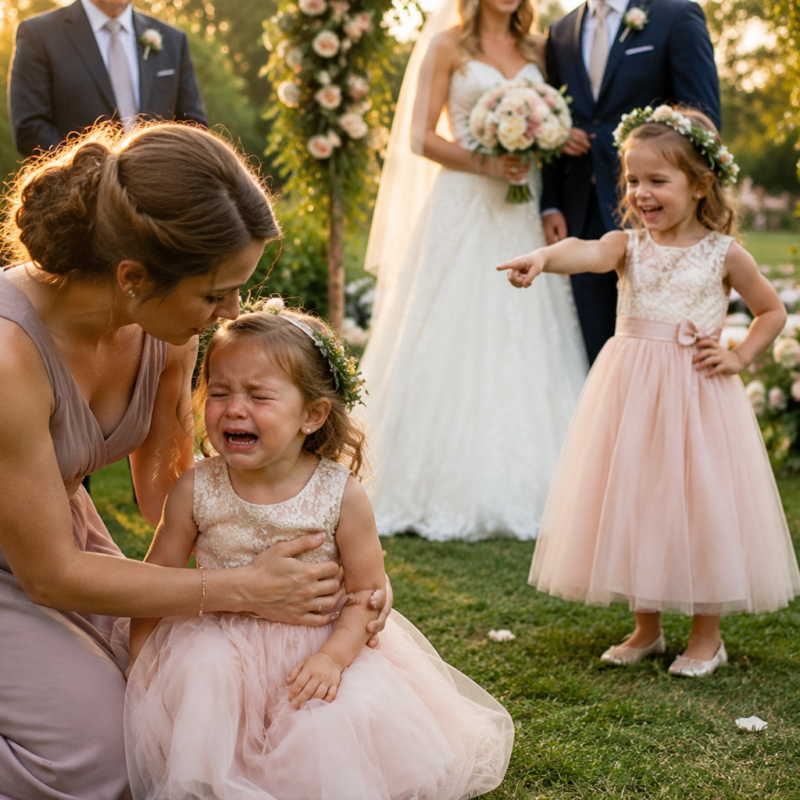
May
The morning of the rehearsal dinner unfolded with the kind of quiet excitement that only children know how to hold onto completely. Adults rush through important days distracted by schedules, phone calls, parking instructions, seating charts, and timelines. But children treat anticipation like something sacred. They sit inside it fully, protecting it carefully, carrying it around like a secret treasure.
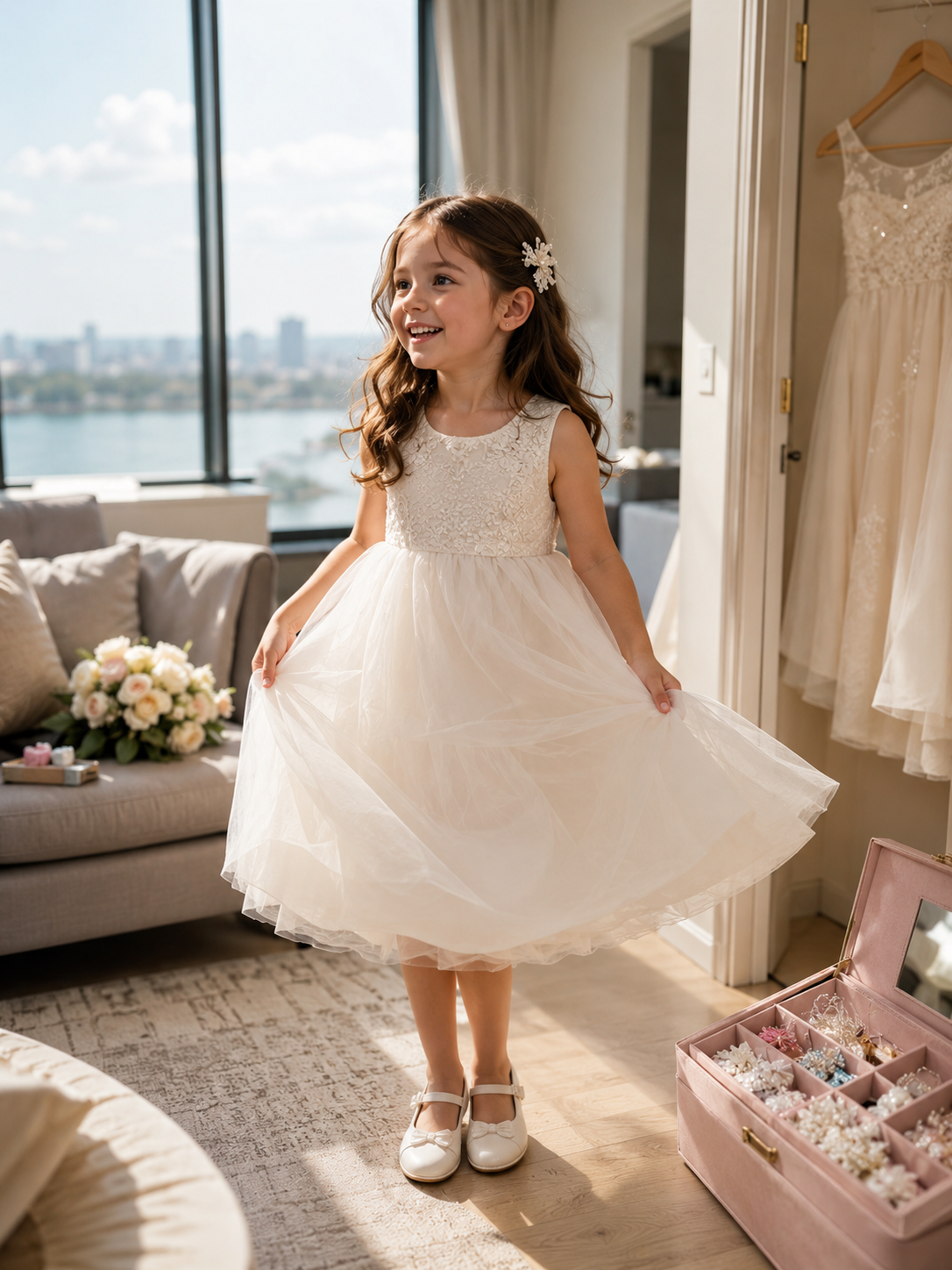
That morning, my six-year-old daughter Lily stood in front of the bedroom mirror for almost an hour trying to decide between two tiny sets of hair clips.
One pair had delicate white flowers.
The other had small silver pearls.
She kept changing her mind every few minutes, studying herself seriously as though the decision carried enormous responsibility.
“The flowers look more like a real wedding, don’t they?” she asked softly, tilting her head while holding the clips against her hair.
I smiled at her reflection in the mirror.
“They’re perfect,” I said. “You’re going to look beautiful.”
She believed me instantly.
That was the thing about Lily—she still trusted the world completely. She trusted promises. She trusted adults. She trusted that when someone told her she mattered, they meant it.
At the time, I didn’t realize how dangerous that kind of trust could be.
For four months, she had practiced being the flower girl for my brother Ryan’s wedding.
Four entire months.
Every evening after dinner, she would walk carefully down the narrow hallway of our apartment carrying an empty basket in both hands. She counted her steps out loud. Practiced smiling naturally. Practiced walking slower because she thought she might accidentally “zoom too fast.”
She always pivoted in the same spot near the hallway wall until a faint mark appeared where her little shoes repeatedly turned.
Sometimes I would hear her talking quietly to herself during practice.
“Smile first… then flowers…”
“Not too fast…”
“Shoulders back…”
She took it seriously in the way only children can.
To adults, she was “just” a flower girl.
To Lily, she had been chosen.
And she wanted to do it perfectly.
My husband Daniel had already packed the car by the time Lily finally settled on the white flower clips. He was the calm one in our family, the kind of man who quietly handled problems before anyone noticed they existed. He loaded garment bags, checked directions twice, grabbed snacks for the drive, and never once acted stressed about any of it.
As we drove toward the lakeside venue, Lily pressed her forehead against the car window almost the entire way.
The wedding venue sat beside a private lake nearly three hours away from our city—one of those impossibly elegant places with stone pathways, glowing gardens, and huge white tents overlooking the water.
“Do you think Uncle Ryan’s going to smile when he sees me?” Lily asked suddenly from the backseat.
Daniel glanced at me in the mirror.
“He’ll love seeing you,” I answered.
Even now, I still remember the guilt that hit me later when I realized I had no idea how badly those words would age.
By the time we arrived, the venue looked exactly like something out of a magazine.
Soft music drifted through hidden outdoor speakers. Staff members moved elegantly between tables covered in white linen. Tall candles flickered beneath hanging lights wrapped around trees.
Everything looked polished.
Expensive.
Perfect.
Daniel had just parked the car when my phone buzzed.
It was a text from my mother.
“Come through the back garden first. I need to talk to you alone. Don’t bring Lily yet.”
The message immediately felt wrong.
I read it twice.
Then a third time.
There was no explanation. No emoji. No reassurance.
Just instructions.
A strange heaviness settled in my chest almost instantly.
“I’ll be right back,” I told Daniel carefully.
Lily was happily showing him her hair clips again, completely unaware that the next ten minutes would become one of the most painful memories of her childhood.
When I walked around the back garden, my mother was already waiting near a row of trimmed hedges beside the lake.
The moment I saw her face, I knew something bad had happened.
She stood with her hands clasped tightly together in front of her stomach—the exact posture she always used whenever she had already accepted a difficult decision and now expected everyone else to accept it too.
“What’s going on?” I asked immediately.
She sighed before answering.
And somehow that sigh alone made everything worse.
“They decided a few weeks ago that Mariana’s niece would be the flower girl instead.”
For a second, my brain genuinely failed to process the sentence.
I stared at her.
“What?”
“Mariana wanted someone from her side of the family involved.”
I blinked slowly.
“No… Lily is the flower girl.”
“She was,” my mother corrected softly.
Was.
The word hit like ice water.
“She’s been practicing for months,” I said.
“I know.”
“She’s wearing the dress right now.”
“I know, sweetheart.”
Every answer sounded calm. Gentle. Reasonable.
And somehow that made it crueler.
Because it meant this conversation had already happened long before I arrived.
This wasn’t confusion.
This wasn’t a last-minute emergency.
This had been decided weeks ago.
Weeks.
“And nobody told us?” I asked.
My mother avoided my eyes.
“Ryan didn’t want drama before the wedding.”
I actually laughed once in disbelief.
“So instead he waited until my six-year-old showed up in her dress?”
“She can still attend the wedding.”
Attend.
Like she was some random guest.
“She’s six years old,” I whispered. “Do you understand what this means to her?”
My mother’s expression hardened slightly.
“It’s Mariana’s wedding too. She wants the ceremony centered around her family.”
Her family.
Not ours.
Not Lily.
Not the little girl who had spent four months practicing because she thought her uncle loved her enough to want her included.
I could physically feel my heartbeat in my throat by the time I walked back toward the parking area.
Daniel took one look at my face and immediately stepped away from the car.
“What happened?”
I could barely get the words out.
“They replaced her.”
His expression changed instantly.
“What?”
“They replaced Lily weeks ago. Mariana’s niece is the flower girl now.”
For several seconds, neither of us spoke.
Then both of us slowly looked toward the backseat.
Lily sat there happily counting tiny white stones she’d collected near the parking lot curb.
She looked so small.
So excited.
So safe inside a moment that hadn’t broken yet.
And suddenly I realized I was about to become the person who shattered it.
I opened the car door carefully and knelt beside her.
“Sweetheart,” I said softly, taking both her hands into mine. “I need to tell you something.”
She immediately looked concerned.
“What happened?”
I swallowed hard.
“They changed the wedding plans a little bit.”
She blinked.
“What kind of plans?”
I forced myself to continue.
“Another little girl is going to be the flower girl now.”
Silence.
Total silence.
She stared at me with confusion first.
Then hurt.
Then something worse.
“Did I do something wrong?” she whispered.
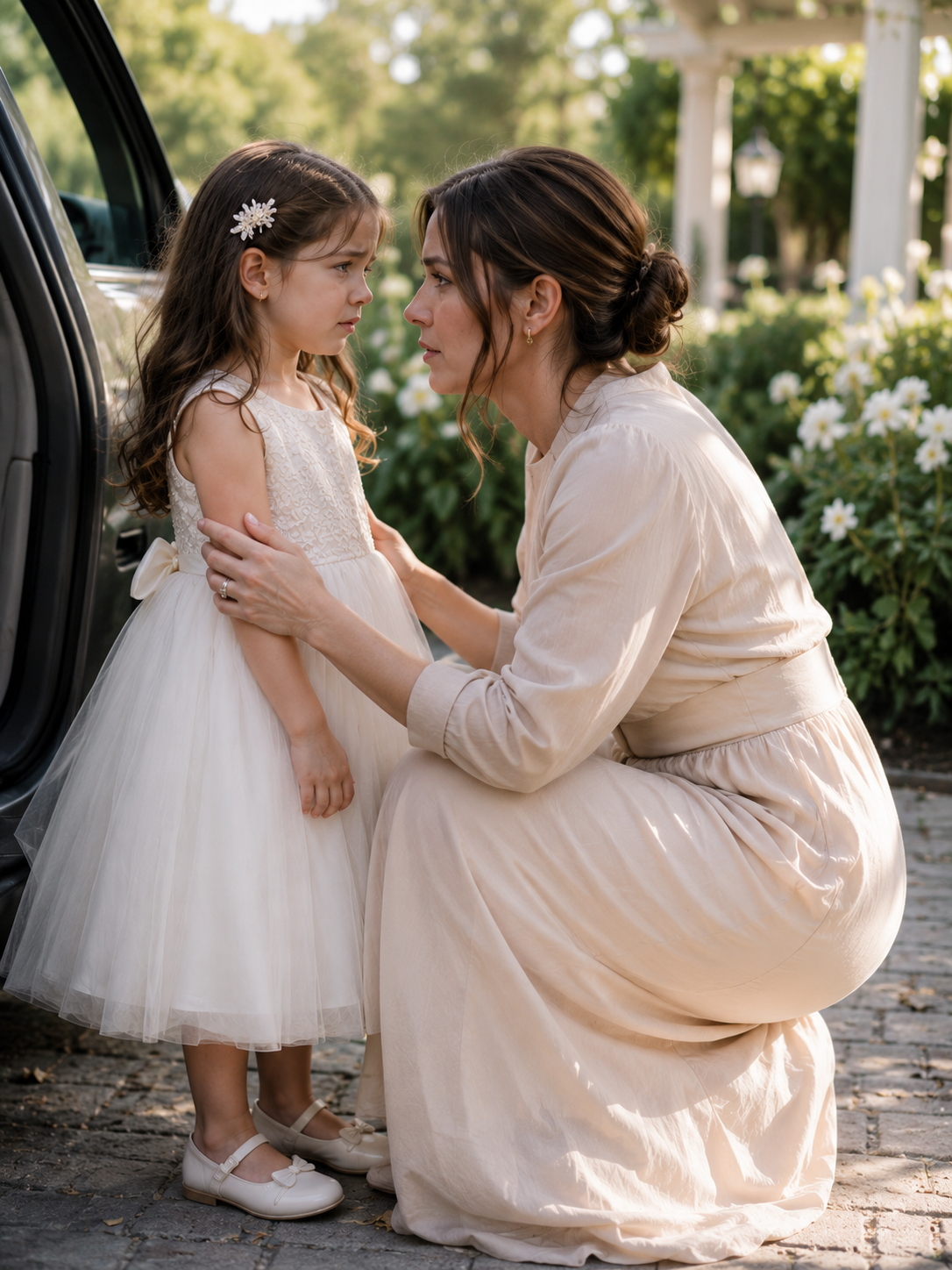
To this day, I don’t think I’ll ever hear a sentence more heartbreaking than that one.
Because children don’t naturally assume cruelty.
They assume fault.
If something painful happens, they immediately search themselves for the reason.
“No, baby,” I said quickly. “No. Absolutely not. You did everything perfectly.”
“Then why don’t they want me anymore?”
Daniel looked away.
I could see his jaw tightening.
“It’s not because of you,” I said desperately. “This was an adult decision.”
“So… I don’t get the basket?”
My throat burned.
“Not this time.”
She nodded slowly.
Too slowly.
Like she was trying very hard not to cry because she sensed everyone else already felt uncomfortable.
“Can I still wear my dress?” she asked quietly.
“Of course you can.”
Another pause.
Then, in the smallest voice imaginable:
“Will there still be cake?”
That almost destroyed me completely.
Because somehow she was already trying to adjust herself around the disappointment. Already trying to make the adults feel better about hurting her.
The rehearsal dinner moved forward like nothing had happened.
That was the worst part.
People laughed.
Champagne glasses clinked.
Music played.
Conversations continued.
And somewhere underneath all of it, my little girl sat quietly in her flower girl dress pretending she was okay.
I watched Ryan across the reception lawn laughing with his friends near the bar.
Relaxed.
Happy.
Comfortable.
And what hurt most wasn’t even the decision anymore.
It was realizing he never respected us enough to tell us himself.
Later that evening, my father quietly approached me near the lake.
“Walk with me,” he said.
We moved away from the crowd toward the water.
The music faded behind us.
For a while, he said nothing.
Then finally:
“He knew this would hurt Lily.”
I stopped walking.
“What?”
My father’s face looked older than usual somehow.
“He knew weeks ago,” he said quietly. “And he asked your mother to handle telling you because he didn’t want to deal with your reaction himself.”
That sentence settled into me like poison.
Not because he misunderstood.
Not because he panicked.
Not because he forgot.
Because he simply didn’t want to deal with it.
My father stared out across the dark lake for several long seconds before speaking again.
“That little girl practiced for months,” he said. “I saw the videos your husband sent me.”
I felt tears finally burning behind my eyes.
“She thought she mattered to him.”
“She does matter.”
“Then why does this feel like she doesn’t?”
My father didn’t answer immediately.
Because there wasn’t a good answer.
When we walked back inside the reception hall, something about him had changed.
You could feel it instantly.
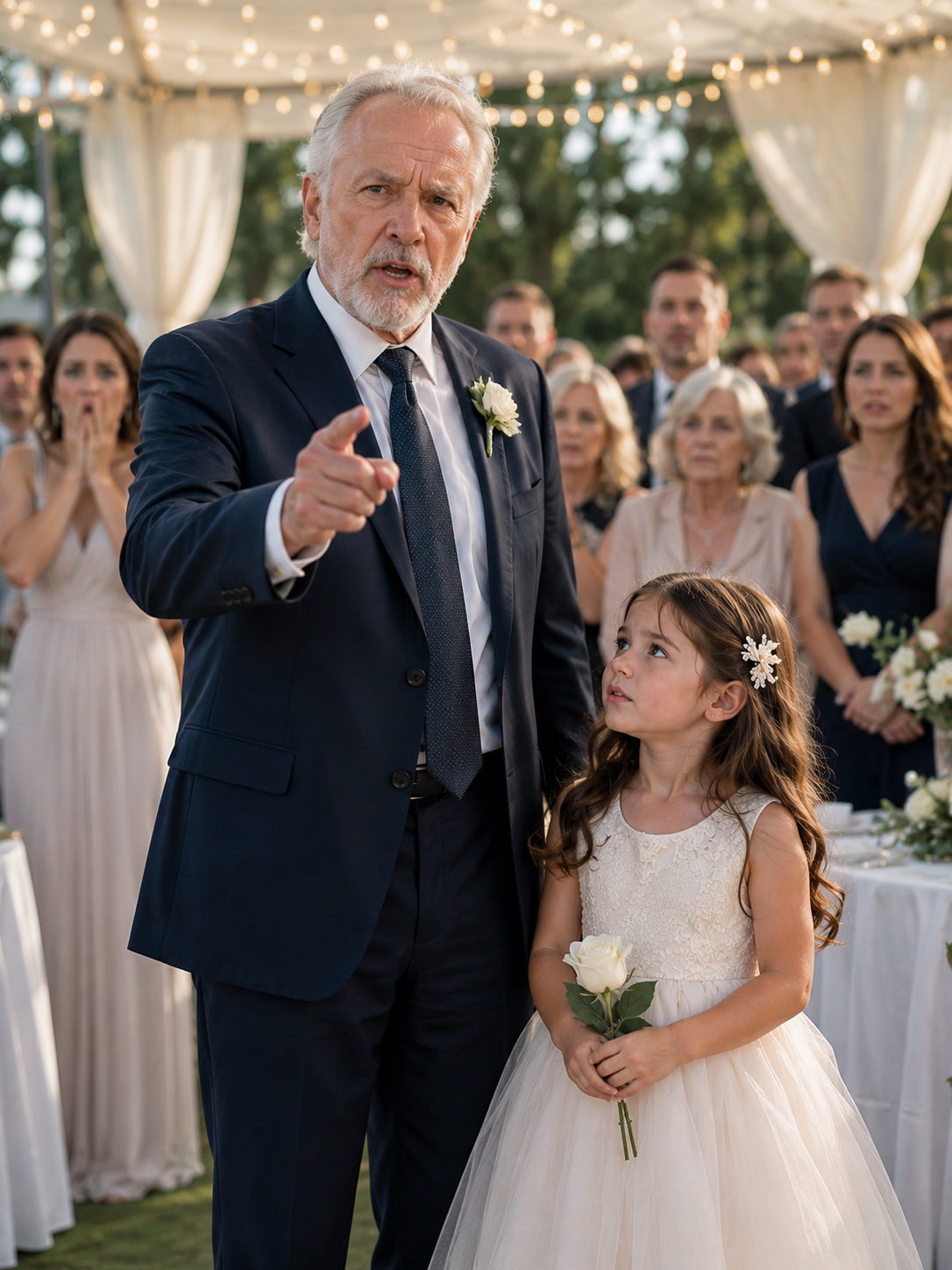
My father had never been a loud man. He didn’t yell. Didn’t make scenes. Didn’t demand attention.
But when he walked to the center of the room and quietly set down his wine glass, conversations began fading anyway.
One by one.
Until nearly everyone looked toward him.
Ryan noticed too.
“Dad?” he asked carefully.
My father looked around the room slowly before speaking.
“We have a bad habit in this family,” he began calmly, “of avoiding uncomfortable truths because we think silence keeps things peaceful.”
The room went completely still.
“And tonight, I’m done pretending that silence is kindness.”
Nobody moved.
Nobody interrupted.
“My granddaughter arrived here tonight excited, prepared, and proud to participate in a role she was promised months ago.”
Ryan shifted uncomfortably.
Mariana’s smile disappeared completely.
“And instead of being treated with honesty and respect,” my father continued, “that promise was taken away quietly behind closed doors so nobody would have to feel uncomfortable.”
The tension in the room became unbearable.
I saw several relatives glance nervously toward Ryan.
“This is not about ruining a wedding,” my father said firmly. “This is about character.”
Ryan finally spoke.
“Dad, we didn’t want drama—”
“No,” my father interrupted. “You didn’t want accountability.”
Silence crashed through the room.
“You allowed a six-year-old child to arrive believing she still mattered in this ceremony because it was easier for you than making one uncomfortable phone call.”
Nobody breathed.
“And then you let her find out after she showed up wearing the dress.”
Ryan looked stunned.
Like he genuinely never expected anyone to say the truth out loud.
My father turned toward the guests again.
“If a child can spend four months practicing because she takes her promises seriously, then adults should at least have the decency to honor theirs honestly.”
The room remained frozen.
No music.
No chatter.
No polite pretending anymore.
Just truth.
Raw and exposed in the middle of a perfect wedding.
The next morning, nobody quite knew how to behave.
The atmosphere felt fragile.
Tense.
Embarrassed.
Ryan avoided eye contact with me almost entirely during breakfast.
Mariana barely spoke.
But for the first time since arriving, people stopped acting like what happened to Lily was small.
And that mattered.
About thirty minutes before the ceremony began, Ryan approached Lily himself.
He knelt in front of her awkwardly.
“I’m sorry,” he said quietly.
Lily looked at him carefully.
Children know when adults mean something.
And they know when adults are apologizing because they were forced to.
“I still want you to walk at the beginning,” he added. “If you want to.”
Not as the flower girl.
Not with the basket she practiced with.
But at least included.
At least acknowledged.
Lily looked at me first.
Then at Daniel.
Then back at Ryan.
“Do I still get my flower?” she asked.
Ryan swallowed.
“Yes.”
During the ceremony, Lily walked slowly down the aisle holding a single white peony in both hands.
No basket.
No petals.
No spotlight.
But her head stayed high the entire time.
Her small steps remained careful and steady, just like she had practiced in our apartment hallway for months.
And when she reached the front, she smiled.
Not the huge carefree smile she once imagined.
But a brave one.
A smile that had survived disappointment and still showed up anyway.
My father was the first person to clap.
Not politely.
Not out of obligation.
Real applause.
The kind meant for courage.
Months have passed since that wedding weekend.
Some relationships still feel strained.
Some conversations still remain unfinished.
But one thing changed forever that night.
Because yes, my daughter learned far too early that people can disappoint you deeply without warning.
But she also learned something else.
Something bigger.
She learned that real love speaks up.
Real love refuses to stay silent simply to keep others comfortable.
And real love will stand beside you publicly—even when doing so ruins the illusion of perfection everyone else is desperately trying to protect.
In the end, that lesson stayed with her far longer than the heartbreak ever did.
Note: This story is a work of fiction inspired by real events. Names, characters, and details have been altered. Any resemblance is coincidental. The author and publisher disclaim accuracy, liability, and responsibility for interpretations or reliance. All images are for illustration purposes only.
