
Stories
A Woman Donated Her Kidney to My Son… Then Disappeared Before He Could Say Thank You
May
The doctors stopped using hopeful words after the third round of testing.
“We’re running out of options,” Dr. Bennett said quietly, folding his hands across the desk. “Your son needs a kidney soon.”
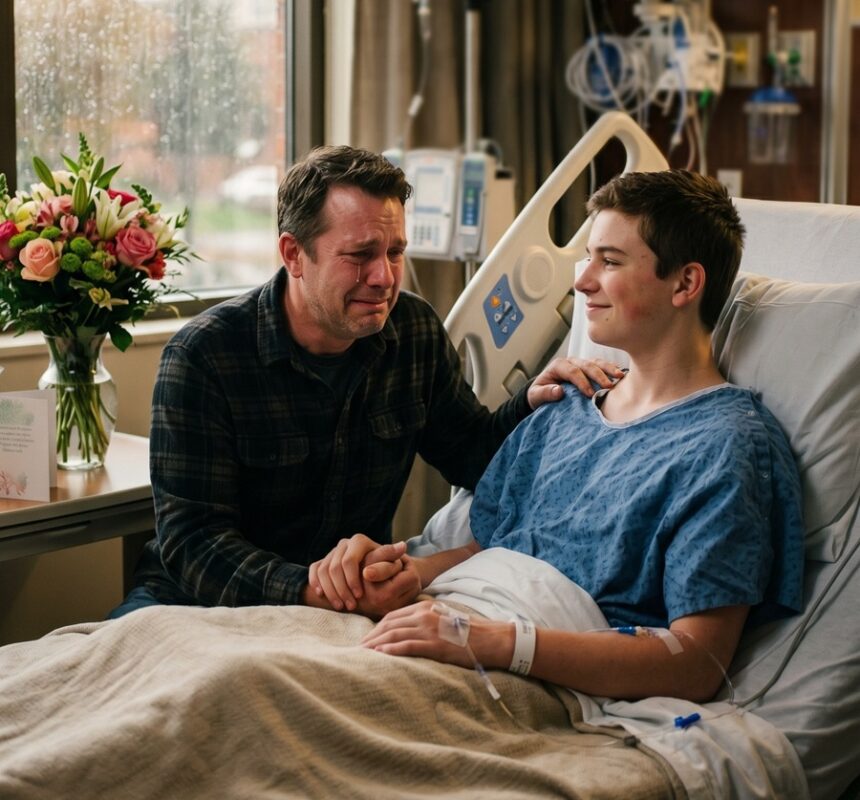
I remember staring at the floor tiles because I couldn’t bear to look at my son, Ethan, sitting beside me in that oversized hospital chair. He was only sixteen, but months of dialysis had hollowed his cheeks and stolen the energy from his voice.
I had already been tested.
Not a match.
My wife wasn’t a match either. Neither were Ethan’s grandparents, cousins, uncles, or anyone else in our family. Friends volunteered. Coworkers volunteered. People from church volunteered.
Nothing.
Every failed phone call from the transplant coordinator felt like another door slamming shut.
At night, I would hear Ethan vomiting in the bathroom after treatment, and I’d sit outside the door pretending not to cry because fathers are supposed to fix things. Fathers are supposed to save their children.
But I couldn’t save mine.
One evening my wife posted our story online.
It was simple. A photo of Ethan smiling weakly from his hospital bed, wearing a baseball cap because he hated how pale he looked.
She wrote:
“My son needs a kidney. We’re praying for a miracle.”
The post spread farther than we expected. Friends shared it. Then strangers shared it. Thousands of comments appeared from people promising prayers and support.
But prayers didn’t change blood types.
Months passed.
No donor.
Then, one rainy Tuesday morning, my phone rang while I was buying coffee in the hospital cafeteria.
“Mr. Carter?” the transplant coordinator asked.
“Yes?”
“We found a match.”
For a second I couldn’t breathe.
“What?”
“A woman from Oregon contacted us last week after seeing your son’s story online. We tested her yesterday. She’s a perfect match.”
I slid into the nearest chair because my legs stopped working.
“She wants to remain anonymous,” the coordinator continued gently. “But she’s already booked a flight.”
I kept asking the same question over and over.
“Why would someone do this?”
Nobody had an answer.
Three days later she arrived at the hospital carrying a faded backpack and wearing grocery-store sneakers.
I only saw her briefly from down the hallway because she requested minimal contact before surgery.
Average height. Brown hair tied back. Exhausted eyes.
She looked ordinary.
That somehow made what she was doing feel even more unbelievable.
Before the operation, the hospital staff handed me an envelope she’d left behind in case something went wrong.
Inside was a single handwritten note.
“I had two. He had none. The math was simple.”
That was it.
No signature.
No phone number.
Nothing.
The surgery lasted nearly eight hours.
I spent every minute pacing the waiting room, bargaining with God, staring at vending machines, and imagining every terrible outcome possible.
Then Dr. Bennett walked through the doors still wearing surgical scrubs.
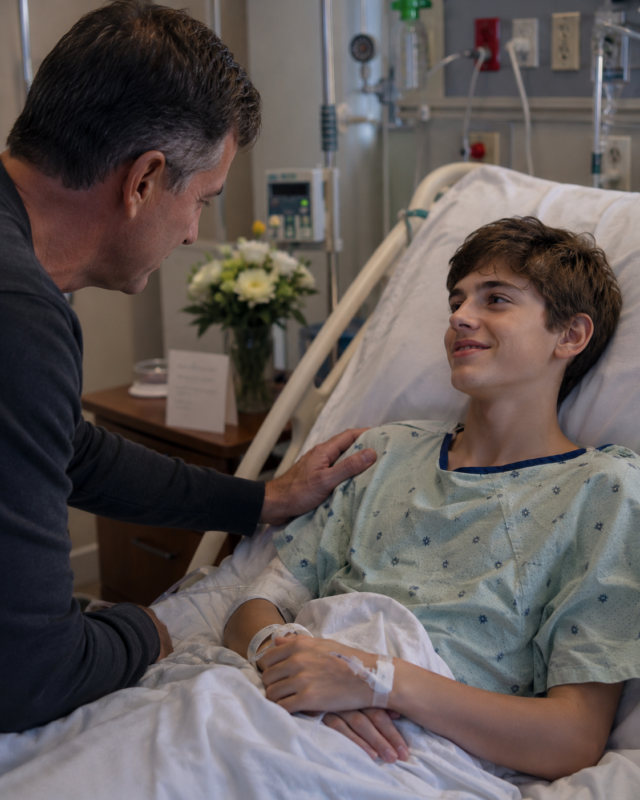
“It worked,” he said with a tired smile. “Your son is going to be okay.”
I broke down right there in front of everyone.
Not polite tears.
The kind that come from months of terror finally cracking open.
Ethan recovered faster than anyone expected.
Within weeks, color returned to his face. He started joking again. Eating again. Planning for the future again.
And the woman who saved him?
She disappeared.
By the time Ethan woke up after surgery, she was already gone.
The hospital honored her request for privacy. We couldn’t contact her. Couldn’t thank her. Couldn’t even send flowers.
All we had was that note.
For a year, I kept thinking about her.
Who leaves part of themselves behind for a stranger and asks for nothing?
Eventually, I hired a private investigator.
I know that probably sounds obsessive, but gratitude without somewhere to go becomes its own kind of ache.
Two months later, he found her.
Her name was Claire Dawson.
Thirty-eight years old.
Single mother of three.
Worked mornings at a diner and nights cleaning office buildings.
When I learned that, my blood ran cold.
This woman had taken unpaid leave from two jobs to fly across the country and donate a kidney to my son.
A boy she had never met.
I asked if she would meet us.
To my surprise, she agreed.
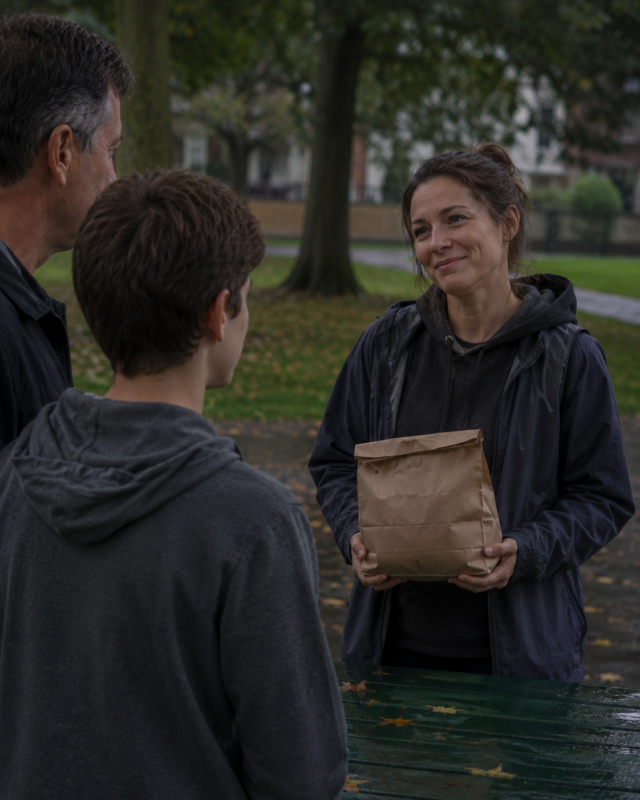
We met at a small park near her apartment in Portland. Ethan was nervous the entire flight there, rehearsing thank-you speeches that he kept forgetting halfway through.
Claire arrived carrying a paper bag of sandwiches because she thought we might be hungry.
That nearly destroyed me.
Even now, she was taking care of other people first.
“You shouldn’t have come all this way,” she said shyly.
“We should’ve come sooner,” I replied.
For a moment nobody spoke.
Then I finally asked the question that had haunted me for over a year.
“Why did you do it?”
Claire looked down at her hands.
“My son needed a transplant when he was six,” she said softly. “We waited forever. Then one day a stranger donated.”
She smiled faintly.
“That person saved my little boy’s life. I never got the chance to repay them.”
Her eyes met Ethan’s.
“So I promised myself that someday, if I ever could… I would.”
My wife offered her money.
She refused.
We offered to help with her rent.
She refused that too.
The only thing she accepted was a phone call from Ethan a few days later after we returned home.
I listened quietly from the kitchen while he spoke to her.
“Thank you,” he said, voice shaking.
There was a pause before she answered.
“Now we’re even with the universe.”
Note: This story is a work of fiction inspired by real events. Names, characters, and details have been altered. Any resemblance is coincidental. The author and publisher disclaim accuracy, liability, and responsibility for interpretations or reliance. All images are for illustration purposes only.
