
Stories
He Left Me at 41 With a Newborn Baby for a Teenage Girl — Years Later, Our Son Exposed Him Publicly
May
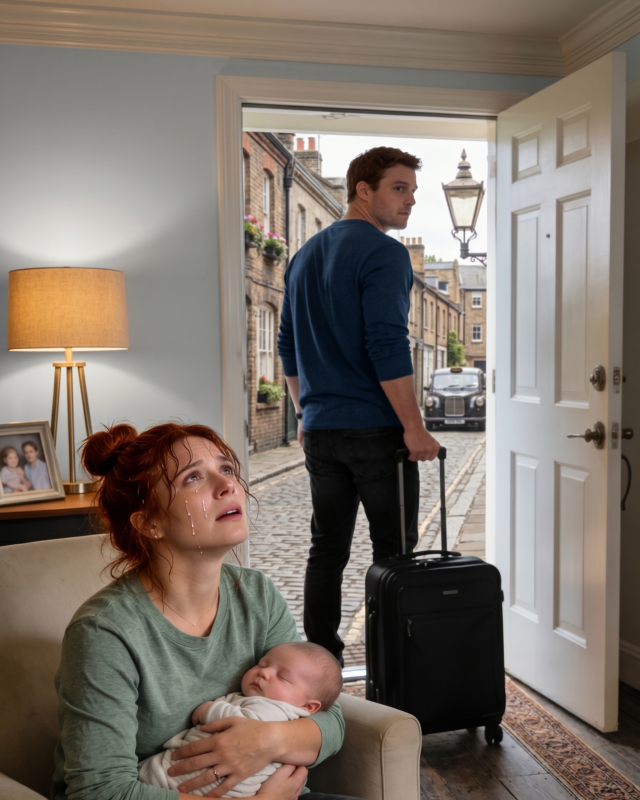
I became a mother at forty-one, at an age when people had already decided motherhood no longer belonged to me.
But my son was never “late.”
He arrived exactly when my heart was desperate for something to save it.
For years, people had disguised cruelty as advice.
“You’re too old now.”
“Maybe it’s time to accept reality.”
“Perhaps motherhood just isn’t meant for everyone.”
“At least you still have your marriage.”
I smiled through every comment like it didn’t hurt.
But every sentence carved something into me.
So when I finally saw those two pink lines, I didn’t scream with joy. I didn’t run to call family. I sat on the bathroom floor shaking, clutching the test in my hand while tears poured down my face so hard I could barely breathe.
I was forty-one.
My body felt older than it should.
My marriage had already gone cold.
And my husband, Andrés, had begun looking at me like I belonged to a chapter of his life he no longer wanted to read.
Still, when I told him, I chose hope.
“You’re going to be a father,” I whispered.
He stared at me for several long seconds.
Then he smiled.
But there was no warmth in it.
“At your age…” he muttered quietly.
I pretended not to hear him.
Because when a woman waits years for a miracle, she becomes dangerously skilled at ignoring warning signs.
The pregnancy was difficult from the beginning.
Constant doctor appointments. Swollen feet. Sleepless nights. Fear. Exhaustion. Days when walking to the kitchen felt like climbing a mountain barefoot.
But every tiny kick reminded me why I kept going.
My baby was still there.
Still fighting.
Still choosing me.
Meanwhile, Andrés drifted farther away with each passing month.
First came the late meetings.
Then the business trips.
Then the silence.
Then the unfamiliar perfume lingering on his shirts.
I noticed everything.
I simply refused to believe it.
When my son was finally born, I named him Mateo.
Tiny. Beautiful. Strong.
He had dark eyes that looked strangely wise, as though he had entered the world already understanding disappointment.
The moment they placed him on my chest, every year of waiting collapsed into one overwhelming feeling.
Love.
Terrifying, endless, aching love.
Andrés arrived late to the hospital.
Perfectly ironed shirt. Expensive cologne. Calm expression.
The face of a man who had emotionally left long before he packed a suitcase.
He looked at Mateo for less than a minute before saying:
“He’s cute.”
Cute.
Not “my son.”
Not “our miracle.”
Not “thank God he’s healthy.”
Just cute.
Like he was commenting on someone else’s baby in a waiting room.
I said nothing.
I was too exhausted to argue.
And maybe too terrified to admit what my heart already knew.
Three months later, Andrés left.
No tears.
No apology.
No shame.
He placed a suitcase beside the front door while Mateo slept in my arms on the couch.
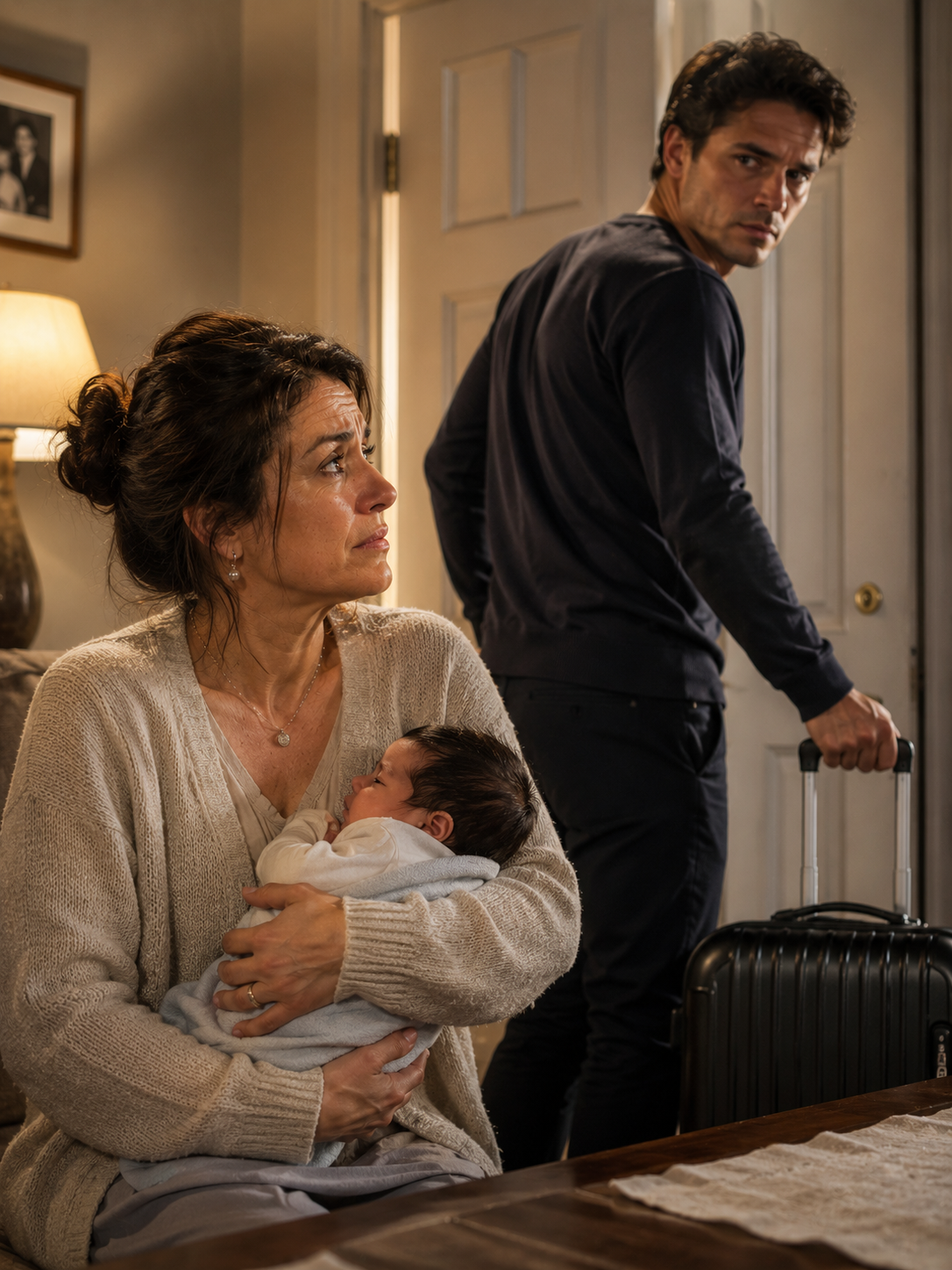
“I can’t live like this anymore,” he said flatly. “I need to start over.”
“Start over?” I asked quietly.
He avoided my eyes.
“With someone else.”
I didn’t ask her name.
I already knew.
I had seen her once in a photo on his phone.
Eighteen years old.
Long hair. Bright smile.
Young enough to mistake abandonment for romance.
“Are you really leaving your son?” I asked.
Andrés exhaled impatiently, like I was making things difficult.
“I’ll send money.”
That sentence killed whatever remained between us.
Not because he left me.
Because he chose a girl barely out of childhood over the child we had prayed years to have.
So I stopped begging.
Stopped asking why.
Stopped waiting for him to become the man I thought I married.
I held Mateo tighter while Andrés walked out of our apartment as casually as someone removing a jacket that no longer fit.
For the next fifteen years, I raised Mateo alone.
And I promised myself one thing:
My son would never spend his life chasing love from a man who didn’t deserve him.
But I had no idea that one day, inside a crowded admissions ceremony, Andrés would walk in proudly beside his “perfect” new family…
And Mateo would destroy fifteen years of carefully built pride with a single sentence.
“I’ll send money.”
That was the final thing Andrés said before abandoning us.
Not “I’m sorry.”
Not “Tell my son I love him.”
Not even “I’ll come visit.”
Just money.
As if child support could replace bedtime stories, fevers at midnight, tiny hands reaching for a father who never came home.
I sat on the couch long after the door shut behind him.
Mateo slept peacefully against my chest, one tiny fist gripping my nightgown.
The apartment was silent except for the hum of the refrigerator.
That night, I realized something devastating:
My marriage had ended.
But my real life had just begun.
At first, I thought Andrés would come back for Mateo.
Not for me.
But surely for his son.
I thought guilt would eventually wake him in the middle of the night. I thought one birthday, one fever, one school photo would break through his selfishness.
I was wrong.
He sent money for three months.
Then smaller amounts.
Then late payments.
Then nothing at all.
When I called, he claimed he was “reorganizing finances.”
When I texted, he ignored me.
On Mateo’s first birthday, he mailed a stuffed bear with the price tag still attached.
No card.
No message.
By then, the eighteen-year-old had moved into his apartment.
Her name was Valeria.
I hated that I knew it.
She posted photos online constantly.
Romantic dinners. Beach vacations. Andrés kissing her forehead while she smiled proudly at the camera.
Under one photo she wrote:
“Real love doesn’t care about age.”
I stared at that caption until my vision blurred.
Real love.
I wanted to tell her real love doesn’t abandon newborn babies.
Real love doesn’t describe fatherhood like a prison sentence.
Real love doesn’t run from responsibility and call it freedom.
But I never commented.
I had a child to raise.
So I worked.
Before the pregnancy complications, I had been a literature teacher. After Andrés left, I took every job I could survive on.
Tutoring children after school.
Correcting essays at night.
Translating documents.
Selling homemade banana bread to neighbors on weekends.
I learned how to stretch one chicken breast across three meals.
I memorized which pharmacy sold the cheapest medicine.
I learned to cry silently in the bathroom with the faucet running so Mateo wouldn’t hear me.
But children notice everything.
One night, when Mateo was three, he found me sitting on the kitchen floor holding an overdue bill.
Without saying anything, he climbed into my lap in his dinosaur pajamas and placed his tiny toy car into my hand.
“For you, Mommy.”
That broke me.
Not loudly.
Not dramatically.
Just enough for my little boy to pat my cheek like he was comforting me instead.
That night, I made myself a promise.
My son would never believe abandonment was stronger than love.
I couldn’t give him a perfect family.
But I could give him honesty, warmth, and a home where he never felt unwanted.
The years that followed were hard.
And beautiful.
Mateo grew into a quiet boy with observant eyes and questions that made adults uncomfortable.
“Why do some dads pick up their kids from school and others don’t?”
“Why do old people walk slower?”
“Why does the moon follow the car?”
I never lied to him.
I softened the truth, but I never poisoned it.
“Your father chose to live somewhere else,” I told him gently one day. “That decision had nothing to do with you.”
Mateo listened carefully.
Then he asked:
“Did he hold me when I was born?”
My throat tightened instantly.
I remembered Andrés standing beside the hospital bed with his hands buried in his pockets, terrified that touching his son might create obligation.
“No,” I whispered.
Mateo nodded quietly.
He didn’t cry.
That scared me more than tears ever could.
After that, he stopped asking about Andrés directly.
Instead, he started collecting proof.
Report cards.
Certificates.
Science fair ribbons.
Drawings.
Awards.
Everything went into a blue folder hidden beneath his bed.
One evening when he was seven, I found him organizing the papers carefully.
“What are you doing?” I asked.
“Nothing.”
“Mateo.”
He hesitated before whispering:
“If he ever comes back… I want him to know I wasn’t a bad kid.”
I thought my heart might actually split in half.
I pulled him into my arms immediately.
“My love, he didn’t leave because you were bad.”
“I know,” he whispered.
But his voice told me he didn’t fully believe it.
That’s the cruelest thing about absent parents.
They leave physically.
But their shadow stays behind and helps raise the child.
I fought that shadow every single day.
I attended every school play even when I brought unfinished translation work inside my purse.
I clapped the loudest at spelling competitions.
I forced myself to relearn math just to help with homework.
When Mateo got sick, I stayed awake counting every breath through the night.
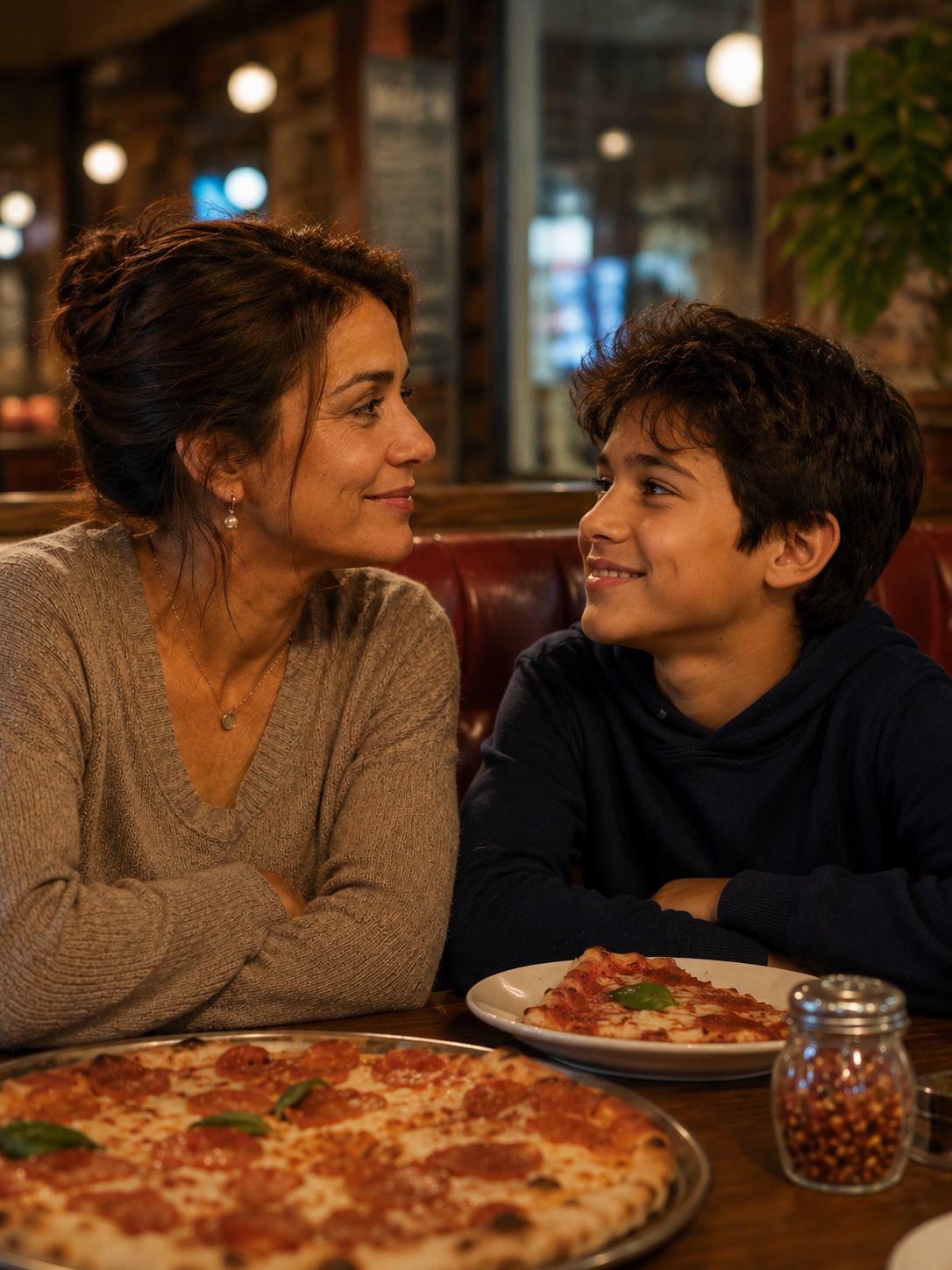
When he won his first science fair, I took him out for pizza even though I barely had enough money.
And when another child once told him, “At least my dad wanted me,” I didn’t tell him to toughen up.
I held him while he cried and whispered:
“You were wanted by me with my whole life.”
That became our prayer.
You were wanted by me with my whole life.
Meanwhile, Andrés kept reinventing himself.
Luxury furniture business.
Failure.
Real estate.
Failure.
Cryptocurrency.
Failure.
Private consulting.
Another reinvention.
Every few years he reappeared online pretending to be successful, fulfilled, transformed.
But people who constantly advertise happiness are usually hiding cracks underneath.
I only knew because others kept telling me.
Relatives sent screenshots.
Old neighbors whispered updates.
Once, Mateo’s teacher accidentally mentioned seeing Andrés at a charity gala with a younger woman before realizing who she was talking to.
I simply smiled politely.
“That’s his life.”
And mostly, I meant it.
The hardest moment came when Mateo turned ten.
He received an academic excellence award at school.
I wore my best navy dress — altered twice because I couldn’t afford another one.
Mateo stood proudly onstage holding a certificate almost bigger than his chest.
After the ceremony, I noticed his eyes scanning the crowd.
Subtly.
Quickly.
But I knew exactly what he was doing.
Children with absent parents become experts at searching doorways.
Later, over ice cream, he asked quietly:
“Do you think he knows I’m smart?”
I set down my spoon slowly.
“I don’t know.”
“Would he care?”
That question nearly destroyed me.
I wanted to lie.
God, I wanted to lie.
But instead I reached across the table and held his hand.
“Some people don’t know how to value precious things,” I told him softly. “That doesn’t make the precious thing less valuable.”
Mateo stared at his melting ice cream for a long moment before whispering:
“I don’t want to become like him.”
“You won’t,” I promised immediately.
From that moment on, something inside him hardened into determination.
He studied relentlessly.
Read library books until librarians greeted him by name.
Taught himself English using old grammar books and online videos.
Turned rejection into fuel.
But what amazed me most was this:
He became strong without becoming cruel.
He helped struggling classmates.
Carried groceries for elderly neighbors.
One winter, he came home freezing because he had secretly given his jacket to another boy at school.
“He needed it more,” Mateo shrugged.
Looking at him, I realized something extraordinary.
Maybe love had actually won.
When Mateo was thirteen, Andrés finally called.
After thirteen years.
I almost ignored the unknown number.
But something told me to answer.
“Lucía?”
The sound of his voice instantly tightened every muscle in my body.
“What do you want?”
“I heard Mateo is doing well.”
“He is.”
“I’d like to see him.”
A glass slipped from my hand into the sink and shattered.
Thirteen years of silence, and suddenly he wanted access again.
“Why?” I asked coldly.
“He’s my son.”
“No,” I replied immediately. “He’s your child. Being a father requires presence.”
Andrés sighed in annoyance.
“Don’t start this again. I sent money.”
“For three months.”
“I was young.”
“You were forty-three.”
Silence.
Then he revealed the real reason.
“I’m trying to repair my image. People keep asking why I never mention my son. It reflects badly.”
There it was.
Not guilt.
Not regret.
Public image.
I closed my eyes.
“Don’t contact us again unless Mateo asks for you.”
“You can’t keep my son away from me.”
I laughed bitterly.
“I didn’t keep him away. You abandoned him yourself.”
Then I hung up.
That night, I told Mateo everything.
He listened silently.
Then asked:
“Did he ask what I like?”
“No.”
“Did he ask if I’m happy?”
“No.”
“Did he apologize?”
I couldn’t answer.
Mateo nodded once.
“Then I don’t need to see him.”
“Are you sure?”
He looked at me with painfully adult eyes.
“I wanted a father. Not an audience.”
I had never been prouder of him.
After that, Andrés tried rebuilding his image publicly.
Posting vague fatherhood quotes online.
Referring to Mateo as “my brilliant son.”
Telling old acquaintances divorce had complicated things but he had “always loved his son from afar.”
From afar.
As if neglect were noble.
I wanted to scream.
Instead, I saved screenshots.
Because people like Andrés rewrite history whenever nobody protects the truth.
Then, when Mateo turned fifteen, the acceptance letter arrived.
One of the most prestigious academic programs in the country.
Full scholarship.
Elite international track.
He had applied secretly using essays he wrote late at night after I fell asleep.
I found him frozen beside the mailbox holding the envelope.
Accepted.
I read the letter twice before my knees nearly gave out.
“My son,” I whispered through tears.
He hugged me tightly while trembling himself.
For one perfect moment, there was no abandonment.
No fear.
No unpaid bills.
Only pride.
The ceremony took place inside a grand auditorium filled with polished wood, banners, flowers, cameras, and proud families.
I wore the cream blouse Mateo loved because he once said it made me “look like a president who reads poetry.”
Mateo looked breathtaking in his dark suit.
Tall now.
Serious.
Trying not to look nervous.
As I adjusted his tie before entering, he complained:
“You’re choking me.”
“I’m fixing you.”
“I’m already fixed.”
“No child is fully fixed before a ceremony.”
He laughed softly.
And suddenly every sacrifice felt worth it.
Then I saw Andrés.
Tailored suit.
Expensive cologne.
Gray beginning to creep into his hair.
Beside him stood Valeria — no longer eighteen, now thirty-three — holding the hand of a small girl around six years old.
Their daughter.
My stomach tightened instantly.
Mateo saw them too.
But his expression didn’t change.
That frightened me.
Andrés approached confidently.
“Lucía,” he greeted smoothly.
“Andrés.”
Then he looked at Mateo and spread his arms slightly.
“Son.”
Mateo didn’t move.
“Hello, Andrés.”
Not Dad.
Not Father.
Just Andrés.
Andrés’ smile faltered.
“I wouldn’t miss this day,” he said.
Mateo tilted his head slightly.
“But you did.”
The words were calm.
That made them devastating.
“I know I wasn’t always around,” Andrés muttered.
“You were never around,” Mateo corrected quietly.
Nearby people started glancing toward us.
I touched Mateo’s arm gently.
Not to stop him.
Just to remind him he wasn’t alone.
“Today isn’t the day for bitterness,” Andrés snapped softly.
Mateo held his gaze.
“You’re right. Today is about work.”
“I’m proud of you,” Andrés forced out.
“You don’t know me well enough to be proud of me.”
That was the first crack.
Inside the auditorium, Mateo had reserved one front-row seat.
One.
Only for me.
Andrés noticed immediately.
“Where should I sit?” he asked.
Mateo glanced toward the rows behind us.
“Where guests sit.”
“But I’m your father.”
Mateo’s expression remained perfectly calm.
“My mother is my parent.”
Second crack.
The ceremony began.
Students crossed the stage one by one while families applauded proudly.
Then the director stepped toward the microphone.
“One applicant moved our admissions committee deeply with his personal essay. We’ve invited him to read an excerpt today. Please welcome Mateo Herrera.”
Herrera.
My surname.
Not Andrés’.
A murmur rippled through the audience.
Mateo walked onto the stage holding a paper in steady hands.
Then he began.
“When people asked who shaped my life most, they expected me to choose an author or historical figure. I chose my mother.”
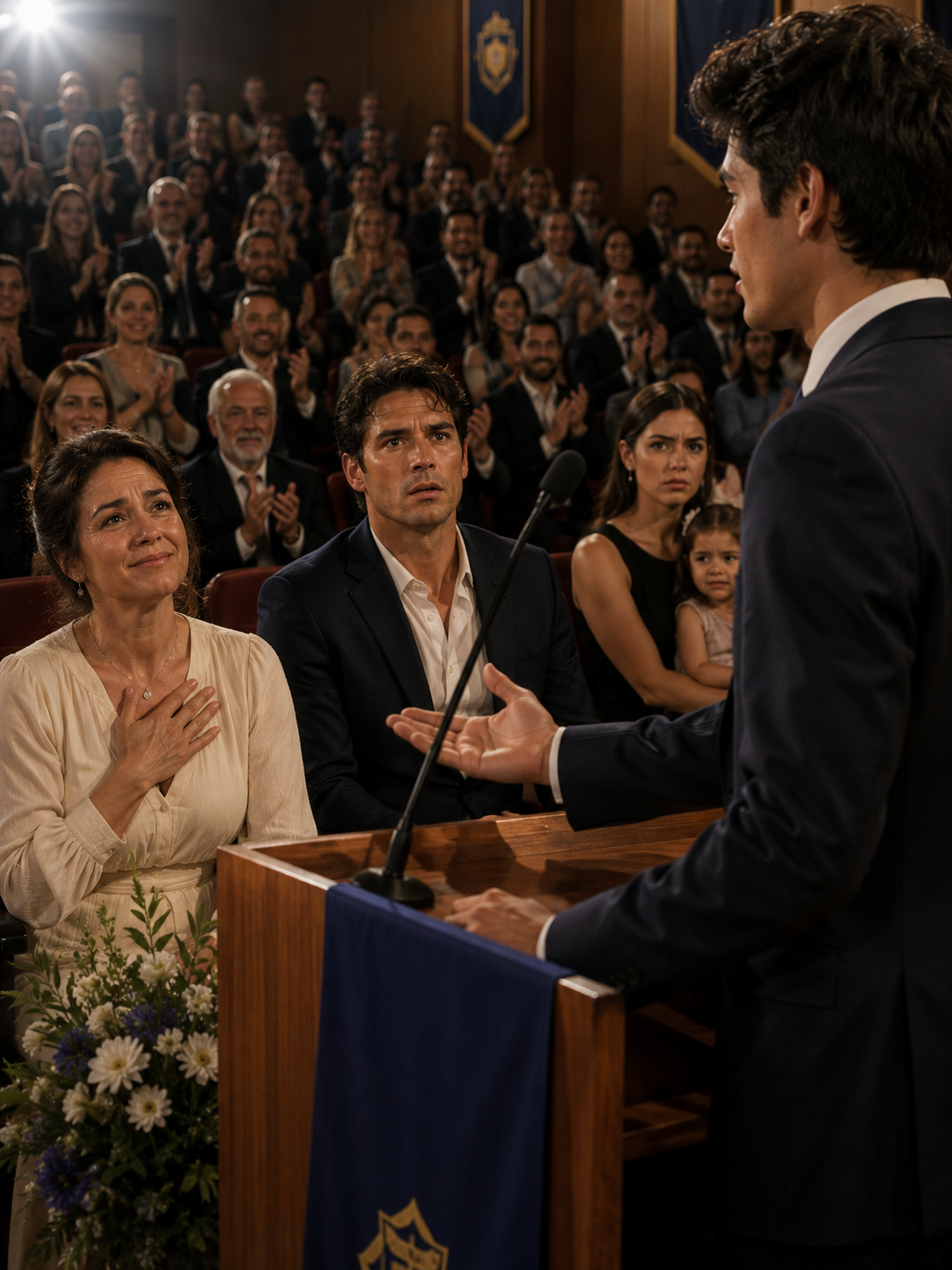
My hand flew to my mouth instantly.
“She had me at forty-one, when people said her life should already be slowing down. Then, when I was three months old, my father decided he was too young to stay.”
The entire auditorium fell silent.
“My mother never taught me to hate him,” Mateo continued steadily. “She told me the truth without teaching me bitterness. She worked while exhausted, smiled while afraid, and built a home where abandonment never became shame.”
Tears blurred my vision.
“For years, I thought losing a parent meant losing part of myself,” Mateo said. “Then I realized something important. When someone walks away, they do not take half of you. They only reveal which half was never truly theirs.”
Then came the sentence that destroyed Andrés in three seconds.
Mateo looked directly toward the back rows and said:
“My father gave me his absence. My mother gave me everything else.”
Silence.
Then thunderous applause exploded across the auditorium.
People stood.
Teachers cried.
Parents clapped.
Students wiped tears from their eyes.
I couldn’t stand at first because my body felt too heavy with pride, grief, relief, and love.
Then Mateo looked directly at me.
So I stood too.
And somehow the applause became even louder.
Not for perfection.
Not for wealth.
For survival.
For invisible sacrifices nobody applauds until years later.
After the ceremony, Mateo found me near the courtyard fountain.
“You didn’t warn me,” I whispered.
He smiled softly.
“If I had, you would’ve made me soften it.”
“I would have.”
“I know.”
Then Andrés approached again.
“You humiliated me,” he hissed.
Mateo looked thoughtful for a moment.
“No,” he replied calmly. “I told the truth publicly. If that embarrassed you, maybe the problem started long before today.”
Valeria stepped forward quietly.
“Andrés… stop.”
That tone in his voice when he snapped at her — I recognized it instantly.
The same tone he once used on me whenever women became inconvenient.
For the first time, Valeria seemed to truly see him.
Mateo noticed their daughter hiding nervously behind her mother.
“Don’t do this in front of her,” he said quietly.
For one second, shame almost reached Andrés.
Almost.
Then pride crushed it.
“Your mother poisoned you against me.”
Mateo went completely still.
“No,” he answered softly. “She protected me from waiting for you forever.”
Andrés had no response.
Because none existed.
Valeria finally took her daughter’s hand.
“We’re leaving.”
There was something final in her voice.
As she walked away, I no longer saw the teenage girl who once “stole” my husband.
I saw another woman finally realizing the cost of believing a man like Andrés.
Andrés stood there looking suddenly smaller.
Not physically.
Spiritually.
Like a man watching every lie he ever told about himself collapse at once.
Then Mateo turned toward me casually and asked:
“Can we go eat now?”
I blinked.
“Right now?”
“I’m starving.”
I burst into real laughter for the first time in years.
Not polite laughter.
Not survival laughter.
Freedom.
We returned to the same pizza restaurant where I had once taken him after his first science fair victory.
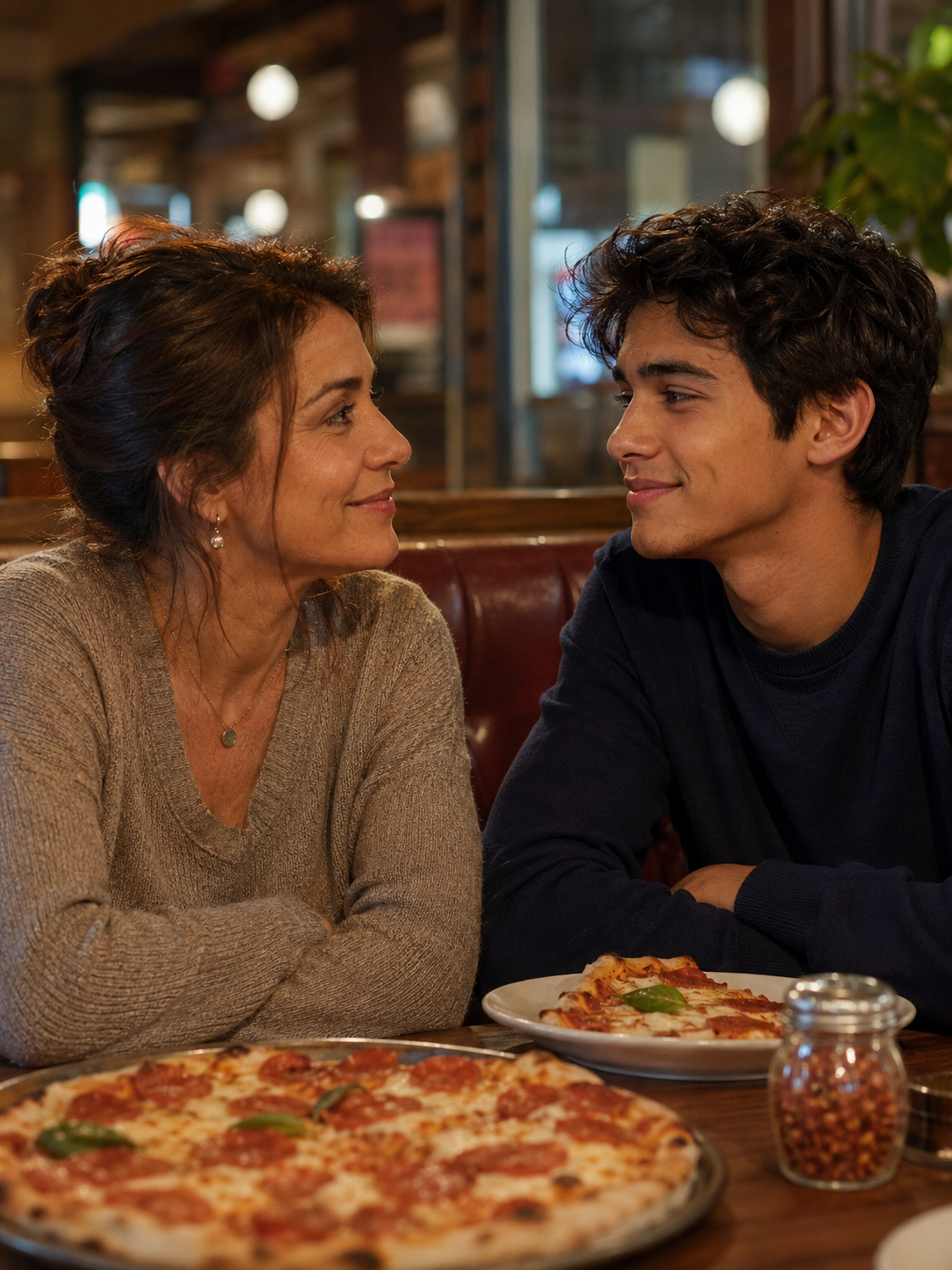
The prices were higher now.
The lights brighter.
But the smell was the same.
Mateo ordered far too much food.
For once, I didn’t calculate the bill in my head first.
Halfway through dinner, I asked softly:
“Do you regret the speech?”
He thought carefully before shaking his head.
“No.”
“Not even a little?”
“I didn’t say it to hurt him,” Mateo replied. “I said it because I spent years believing his leaving made me less. Today I finally said out loud that it didn’t.”
Tears burned my eyes again.
“Please don’t cry into the pizza,” he teased gently.
“I’ll try.”
“You always say that before crying.”
“I gave birth at forty-one,” I said dramatically. “I earned the right.”
He laughed.
And somehow that laugh mattered more than the applause.
That night, Mateo placed his admission folder directly on the kitchen table.
Not hidden inside the blue folder beneath his bed.
Out in the open.
“I don’t need proof anymore,” he said quietly.
“No?”
He shook his head.
“If someone wants to know me, they can show up.”
Something inside my chest loosened after fifteen long years.
Later that night, my phone buzzed.
A message from Andrés.
Lucía, I know I failed. Please let me talk to you.
Once, that text would have shattered me.
Now it only exhausted me.
I typed one sentence back:
Talk to your conscience first.
Then I blocked the number.
A few weeks later, Valeria contacted me too.
Her message was respectful. Honest. Difficult.
I believed many things Andrés told me. I was young, but that doesn’t erase the pain I caused. I’m leaving him. Your son’s words helped me realize I need to protect my daughter from growing up with the same emptiness.
I stared at the message for a long time.
For years, I had blamed her.
But Andrés had not been stolen.
He had walked away willingly.
And eventually she became another woman forced to carry the consequences of believing him.
I replied simply:
Protect your daughter. That’s what matters now.
She answered:
I will.
We never became friends.
Life isn’t that clean.
But I stopped hating her.
And that surprised me most.
Healing didn’t make me softer.
It made me more selective about what pain I carried.
Mateo entered the academy that fall.
On the first morning, I ironed his shirt while he complained dramatically and pretended not to enjoy my attention.
At the gate, he hugged me tightly.
“You okay?” he asked.
“You’re asking me?”
“Yes.”
I looked at him standing there — brilliant, kind, whole despite everything.
“I’m okay,” I promised.
Then he walked through the school gates.
Not away from me.
Forward.
There’s a difference.
Years passed.
Mateo grew into the kind of young man teachers remember forever.
Not because he was perfect.
Because he listened deeply. Spoke thoughtfully. Treated people gently.
Andrés tried contacting him twice more.
Mateo ignored both attempts.
On Mateo’s eighteenth birthday, another letter arrived.
This time Andrés included an old photo supposedly showing himself holding baby Mateo in the hospital.
Except it was fake.
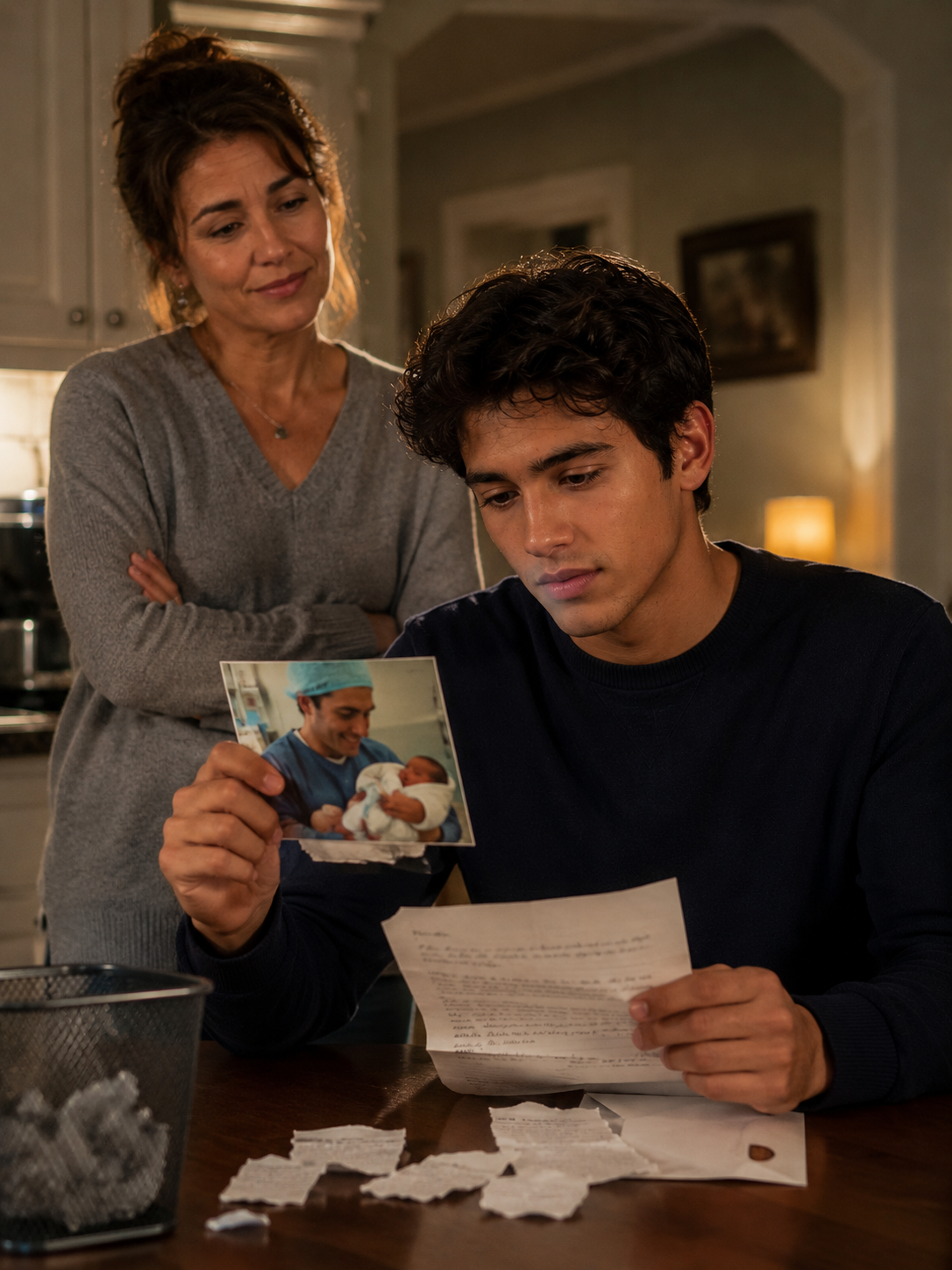
Poorly edited.
Pathetic.
Mateo stared at it for several seconds before laughing bitterly.
“He still wants credit without doing the work.”
Then he tore the letter into tiny pieces and threw them away.
That was when I truly knew my son was free.
Not because he hated his father.
Because he no longer needed him.
Years later, at graduation, Mateo gave another speech.
This time, he warned me first.
He stood tall at the podium while I sat in the front row wearing the same cream blouse because he specifically asked me to.
He spoke about women told their lives started “too late.”
About children from broken homes who still grow up whole.
Then he looked directly at me and said:
“My mother was told she became a mother too late. But she arrived exactly on time for my life.”
That was when I completely lost the battle against tears.
Because fifteen years earlier, Andrés had looked at our newborn son and called him “cute.”
Then he walked away chasing youth, freedom, and a life without responsibility.
But here stood the child he abandoned:
Brilliant.
Kind.
Strong.
Carrying my name.
My sacrifices.
My love.
And his own extraordinary future.
Andrés wanted to “start over.”
I stayed.
And built something that never needed him.
After the ceremony, Mateo placed his diploma carefully into my hands.
“This belongs to you too,” he said softly.
“No, my love. It belongs to you.”
He smiled.
“Then hold it for me for a minute.”
So I did.
I held it the same way I once held him in the hospital.
Carefully.
Gratefully.
Knowing miracles do not always arrive gently.
Sometimes they arrive after years of loneliness, overdue bills, exhaustion, and broken promises.
Sometimes they arrive in the arms of a forty-one-year-old woman everyone called “too late.”
And sometimes, fifteen years later, they stand beneath bright lights and destroy a selfish man’s pride with a single sentence.
Not because they want revenge.
But because truth, when finally spoken by someone who survived it, never needs to scream.
It only needs three seconds.
Note: This story is a work of fiction inspired by real events. Names, characters, and details have been altered. Any resemblance is coincidental. The author and publisher disclaim accuracy, liability, and responsibility for interpretations or reliance. All images are for illustration purposes only.
