
Stories
My Mom Told Me, ‘People Like Us Don’t Become Doctors’—Years Later, She Handed Me a Secret That Broke Me
May
The call came just after midnight.
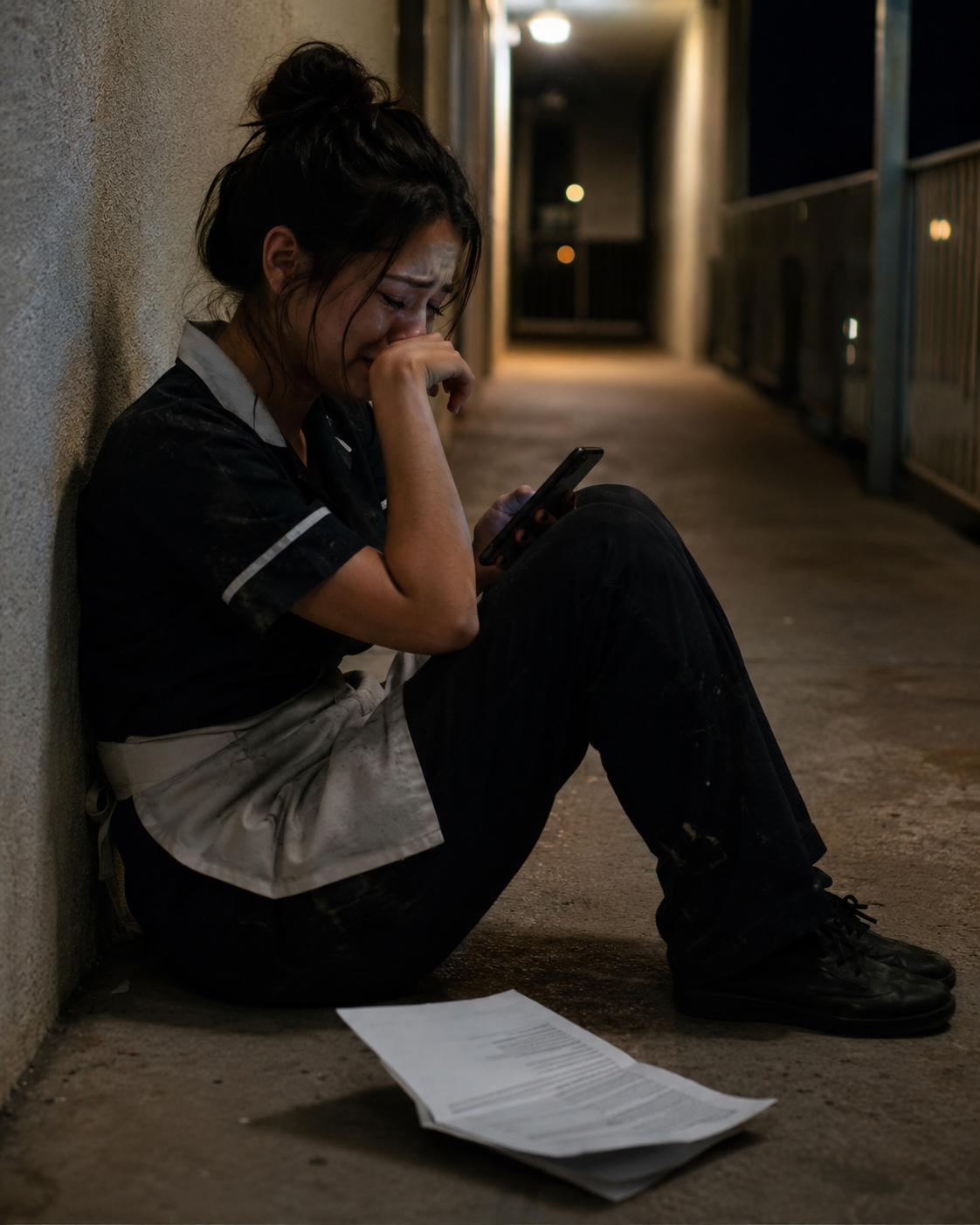
I was sitting in the hallway outside my tiny apartment, still wearing my diner uniform, my feet aching from a twelve-hour shift. My acceptance letter to medical school lay open beside me, creased from how many times I’d reread it.
I should’ve felt victorious.
Instead, I was crying so hard I could barely breathe.
The financial aid package had arrived that afternoon, and it wasn’t enough. Not even close. Tuition, books, housing, lab fees—it stacked up into a number so impossible it made my chest hurt.
I stared at my phone for almost an hour before calling my mother.
When she answered, I broke instantly.
“Mom,” I whispered, wiping my face with the sleeve of my uniform. “I got in.”
There was silence. Then a surprised laugh.
“You did?”
“I did.” I swallowed hard. “But I can’t afford it. I just… I need help. Even a little. I’ll work for the rest. I promise. I just can’t do all of it alone.”
I remember hearing the television in the background. Dishes clinking. Normal life continuing while mine felt like it was collapsing.
Then she sighed.
Not cruelly. Not angrily.
Just tired.
“Honey,” she said, “people like us don’t get dreams like that.”
I froze.
“You’re smart, but medical school?” she continued gently. “Be realistic. Go to community college first. Or work full-time for a while. Maybe nursing assistant classes. Something stable.”
“I don’t want something stable,” I said quietly. “I want this.”
“You can’t build your life on wanting.”
The words hit harder than yelling ever could.
I begged for another ten minutes. She kept offering alternatives. Practical choices. Smaller dreams.
Finally, I hung up before she could hear me sob.
That night, something inside me hardened.
If nobody believed I could become a doctor, then I would drag myself there alone.
And I did.
I worked double shifts at the diner and cleaned offices overnight on weekends. I slept four hours a night if I was lucky. I learned which vending machines gave extra snacks when tilted hard enough. I stitched together scholarships, emergency grants, and student loans with the desperation of someone trying to hold shut a sinking ship.
There were nights I studied anatomy while icing swollen feet.
Nights I cried in hospital stairwells after failing exams by two points.
Nights I almost quit.
But every time I remembered her voice saying, “People like us don’t get dreams like that,” anger carried me further than hope ever could.
Years passed.
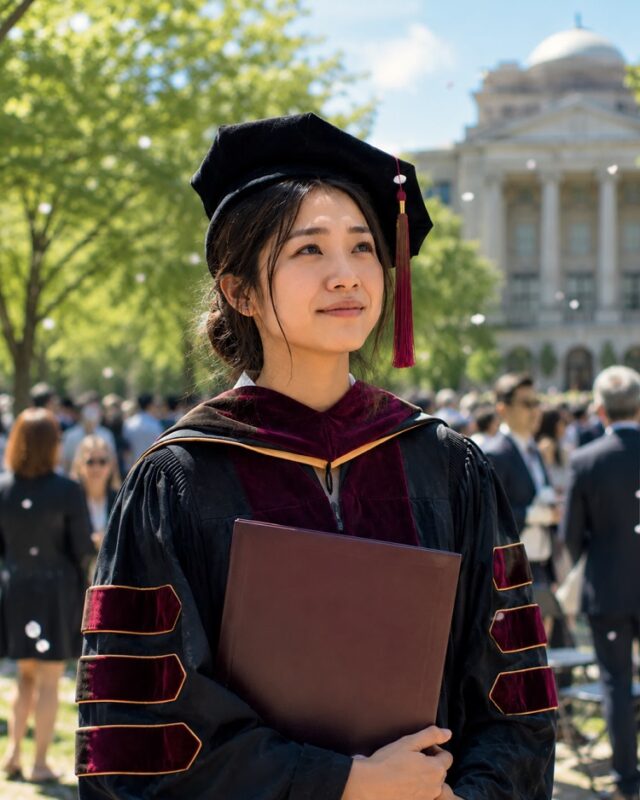
Then graduation arrived.
A doctorate in medicine.
Proof that I had survived.
A month before the ceremony, my mother called.
“I was thinking,” she said carefully, “maybe I could come to graduation.”
I laughed before I could stop myself.
“You want to celebrate now?”
“I know I wasn’t—”
“You let me drown,” I snapped. “Don’t come watch me swim.”
The silence on the line stretched long and thin.
Then she said softly, “Okay.”
No argument. No defense.
Just okay.
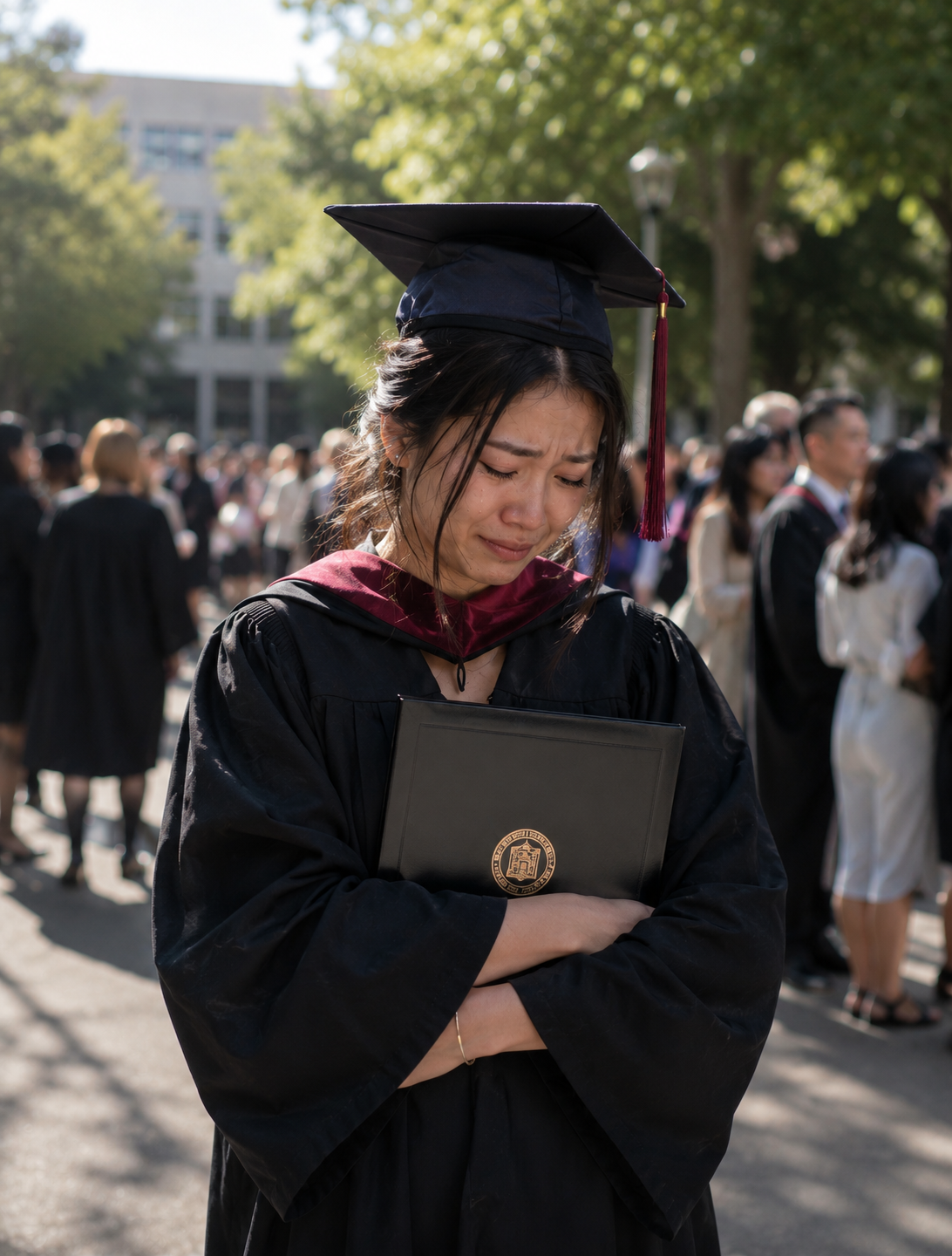
By graduation morning, I had convinced myself I didn’t care.
Campus overflowed with proud families carrying flowers and balloons. Parents cried into phones while taking blurry pictures. Little kids sat on shoulders screaming graduates’ names across the lawn.
I sat among my classmates in my black gown and crimson hood, pretending not to notice how many empty seats were waiting for me.
Then, halfway through the ceremony, I looked up.
And saw her.
She stood near the back fence beneath a tree, away from the celebrating crowds.
Older than I remembered.
Smaller somehow.
Not waving. Not trying to get my attention.
Just watching quietly, like she knew pride was something she no longer had the right to claim.
My chest tightened, but I looked away.
After the ceremony ended, chaos exploded around us—laughter, cameras flashing, professors hugging students.
I was stuffing my diploma into its case when someone tapped my shoulder.
I turned.
Mom.
For a second, neither of us spoke.
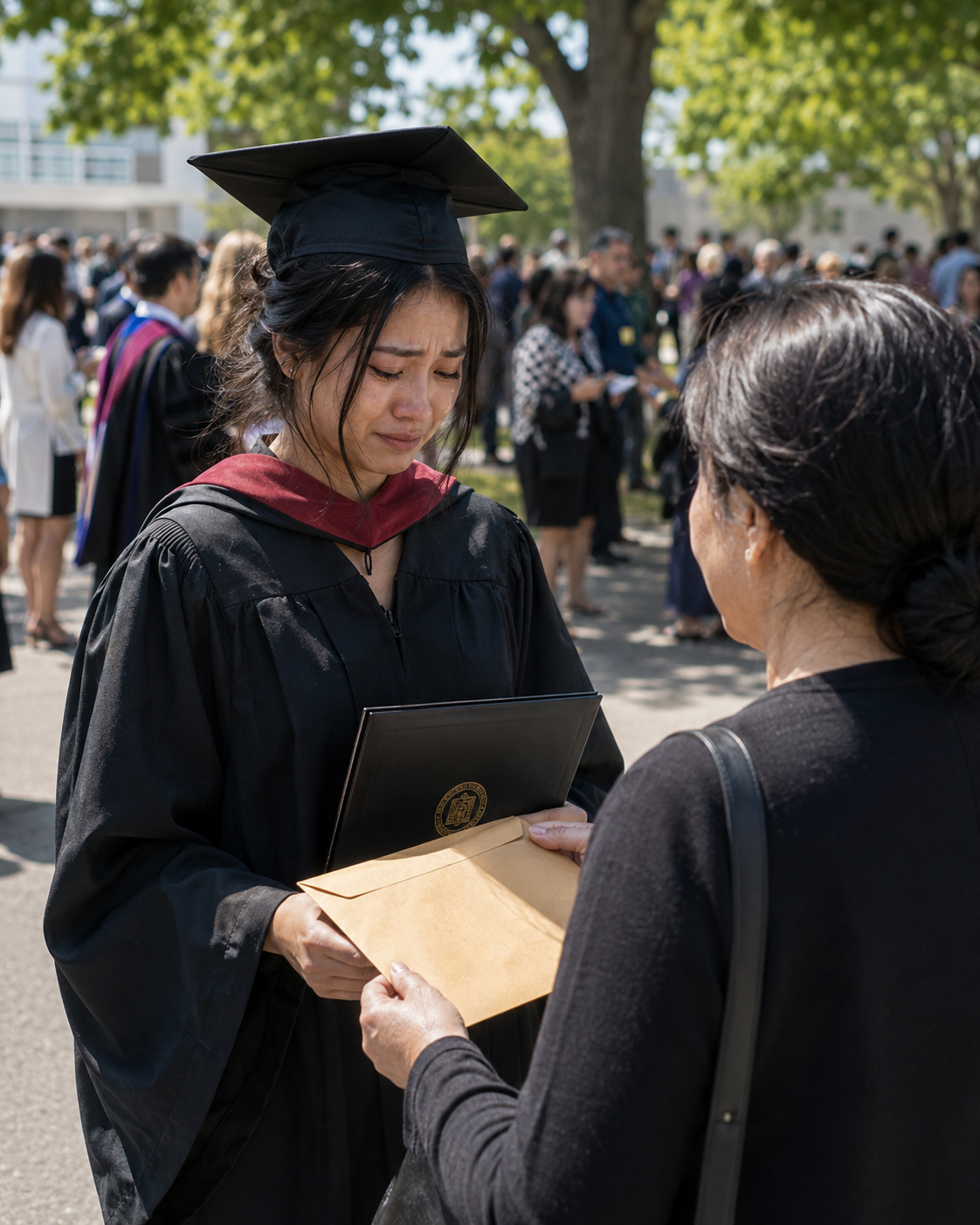
Then she held out a plain manila envelope.
“I won’t stay,” she said softly. “I just wanted you to have this.”
I almost refused it.
But something in her expression stopped me.
I opened the envelope slowly.
Inside was a receipt.
At first, the numbers didn’t make sense.
Then my stomach dropped.
Paid in full.
My entire final year of tuition.
Every cent.
I stared at it, confused.
That year had been brutal financially. I’d believed a random combination of aid adjustments, scholarships, and deferred fees had somehow saved me.
My hands started shaking.
A folded note slipped from the envelope.
The handwriting was careful and uneven.
“I knew you wouldn’t take help from me. I also knew I was wrong back then. I’ve been saving since the night you hung up on me. I’m proud of you… especially because you did it anyway.”
I read it twice.
Then a third time.
Suddenly all the anger I’d carried for years felt heavier than before.
Not because it disappeared.
But because now it had somewhere to go.
“I didn’t know,” I whispered.
She nodded once.
“I know.”
Later, I learned things she never told me herself.
That she’d taken extra factory shifts.
That she sold her old jewelry.
That she followed every school update online, reading articles about student awards and quietly printing photos from the university website.
That she talked about my medical degree at work like it was a miracle she still couldn’t believe belonged to her daughter.
But she never asked me to forgive her.
Never tried to erase what she’d said that night.
She simply corrected the one thing she still could.
Quietly.
Without needing credit.
And standing there in my graduation gown, holding the proof of her sacrifice in trembling hands, I realized something I hadn’t understood before:
Sometimes love arrives too late to look perfect.
Sometimes it comes from people who failed you first.
And sometimes the deepest apologies are never spoken at all.
Note: This story is a work of fiction inspired by real events. Names, characters, and details have been altered. Any resemblance is coincidental. The author and publisher disclaim accuracy, liability, and responsibility for interpretations or reliance. All images are for illustration purposes only.
