
Stories
I Signed The Divorce… And While He Rushed To Celebrate His “Baby Boy,” The Doctor Quietly Said: “The Dates Don’t Match.”

May
Five minutes after signing the divorce papers, I looked at my husband and said quietly, “Go celebrate the baby you think is yours. I’m taking the kids and leaving the country.”
Rodrigo froze, the pen still in his hand.
For the first time in months, it seemed like he actually heard me.
We sat in a mediator’s office in Mexico City—cold coffee on the table, stacks of stamped documents, and the kind of humiliation that no longer screams because it has been repeated too many times.
My name is Valeria Salgado.
After nine years of marriage, two children, and countless nights pretending not to notice the messages he hid on his phone, I had just stopped being his wife.
He gave a dry laugh.
“Don’t start with drama, Valeria. It was already difficult convincing my family you shouldn’t fight for things that aren’t yours.”
His sister Patricia smirked beside him, arms crossed.
“You should be grateful,” she added. “You get the kids without making a scene. My brother finally gets a real family. Fernanda is giving him a son.”
A son.
As if Mateo, seven years old, didn’t exist.
As if Lucía, five, was just… temporary.
Rodrigo’s phone rang before the mediator finished organizing the papers.
His face softened instantly.
“Yes, Fer. It’s done,” he said. “We’re heading to the clinic. Today we finally see our heir.”
Our heir.
I felt nothing.
Not because it didn’t hurt—but because wounds repeated too many times eventually stop bleeding.
I placed the keys to the Polanco apartment on the table.
“I moved everything out yesterday.”
He smiled, satisfied.
“Good. You finally understood.”
Then I placed the children’s passports beside them.
His smile disappeared.
“I understood something else too,” I said calmly. “We’re leaving for Madrid today. Our flight is in less than two hours.”
Patricia laughed loudly.
“With what money? Planning to sell tamales at the airport?”
Rodrigo stood up abruptly.
“You can’t take them like that.”
“Yes, I can,” I replied. “You signed the travel authorization three weeks ago. And you also signed that you wouldn’t contest custody.”
He flipped through the documents frantically.
Too late.
Outside, a black SUV pulled up.
A driver stepped out.
“Mrs. Valeria, Attorney Esteban is waiting at the airport. The file is complete.”
Rodrigo narrowed his eyes.
“What file?”
I took Mateo’s hand, lifted Lucía, and looked at him one last time.
“The one you should have cared about before humiliating your own children.”
He stepped closer.
“Valeria… what did you do?”
I smiled faintly.
“Go to the clinic, Rodrigo. You don’t want to miss what the doctor says.”
Then I walked out.
No tears.
No hesitation.
No looking back.
He still believed he was about to meet his “son.”
But less than an hour later, inside a private clinic, the doctor would study the ultrasound, check the dates twice, and say:
“The dates don’t match, Mr. Rodrigo.”

The mansion doors closed behind Carmen like a verdict.
She and Alejandro stood on the steps, hand in hand, with nothing left behind them except power, marble, and a mother who had just cut him off.
Ahead—only the street.
Alejandro looked at her, steady despite everything.
“Go back,” she whispered.
“No.”
“She’ll take everything.”
“She already has.”
Tears spilled down her face.
“You don’t understand. I can survive poverty. You can’t.”
He wiped her cheek gently.
“Then teach me.”
That broke her.
Still, love didn’t pay rent.
“I’m going home,” she said. “To Ecatepec.”
“I’m coming with you.”
He was barefoot.
She handed him her sandals.
“They won’t fit,” he said.
“Neither will poverty,” she replied. “Start practicing.”
Her mother met them at the door—small, strong, and furious.
“Do you love my daughter?” she demanded.
“Yes.”
“Love doesn’t impress me. What will you do now that your mother took everything?”
Alejandro answered simply:
“Work.”
He didn’t know how—but he meant it.
Beatriz called that night.
“You have twenty-four hours to return my son,” she said coldly.
“He’s not an object.”
“He’s confused. You’re ambitious. Return him, and I’ll pay for your future. Refuse—and your family will learn the cost of touching a Mendoza.”
Carmen stood in the kitchen, trembling.
Alejandro stepped forward.
“She called you.”
“Yes.”
“She threatened your family?”
“Yes.”
He reached out.
“Give me the phone.”
“No. She doesn’t get proof that we’re afraid.”
For the first time, they stood as equals.
The next day, the attacks began.
Her bank account froze.
Her sister’s job was questioned.
Her landlord demanded sudden payments.
Her school account was blocked.
“She’s burning everything around us,” Carmen whispered.
Alejandro took her hand.
“You’re not fighting alone.”
But he had nothing.
No money.
No power.
No safety net.
Only choice.
He found work with Martín, a delivery business owner.
“Can you lift boxes?” Martín asked.
“I can learn.”
That week nearly broke him.
He came home exhausted, blistered, silent.
On Friday, he held his first earned pay in his hands like it meant something real.
He placed it on the table.
“For groceries.”
Not as performance.
As truth.
Then the legal attack came.
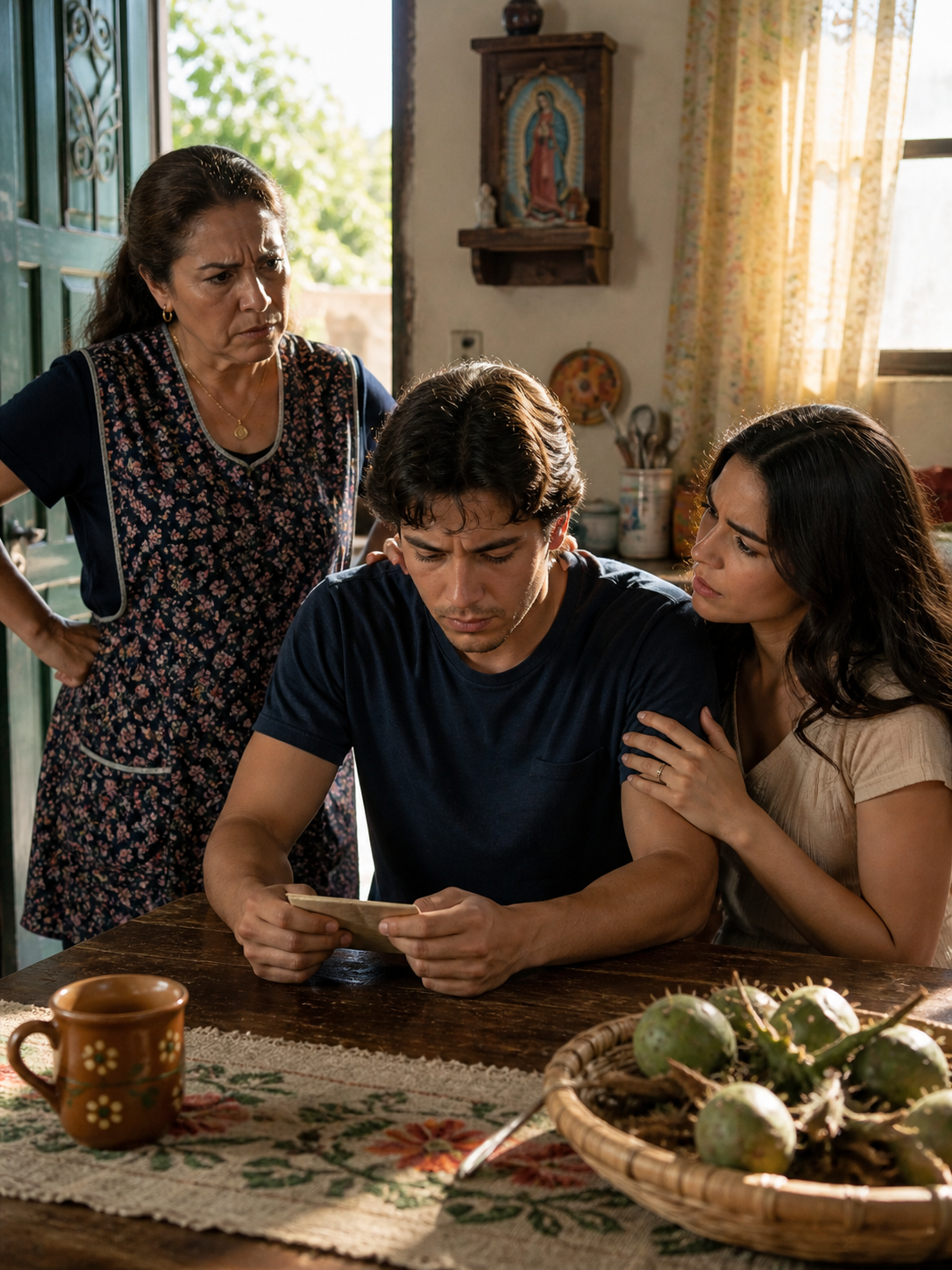
Beatriz accused him of theft.
Police arrived.
Neighbors watched.
Alejandro stood calm—but shaken.
“She can make this real,” he said.
Carmen answered,
“Then we find out what she’s afraid of.”
That led them to Rosa.
And to the truth.
His father’s letter.
His inheritance—stolen.
“She didn’t cut you off,” Carmen said.
“She was never supposed to control it.”
Alejandro broke quietly.
“My father already gave it to me.”
The fight moved to court.
Not as a son begging—but as a man demanding truth.
“My relationship is not on trial,” he said. “My mother’s documents are.”
That changed everything.
In court, Carmen stood firm.
When asked about their differences, she said:
“Yes. His family had money. Mine had chairs at the table for people they loved.”
Silence filled the room.
Alejandro looked at her like she had given him air.
Rosa testified.
Documents surfaced.
Truth cracked through control.
Then Alejandro stood.
“My mother taught me family was something I could be locked out of. Carmen taught me family tells the truth—even when it hurts.”
He turned to Beatriz.
“And I am asking to be free.”
That was the moment she lost him.
Not legally.
But completely.
Months later, the ruling came.
Inheritance restored.
Control stripped from Beatriz.
Truth acknowledged.
Alejandro didn’t smile.
He closed his eyes.
And breathed.
He didn’t return to the mansion.
Instead, he transformed it.
Into a residence for students.
For girls who worked and studied.
For futures that once would have been invisible.
Carmen became:
Program Director.
When Beatriz returned, she said quietly:
“I underestimated you.”
“Yes,” Carmen replied.
“I thought you wanted his money.”
“I wanted his heart. The money was what you used to control it.”
Alejandro added,
“You lost me trying to own me.”

Years later, standing in the same hallway where everything began, Alejandro asked:
“Do you regret it?”
Carmen smiled.
“I regret how much it hurt. But not telling the truth.”
He took her hand.
“I don’t regret leaving.”
Because in the end, they didn’t win by revenge.
They won by rebuilding.
Love didn’t erase the past.
It forced them to face it—honestly.
And choose each other anyway.
Note: This story is a work of fiction inspired by real events. Names, characters, and details have been altered. Any resemblance is coincidental. The author and publisher disclaim accuracy, liability, and responsibility for interpretations or reliance.
