
Stories
After She Called Me “An Old Witch,” I Took Back My House—For Good

May
After a family dinner, while I stood at the sink washing dishes, my daughter-in-law leaned in close and whispered, “You old witch, I only tolerate you because of my husband.”
I let out a soft laugh and replied calmly, “Don’t worry—you won’t be seeing me anymore.”
The very next day, I changed the locks.
They had called me a burden in my own home—the same home where I had once given them shelter.
But what truly shattered me wasn’t the insult. It was the realization of how much of myself I had already given away.
The first light of dawn stretched across the Folsom sky, a pale haze settling over the hills. Inside my quiet kitchen, a feeling I had ignored for years finally surfaced.
At sixty-five, I woke early out of habit. Age and restlessness had shaped that rhythm. Sitting on the edge of my bed, I watched the highway come alive with commuters heading toward Sacramento.
For thirty-two years, George had been one of them.
Then he was gone.
And everything shifted.
This apartment—nearly thirteen hundred square feet—had once been our dream. We bought it in the eighties, when California was still affordable, and built a life inside it piece by piece.
Now, it felt like a battlefield.
And I, Adelaide, was losing.
The kitchen was spotless, as it had always been. Years as an emergency nurse had taught me that order was the only way to survive chaos.
I set the kettle on and reached for my small indulgence—Earl Grey tea from a shop near my old workplace.
Melinda, my daughter-in-law, hated it. She preferred her capsule coffee and never failed to show her distaste.
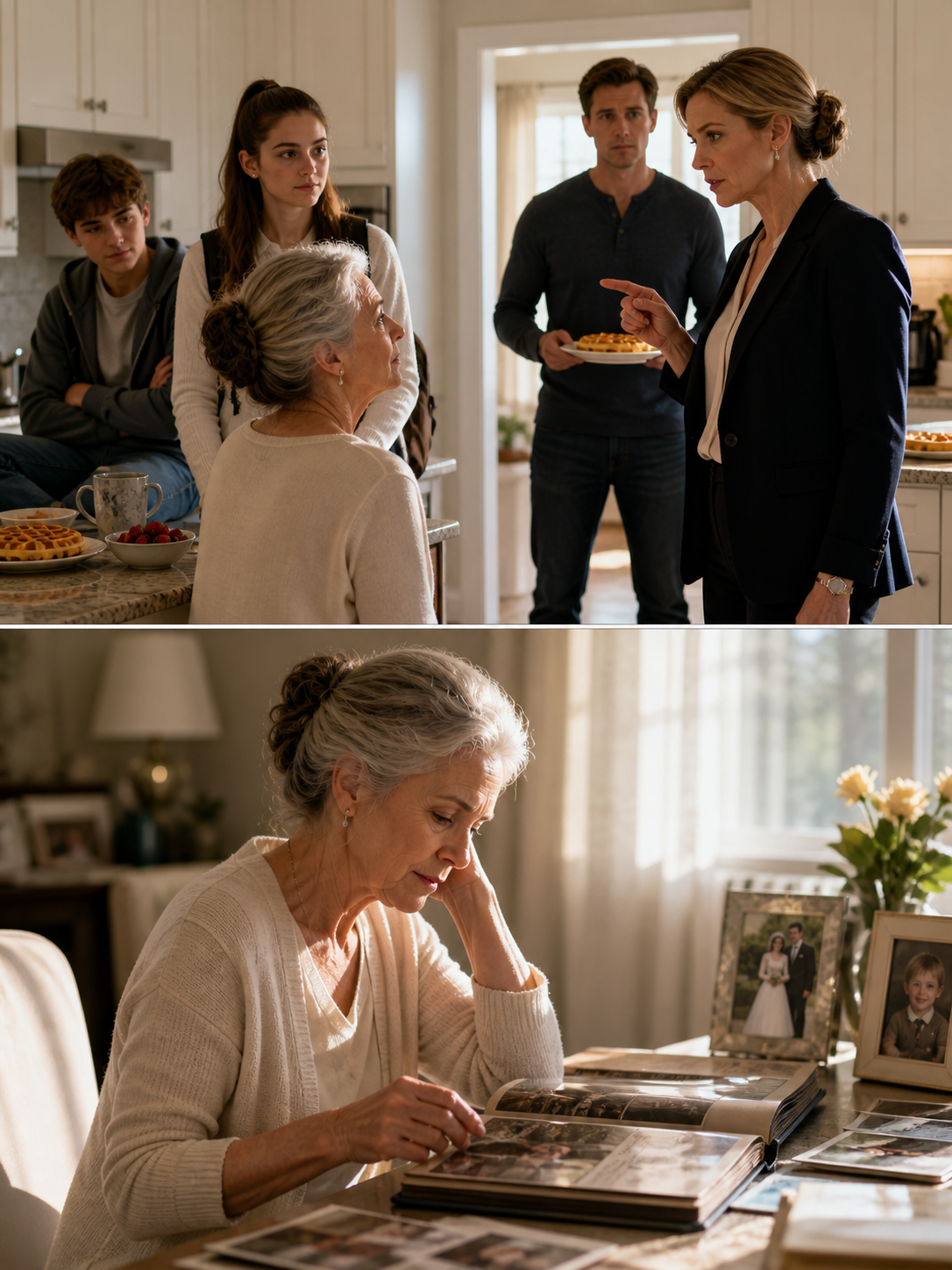
While the water boiled, I mixed batter for waffles.
Phillip had loved them since he was a boy. Even now, I made them every Saturday—my quiet way of holding onto a version of our family that no longer existed.
Jace shuffled into the kitchen, headphones on, eyes glued to his tablet. I greeted him and told him breakfast would be ready soon.
He nodded without looking up.
I didn’t take it personally. At least he wasn’t openly hostile like his sister could be.
But I knew he saw everything.

Skyler entered moments later, already dressed, already composed. At seventeen, she looked so much like her mother—but her eyes, those soft brown eyes, belonged to Phillip… and to George.
She asked about her sweater. I told her where it was.
She snapped at first, then softened, apologizing quickly before rushing off to grab it.
She returned, smiling, kissed my cheek, and called me the best before stealing a waffle and heading out.
Moments like that reminded me not everything was lost.
Then Melinda appeared.
She stood in the doorway, sharp and polished, addressing me by name—never “Mom.” Her tone carried authority, not warmth.
She accused me of moving her things again. I calmly explained I had only cleaned.
She didn’t believe me.
Skyler corrected her. Jace snorted quietly.
Melinda ignored them both.
Phillip entered soon after, drawn by the smell of waffles. For a brief moment, he looked like my little boy again.
But that moment passed quickly.
Melinda returned, holding the missing hand cream, announcing it had been exactly where Skyler said.
Then she looked at me and said, “Don’t touch my things. Everyone needs personal space.”
I nodded silently.
My personal space had disappeared long ago.
They made plans for the evening without asking me—only informing me I’d be watching the kids.
I smiled and agreed.
There was no point arguing anymore.
Later, in my room, I flipped through old photo albums—our wedding, Phillip’s childhood, the life George and I built together.
Back then, everything felt solid.
Now it felt like it had quietly eroded.
After George died, I kept going. I worked two more years before retiring.
Then Phillip lost his job.
He called me, asking if they could stay for “just a year.”
I said yes without hesitation.
Three years later, they were still here.
They had sold their house to cover debts—gambling debts.
Phillip found work again, but everything had changed.
At first, I only asked them to help with utilities.
Gradually, they took over everything.
One afternoon, I met my friend Rosie at our usual café.
She didn’t let me pretend.
She saw through everything.
She reminded me who I used to be—the woman who had saved lives without hesitation, who stood up to danger without fear.
I barely recognized that woman anymore.
But something inside me stirred.
That evening, I came home to silence—and then to voices behind a closed door.
I wasn’t meant to hear it.
But I did.
Phillip had lost fifteen thousand dollars gambling.
Again.
He promised he’d win it back.
Melinda laughed bitterly.
She said his “system” was exactly why they were living in my home.
I stood frozen in the kitchen, realizing everything I had believed was a lie.
There had been no overtime.
Only secrets.
Only debt.
That night, dinner passed in silence.
Later, Melinda returned with a friend, laughing loudly.
They assumed I wouldn’t hear.
They assumed I didn’t matter.
They called me a burden. A stereotype. A problem they had to tolerate until they could afford their own place.
I sat on my bed, hands trembling.
These hands had saved lives.
And now, to them, they were nothing more than tools.
Something inside me finally broke.
A week later, Melinda came home early and announced she needed a home office.
She wanted my room.
She suggested I move into the storage space.
I asked Phillip if he agreed.
He lowered his eyes and said it was temporary.
That was the moment everything became clear.
This was no longer about space.
It was about respect.
And I had none.
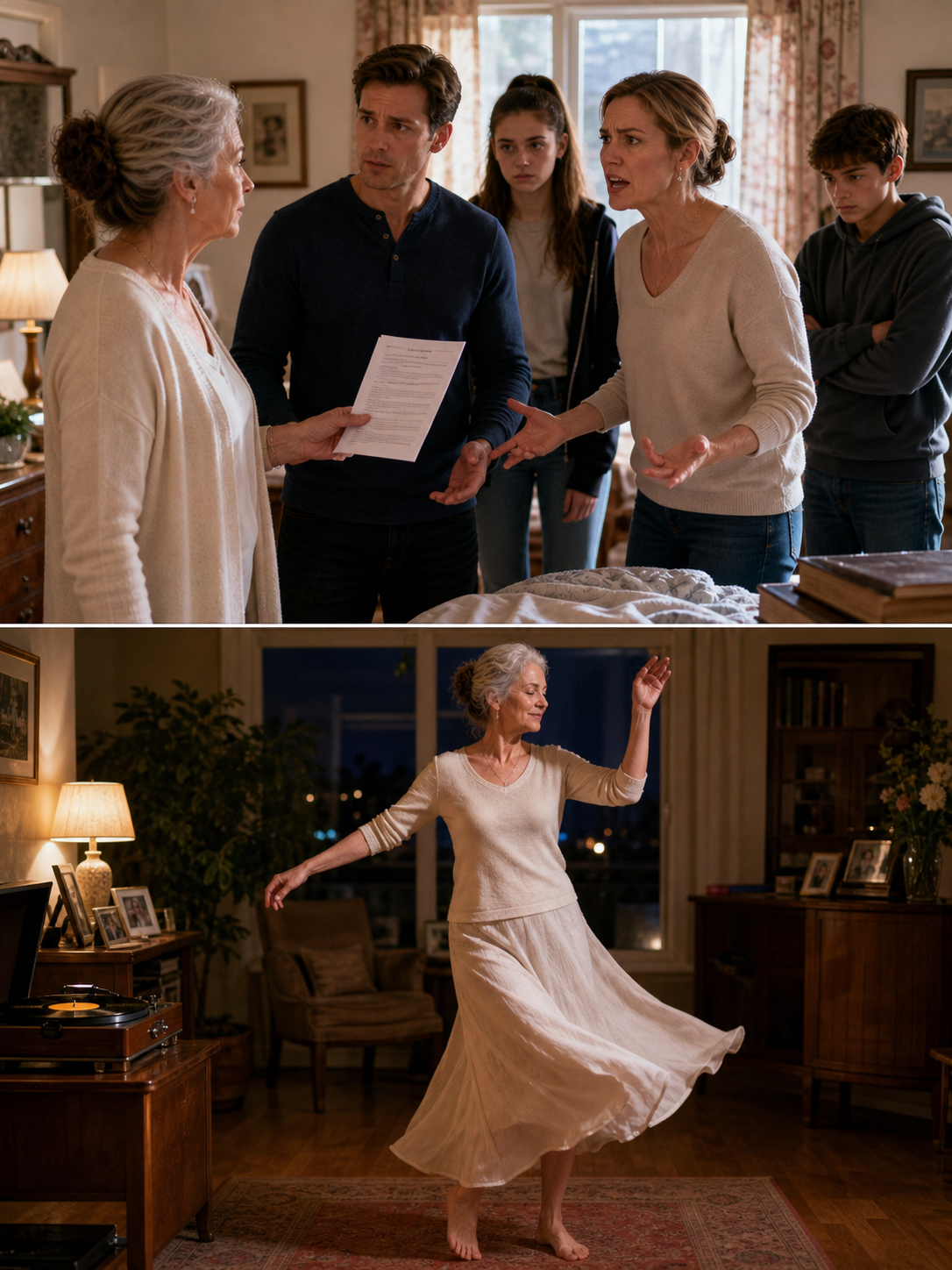
The next morning, they started moving furniture without my consent.
I told them to stop.
For the first time, I didn’t back down.
Melinda mocked me.
She called my memories junk.
She grabbed one of George’s records.
I stopped her.
Then she said it.
“This is our home now. You’re just an old woman clinging to the past.”
The silence that followed was absolute.
I looked at her—and for the first time, I didn’t feel small.
I reminded her whose house it really was.
Who had paid for it.
Who had given them shelter.
And then I said it clearly:
“If you don’t like it, you can leave.”
That night, something inside me settled.
For the first time in years, I felt calm.
The next day, I went to the bank.
Three payments left on the mortgage.
Then I went to a lawyer.
He confirmed what I already knew.
I had every right to take my home back.
I spent a week with Rosie.
When I returned, I handed Phillip an official notice.
Thirty days.
Melinda screamed.
Phillip followed her out.
But Skyler and Jace stayed.
They chose me.
That evening, I put on one of George’s old jazz records.
And for the first time in years—
I danced.
And I realized something I had almost forgotten.
I wasn’t the woman they had reduced me to.
I was still me.
Note: This story is a work of fiction inspired by real events. Names, characters, and details have been altered. Any resemblance is coincidental. The author and publisher disclaim accuracy, liability, and responsibility for interpretations or reliance.
