
Stories
Six Kids, No Rest, And A Cheating Husband—Until An Entire Neighborhood Stepped In
May
I didn’t mean to get involved.
At first, Lisa was just my neighbor—the woman across the street with the always-tired smile and the baby on her hip. Then came another baby. And another. Over the years, I watched her belly grow, her shoulders slump, and the light in her eyes slowly dim.
Six pregnancies. Six children.
And somehow, it always looked like she was carrying more than just the kids.
Her husband, Mark, was rarely around. When he was, he moved through life like nothing weighed on him—laughing loudly, leaving early, coming back late. Meanwhile, Lisa was always in motion: pushing a stroller with one hand, holding a toddler with the other, calling after two more running down the sidewalk.
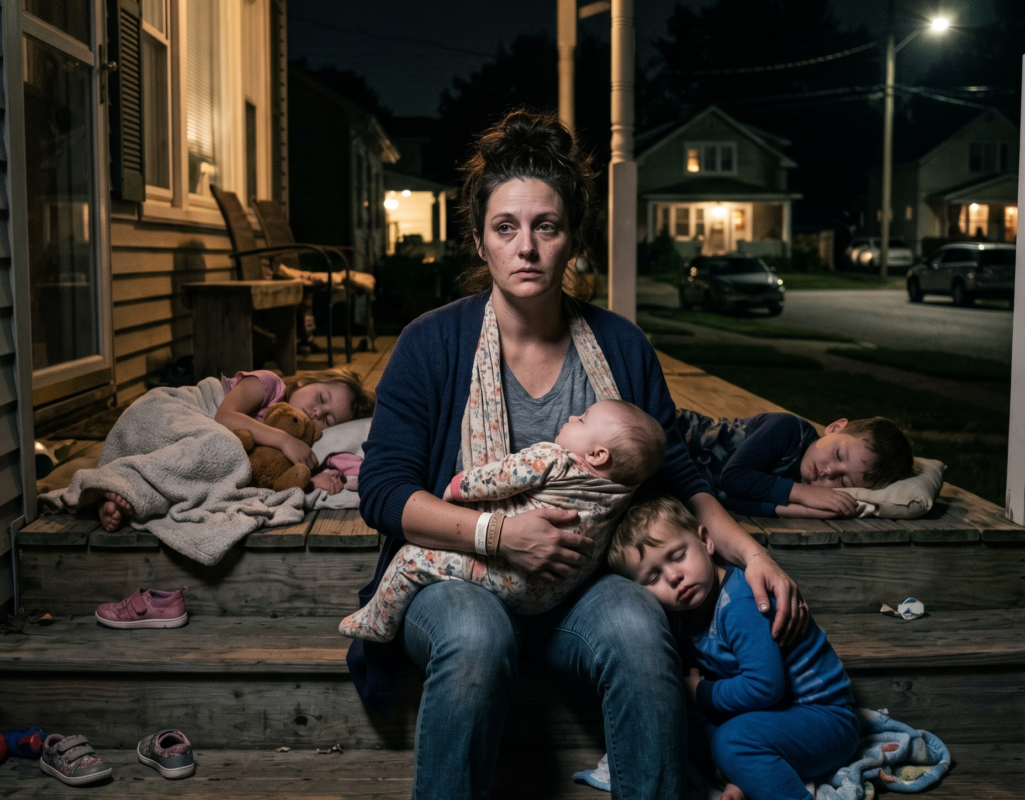
Sometimes I’d see her sitting on the porch steps late at night, one child asleep against her chest, another curled beside her. Her eyes would be open, but distant. Like she hadn’t had a moment to herself in years.
I told myself it wasn’t my business.
Until the day I saw Mark at a café across town.
He wasn’t alone.
He was leaning in close to a young woman—too close. His hand rested comfortably on her waist, and when she laughed, he kissed her like it was second nature.
I froze.

For a moment, I felt sick—not just from what I saw, but from knowing what waited back home for Lisa. The sleepless nights. The endless responsibilities. The quiet loyalty.
I could have gone straight to her.
But something stopped me.
Because the truth was—Lisa wasn’t just being betrayed. She was already broken from exhaustion. And dropping that truth on her in that state… it would shatter her.
So instead, I made a different choice.
I knocked on Mrs. Carter’s door that evening.
“Can I ask you something… unusual?” I said.
That conversation turned into another. And another. Within days, I had spoken to nearly everyone on our street. What I asked wasn’t small—but neither was what Lisa had been carrying all these years.
We created a plan.
One by one, neighbors volunteered. Each family would take the kids for a full day. Meals would be covered. A local salon owner—who had seen Lisa come in once with tangled hair and leave before even sitting down—offered a full spa day. Someone else brought clothes. Another arranged free dinners at a nearby restaurant.
We didn’t tell Lisa right away.
We prepared everything first.
Then, one quiet Sunday afternoon, we showed up at her door—six of us, standing there with schedules, envelopes, and a simple message.
“You get a week,” I told her softly. “Just for you.”
At first, she didn’t understand.
Then her hands started shaking.
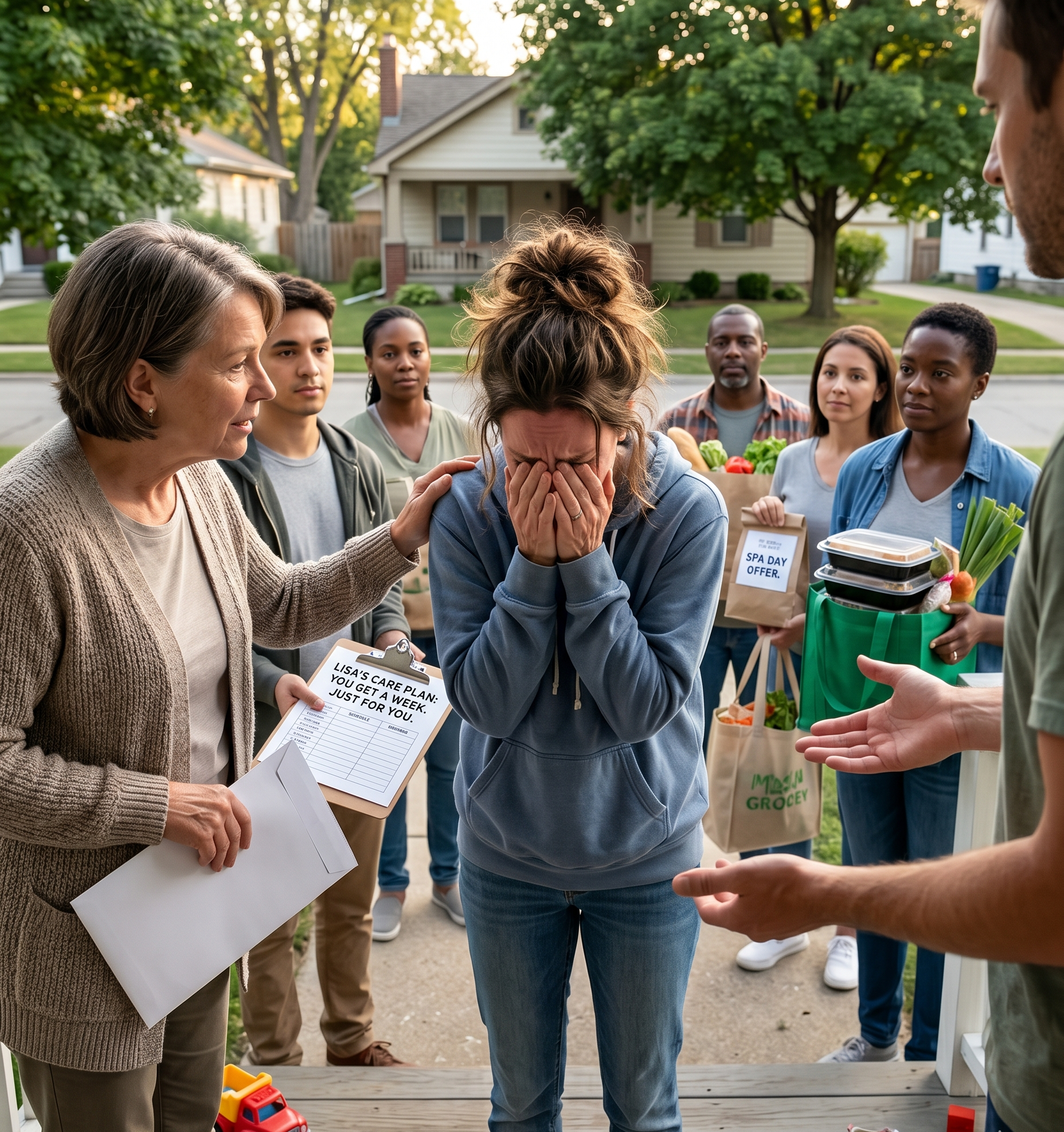
“A week… without the kids?” she whispered.
“We’ve got them,” Mrs. Carter said gently. “All of us.”
Lisa’s lips trembled. And then, just like that, she broke down—not the quiet kind of crying she was used to, but deep, uncontrollable sobs. The kind that come from years of holding everything in.
“No one’s ever…” she tried to speak, but couldn’t finish.
So we didn’t let her.
We just hugged her.
That week changed her.
By the second day, she looked lighter. By the fourth, she laughed—really laughed—for the first time I’d ever heard. By the end of the week, she stood straighter, her eyes clearer, her voice stronger.
She looked like herself again.
Or maybe, like someone she hadn’t had the chance to be in a very long time.
That’s when I knew.
That’s when I told her.
We sat in my living room, the afternoon sun spilling across the floor. My hands felt heavy as I passed her the photos. I didn’t say much—just enough.
“I didn’t want you to find out when you were too tired to stand,” I said quietly.
She stared at the images for a long time.
Her face didn’t crumble the way I expected. Instead, something steadier took its place. Pain, yes—but also clarity.
“I think… I’ve known,” she said finally. “I just didn’t have the strength to face it.”
She set the photos down.
“But now I do.”

The divorce wasn’t easy. Nothing about it was.
But she didn’t go through it alone.
We kept our promise.
The neighborhood rotated childcare. Meals still showed up at her door. Someone always checked in. Little by little, Lisa began to rebuild—not just her life, but herself.
One afternoon, I noticed her sitting outside with yarn in her hands, carefully knitting something soft and bright.
“I used to love this,” she said, smiling. “I forgot.”
That small moment turned into something bigger.
She started making scarves. Then blankets. Then custom pieces. People began asking to buy them. Orders came in. Slowly, she built something that was hers—something no one could take away.
Now, when I see her, she still has six kids.
But she also has rest.
She has purpose.
She has herself.
And sometimes, when we sit together in the quiet after the kids have gone to bed, she’ll look around the street—the same street that once just watched her struggle—and smile.
“It took a whole neighborhood,” she once said, “to remind me I mattered.”
I think about that a lot.
Because sometimes, kindness isn’t just a gesture.
Sometimes, it’s a lifeline.
And sometimes, it’s the beginning of someone finally choosing themselves again.
Note: This story is a work of fiction inspired by real events. Names, characters, and details have been altered. Any resemblance is coincidental. The author and publisher disclaim accuracy, liability, and responsibility for interpretations or reliance. All images are for illustration purposes only.
