
Stories
Desperate and Broke, I Sold My Grandmother’s Necklace—What Happened Next Changed My Life Forever
Apr
After the divorce, I walked out with nothing but a cracked phone, two trash bags of clothes, and my grandmother’s old necklace.
My husband didn’t even try to hide it. Two weeks after I lost the baby, he said he “needed something lighter” in his life. Something “less heavy.” That “something” turned out to be a twenty-three-year-old with perfect hair and no history with him.
I remember standing in the doorway of what used to be our apartment, holding my bags, thinking, So this is what starting over feels like.
It didn’t feel brave.
It felt like falling.
For weeks, I survived on diner tips and stubbornness.
I worked double shifts, smiled through exhaustion, and learned how to stretch a single meal into two. At night, I lay on my thin mattress listening to the hum of the city and the echo of everything I had lost.
The only thing I never touched was the old shoebox under my bed.
Inside it was my grandmother’s necklace.
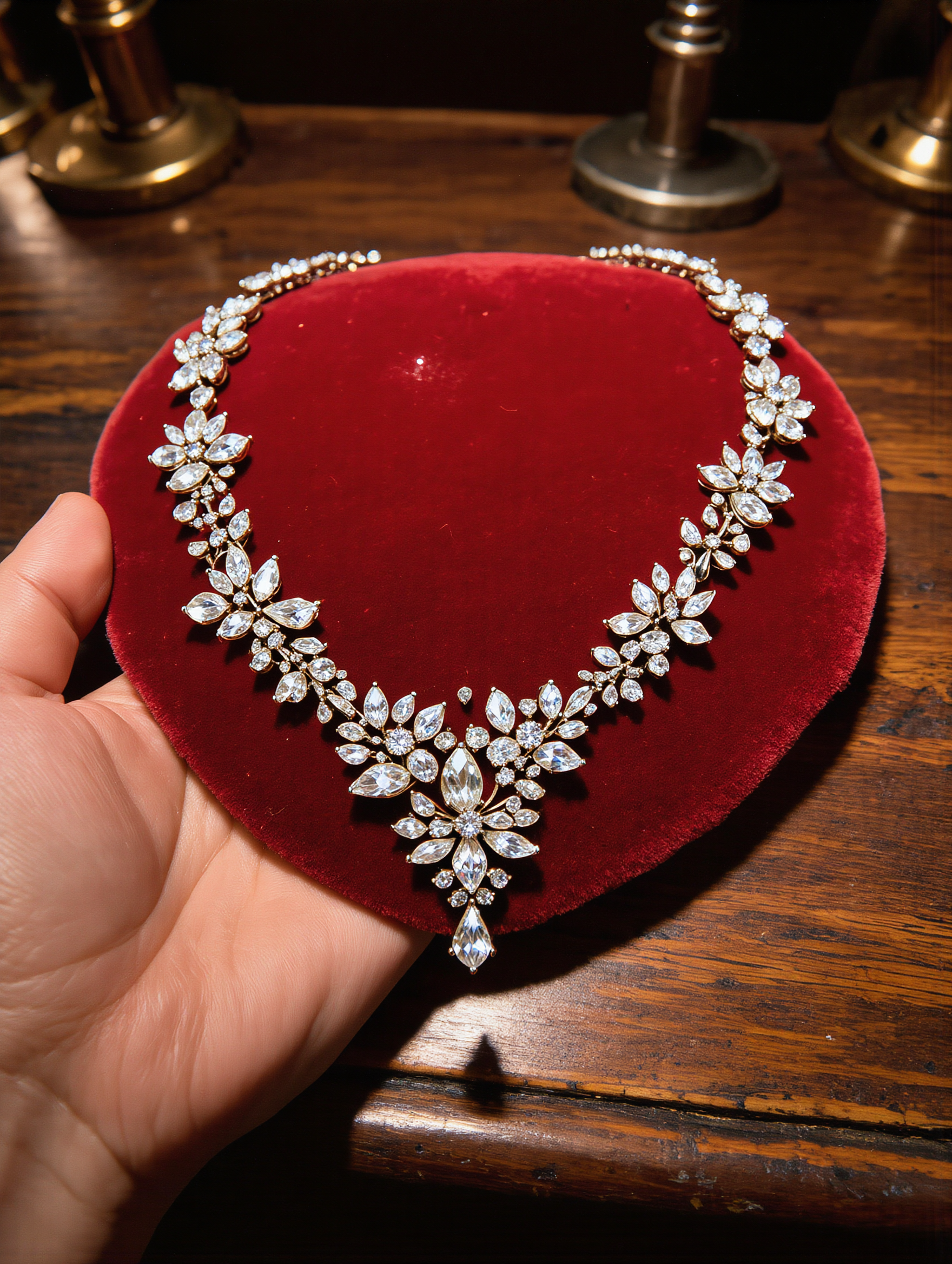
Heavy. Gold. Intricate in a way that didn’t belong to my life. It had a deep emerald stone in the center, surrounded by tiny diamonds that caught the light like stars.
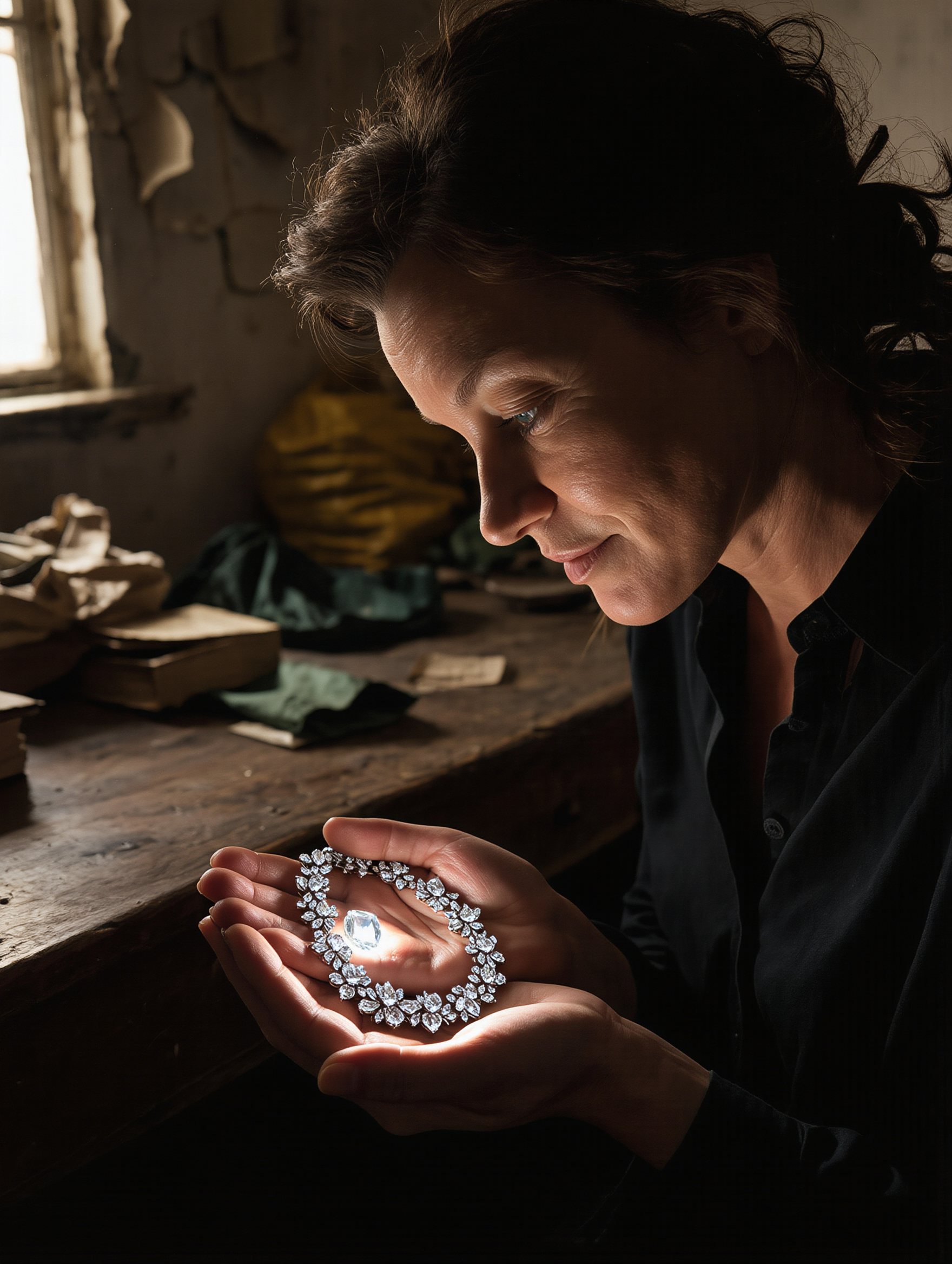
“Someday,” Nana used to say, clasping it around my neck when I was little, “this will lead you where you’re meant to go.”
I always thought she meant emotionally.
I never imagined she meant literally.
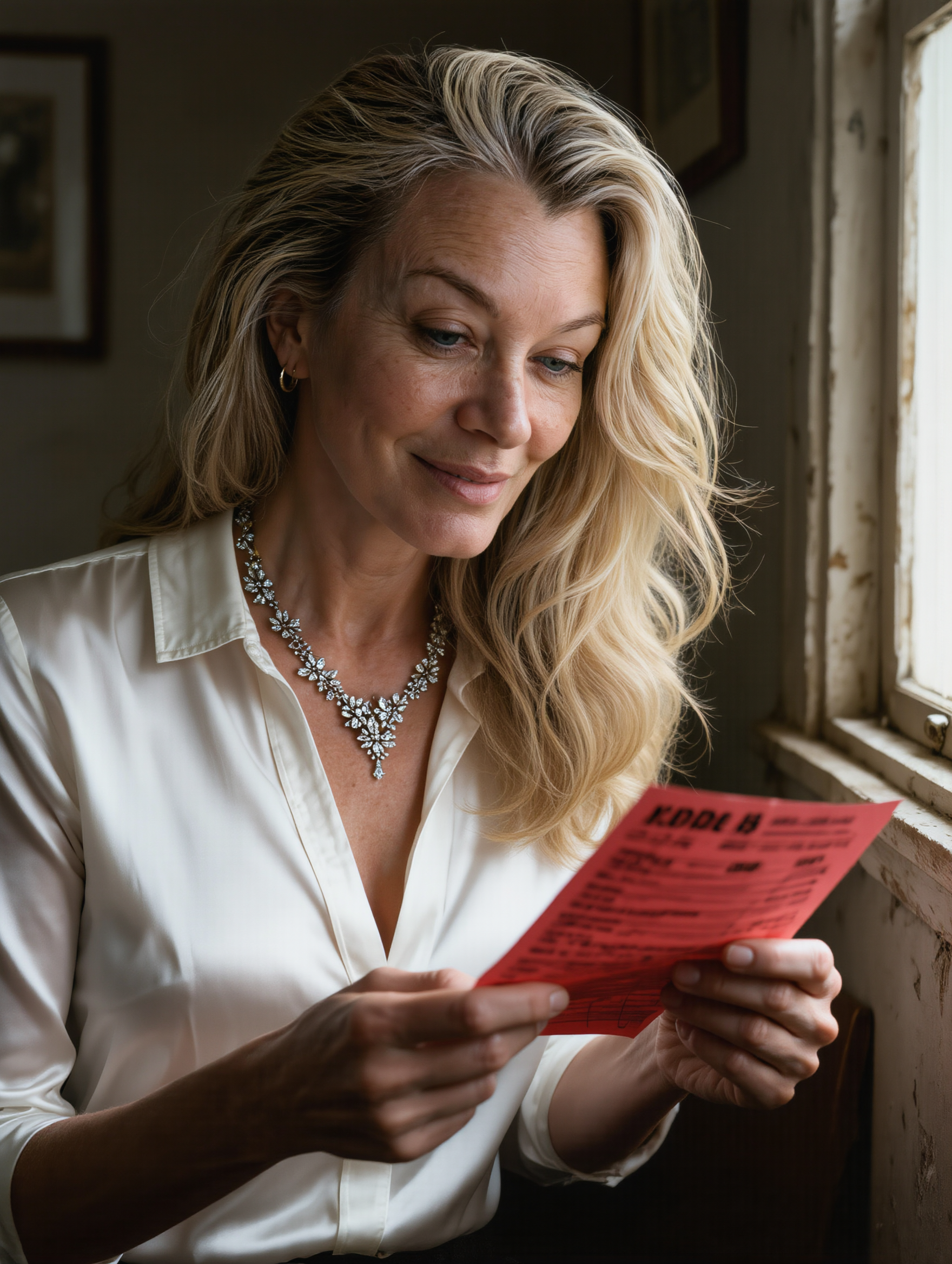
The red notice came on a Thursday.
FINAL WARNING.
It was taped crookedly to my door like an accusation.
I stared at it for a long time before pulling it down. My hands were shaking, but not from surprise. I had known this was coming.
I just didn’t have a way to stop it.
That night, I sat on the floor, the shoebox open in front of me.
The necklace glowed softly under the weak light.
“I’m sorry, Nana,” I whispered. “I just need one more month.”
The words felt like betrayal.
I cried until my throat hurt, until my chest felt hollow. But by morning, I had made my decision.
The pawn shop sat on a quiet street downtown, squeezed between a laundromat and a shuttered bookstore.
A small bell chimed as I stepped inside.
The air smelled faintly of metal and dust.
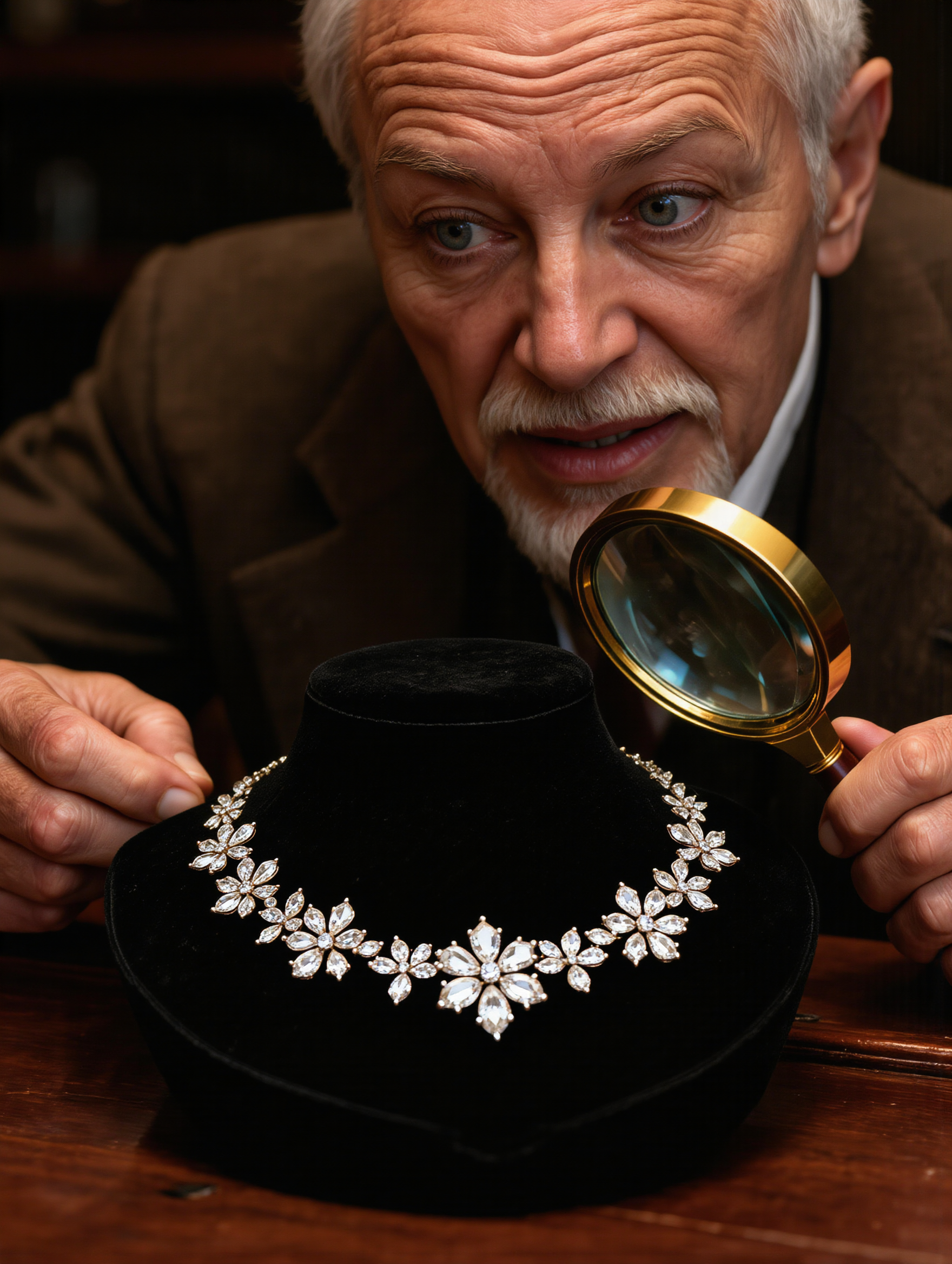
An older man stood behind the counter, polishing a watch. He looked up and gave me a polite nod.
“Can I help you, ma’am?”
My fingers tightened around the necklace.
“I… I need to sell this.”
I placed it on the counter carefully, like it might shatter.
He barely glanced at it at first.
Then he froze.
His hand hovered mid-air, the cloth slipping from his fingers.
Slowly, he leaned closer.
The color drained from his face so fast I thought he might faint.
“Where did you get this?” he asked, his voice barely above a whisper.
“It was my grandmother’s,” I said, suddenly uneasy. “I just need enough for rent.”
“Your grandmother’s name?”
“Merinda L.,” I answered. “Why?”
He stumbled back as if I had struck him.
“Miss… you need to sit down.”
My stomach dropped. “Is it fake?”
“No,” he breathed. “It’s… it’s very real.”
He grabbed a cordless phone with trembling hands and hit a speed dial.
“I have it,” he said when someone answered. “The necklace. She’s here.”
My heart started racing.
“Who are you calling?”
He covered the receiver, eyes wide.
“Miss… the master has been searching for you for twenty years.”
A cold wave washed over me.
“What are you talking about?”
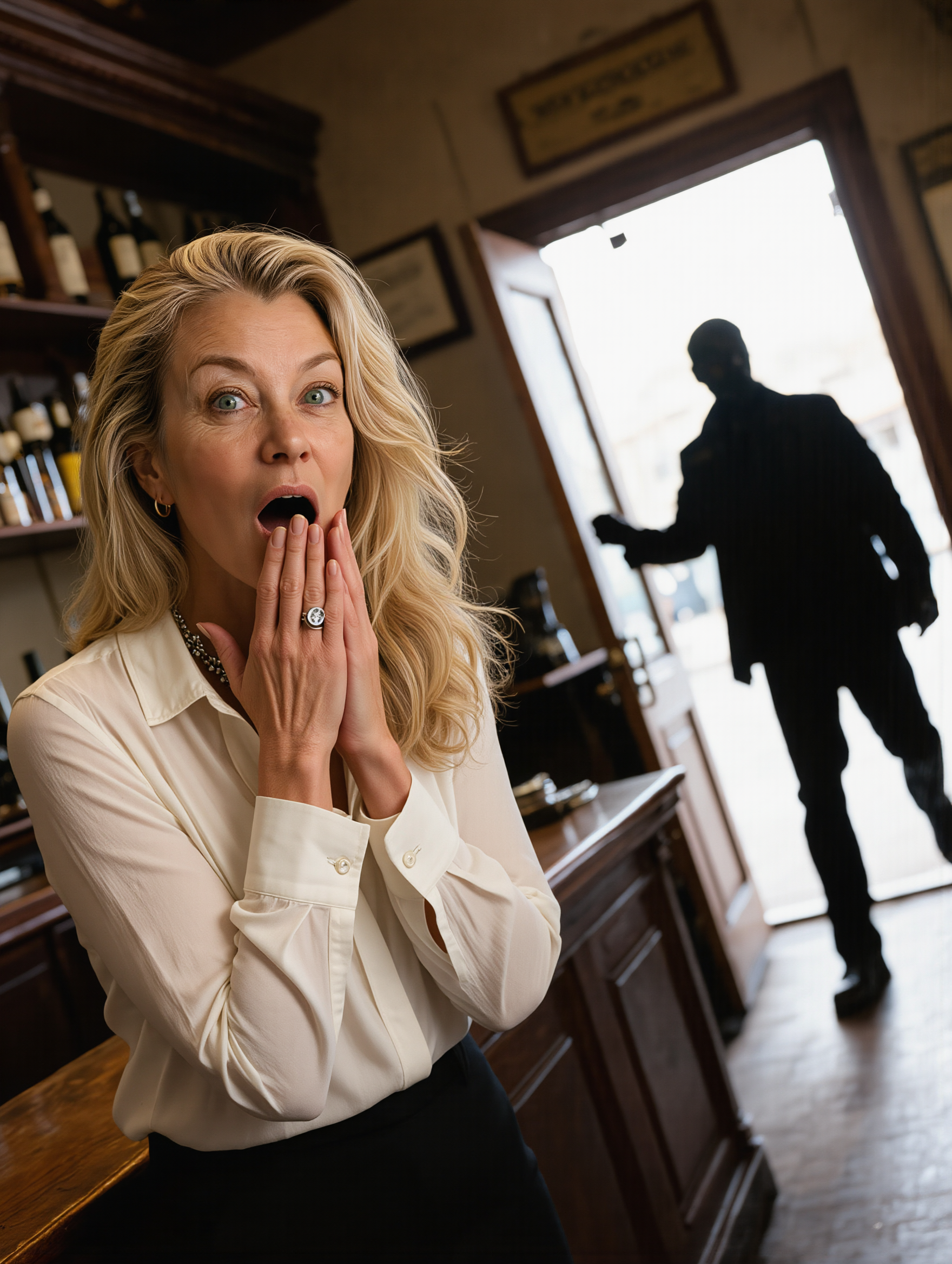
Before he could answer, I heard a click behind the showroom.
A door I hadn’t noticed before unlocked.
Then it slowly swung open.
The man who stepped inside didn’t belong in a place like this.
He wore a dark, perfectly tailored coat. His silver hair was combed neatly back, his posture straight despite his age. Two younger men in suits stood behind him, but he raised a hand, stopping them at the threshold.
His eyes locked onto the necklace.
Then onto me.
For a long moment, he said nothing.
Then, in a voice thick with emotion, he whispered, “Merinda…”
My chest tightened. “That was my grandmother’s name.”
His expression shattered.
“No,” he said softly. “That was my daughter’s name.”
Everything inside me went still.
“What?”
He stepped closer, slow and careful, like approaching something fragile.
“My name is Charles Whitmore,” he said. “And I believe… you are my granddaughter.”
I let out a breath that sounded more like a laugh.
“That’s not possible. My grandmother raised me. My mother died when I was a baby. I don’t know any Whitmores.”
“That’s because you were never meant to disappear,” he said, his voice breaking. “But you did.”
He gestured toward the necklace.
“That piece belonged to my wife. We had two made. One was buried with her. The other was given to our daughter, Merinda, when she turned eighteen.”
I stared at the necklace, my pulse hammering.
“She wore it every day,” he continued. “Until the day she left.”
“Left where?”
“With a man we didn’t trust,” he said quietly. “She was pregnant. We argued. She refused our help. Months later, we were told she had died. But there was no record of the child.”
My throat went dry.
“Me,” I whispered.
He nodded.
“We searched everywhere. Hospitals. Shelters. Adoption records. We hired investigators. For years, there was nothing. So I did the only thing I could—I asked every antique dealer, every pawn shop, to watch for that necklace.”
“And you just… waited?” I asked.
“For twenty years.”
The weight of his words settled over me like gravity.
My whole life—every struggle, every unanswered question—suddenly felt like pieces of a story I had never been told.
Charles reached into his coat and pulled out a photograph.
He placed it gently on the counter.
A young woman smiled back at me.
Dark hair. Soft eyes.
Wearing the necklace.
She looked like me.
Or maybe I looked like her.
“That’s my mother?” I asked.
“Yes,” he said. “That’s Merinda.”
Tears blurred my vision.
I didn’t remember her. I had no memories of being held by her, no voice to recall. Just a lifetime of absence.
“What happened to me?” I asked.
“A woman reported finding an abandoned baby outside a clinic the same week we lost Merinda,” he said. “We never connected the two. Not until now.”
“Nana…” I whispered.
“She wasn’t your grandmother,” he said gently. “But she must have loved you very much.”
I nodded, tears spilling freely now. “She did.”
Charles knelt in front of me, ignoring the polished floor beneath him.
“I’m sorry,” he said. “I’m sorry we didn’t find you sooner.”
I wanted to be angry.
But looking at him—at the grief etched into every line of his face—I couldn’t.
“I came here to sell it,” I said weakly. “I can’t pay my rent.”
His expression shifted, firm and certain.
“You will not sell your mother’s necklace,” he said. “And you will not lose your home.”
“I don’t want charity.”
“It’s not charity,” he replied. “It’s family.”
Everything changed after that.
Charles insisted on verifying everything—documents, timelines, records. Every detail matched.
Within days, my rent was paid. My eviction notice disappeared like it had never existed.
But the bigger change wasn’t the money.
It was the feeling.
For the first time in my life, I wasn’t alone.
A week later, I stood in the doorway of Charles’s estate.
It was grand, yes—but not cold.
The walls were lined with photographs.
Of her.
My mother.
Laughing. Painting. Standing beside Charles.
Living a life I had never known.
In the library, Charles handed me a small velvet box.
“Your grandmother left this,” he said.
Inside was a letter.
My name was written on the front.
Clara.
My hands trembled as I opened it.
My dearest girl,
If you are reading this, then the necklace has finally brought you where you belong…
By the time I finished, I was crying again.
Not from pain this time.
From understanding.
Months later, I stood behind the counter of my own small bakery café.
The sign outside read: Merinda’s.
I still worked hard. I still woke up early. I still remembered where I came from.
But now, I carried something different.
Hope.
On opening day, I wore the necklace.
Not to sell.
Not to survive.
But to remember.
When Charles walked in and saw the name above the door, he stopped.
Tears filled his eyes.
“You look like her,” he said.
I touched the necklace and smiled softly.
“No,” I said. “I think I look like everyone who loved me enough to help me find my way home.”
Note: This story is a work of fiction inspired by real events. Names, characters, and details have been altered. Any resemblance is coincidental. The author and publisher disclaim accuracy, liability, and responsibility for interpretations or reliance. All images are for illustration purposes only.
