
Stories
I Packed My Bags After My MIL’s Cruel Words—Then Came the Knock That Changed My Life
Apr
I was thirty-four years old when my world split in two.
One half was the life I had been living—quiet, predictable, full of small plans for “someday.” The other half was a single sentence spoken in a sterile doctor’s office:
“Stage 2.”
I remember nodding like I understood, like I was composed. But inside, everything collapsed. Words like treatment, chemo, prognosis—they floated around me like distant noise. All I could think was: I’m not ready.
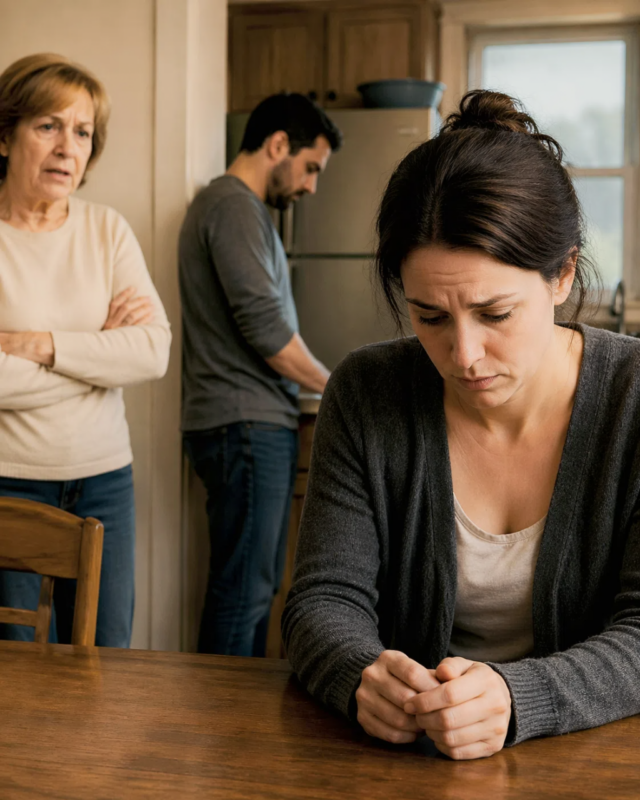
That night, I sat at the kitchen table, staring at my hands. My husband stood by the sink, silent. I kept waiting for him to come over, to hold me, to say something—anything—that might anchor me.
But he didn’t.
And then my mother-in-law spoke.
“Well,” she said, folding her arms, her voice sharp and certain, “maybe this is punishment. For not giving this family any grandchildren.”
The words hit harder than the diagnosis.
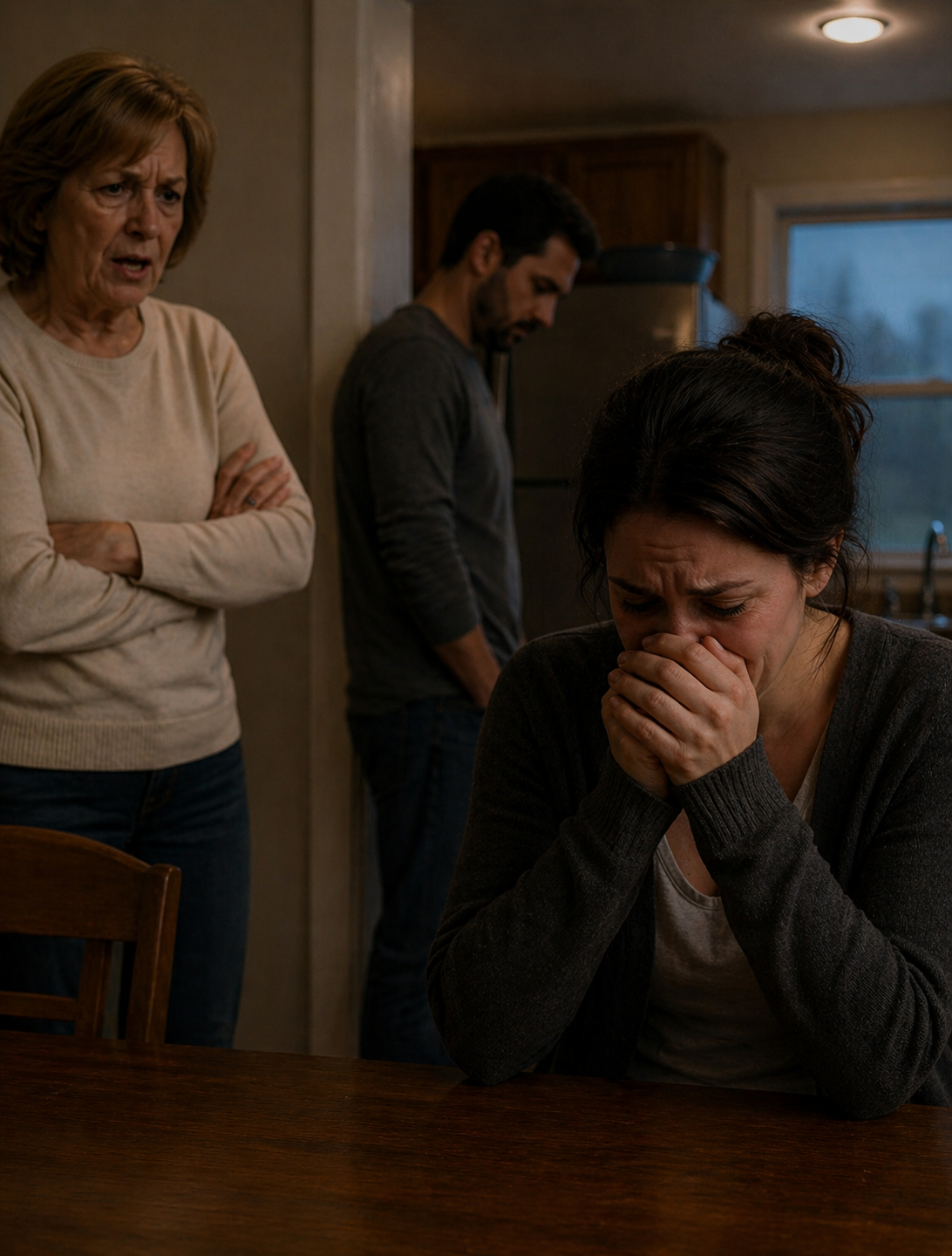
I felt something inside me snap—not loudly, not dramatically. Just a quiet, final break.
I turned to my husband, expecting outrage, or at least discomfort. But he looked down. He said nothing.
That silence said everything.
I didn’t argue. I didn’t cry. I simply stood up, walked to the bedroom, and packed a bag. A few clothes. My medication. My documents. I moved like someone else was controlling my body—calm, efficient, hollow.
When I walked past him with my suitcase, he finally spoke.
“Where are you going?”
I paused at the door, my hand on the knob.
“I don’t know,” I said. “Somewhere quieter than this.”
And then I left.
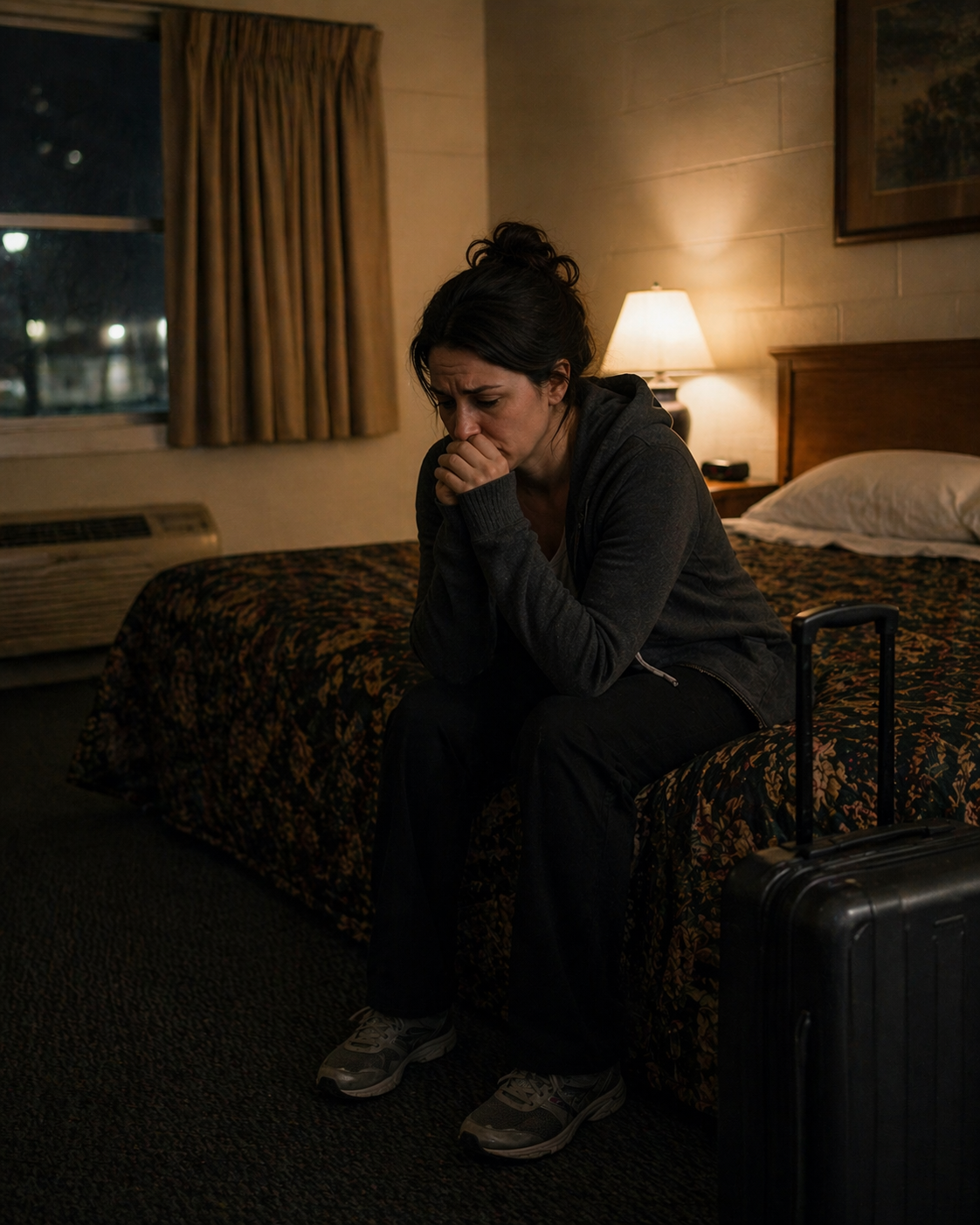
The motel smelled faintly of detergent and old carpet. It wasn’t much, but it was mine for the night. A place where no one would say cruel things disguised as truth.
I sat on the edge of the bed, still fully dressed, staring at the blank TV screen. My phone buzzed once. Then again. I ignored it.
At some point, I must have dozed off.
A sharp knock at the door jolted me awake.
I glanced at the clock.
11:03 PM.
My heart started racing immediately. No one knew where I was. I hadn’t told anyone. Another knock came, firmer this time.
My blood ran cold.
Slowly, I stood up and walked to the door. Every step felt heavy, uncertain. I leaned forward and looked through the peephole.
And then my legs nearly gave out beneath me.
It was my father-in-law.
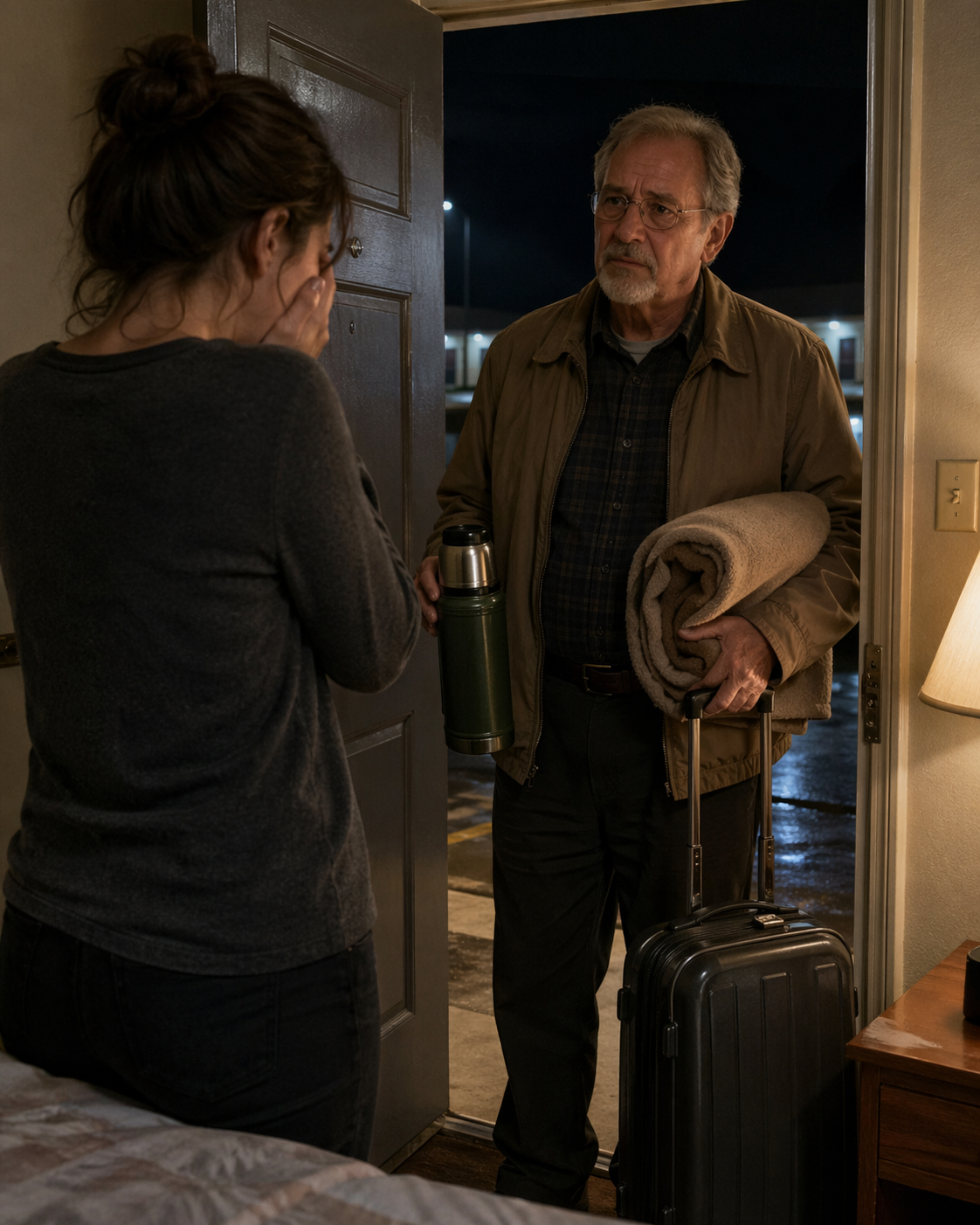
He stood there under the dim hallway light, holding a folded blanket in one arm, a thermos in the other. At his feet was a small suitcase.
For a moment, I couldn’t move.
Then I opened the door.
He didn’t smile. He didn’t hesitate. He simply stepped forward slightly and said, in a quiet, steady voice:
“My wife is wrong.”
I swallowed hard.
“And my son,” he added, his eyes soft but unwavering, “is a coward for not saying so.”
The words hung in the air between us—honest, heavy, undeniable.
“I’m not here to fix anything,” he continued. “I just… didn’t want you to be alone tonight.”
That was it. No speeches. No pressure. Just presence.
I stepped aside, and he handed me the thermos.
“Soup,” he said. “It’s still warm.”
I don’t remember deciding to cry. It just happened. The kind of crying that comes from a place too deep to control. I pressed my hand to my mouth, trying to quiet it, but he gently shook his head.
“It’s okay,” he said.
There was only one bed in the room. I offered it to him, but he refused.
“I’ve slept in worse places,” he said lightly. “I’ll be fine.”
He went back to his car in the parking lot that night, wrapped in that same blanket he had brought for me.
The next morning, he was already awake when I stepped outside, sipping coffee from a paper cup like it was any ordinary day.
“Ready?” he asked.
“For what?”
“First appointment’s in a few days,” he said. “We’ll get there.”
And somehow, I believed him.
True to his word, he drove me to my first chemo appointment the following week. He sat beside me in the waiting room, flipping through an old magazine, occasionally glancing over just to make sure I was okay.
He never hovered. Never made it about himself. He was just… there.
Steady. Quiet. Unshakable.
My husband eventually came around.
He apologized—more than once. He said he was scared, that he didn’t know how to react, that he regretted his silence more than anything.
I listened.
But something fundamental had shifted. Trust, once cracked, doesn’t rebuild overnight.
My father-in-law never mentioned that night again. Not once. No reminders. No “I told you so.” No expectations.
But he showed up.
Every appointment. Every scan. Every long, exhausting day.
He sat in uncomfortable chairs. He waited through endless hours. He drove without complaint.
Every single time.
And in the middle of fear, pain, and uncertainty… that quiet, unwavering presence became the one thing I could depend on.
Not loud love. Not perfect words.
Just someone who refused to let me face it alone.
Note: This story is a work of fiction inspired by real events. Names, characters, and details have been altered. Any resemblance is coincidental. The author and publisher disclaim accuracy, liability, and responsibility for interpretations or reliance. All images are for illustration purposes only.
