
Stories
12 Years After I Raised My Best Friend’s Son as My Own, My Wife Found the Truth He Was Afraid to Tell Me
Apr
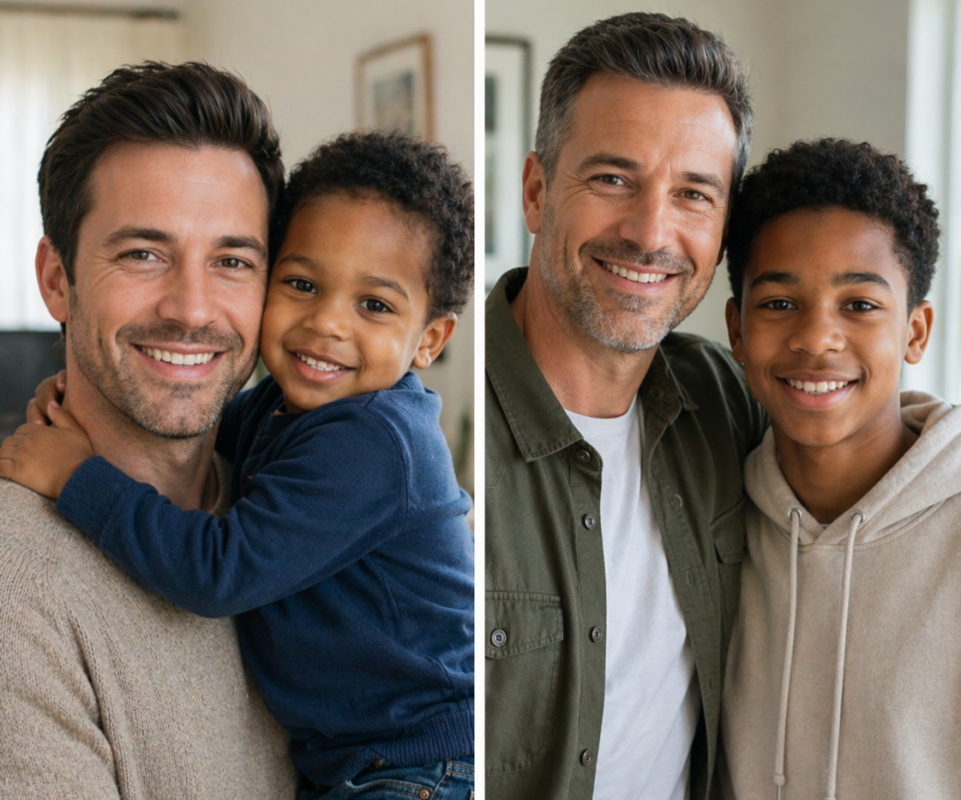
I adopted my best friend’s little boy after she passed away — 12 years later, my wife showed me what he had been HIDING from me.
I used to think I understood what loneliness felt like.
I had grown up in an orphanage where silence had a weight to it. It lived in the hallways after lights-out, in the empty spaces at birthday parties, in the way some children learned not to ask when their parents were coming back. You either hardened yourself or you found someone to hold on to.
For me, that person was Nora.
She was the closest thing I ever had to a sister. We weren’t related by blood, but that never mattered. We shared everything—bad cafeteria food, whispered dreams about the future, promises that one day we’d build lives that felt warm and safe and permanent. When we aged out of the system and went our separate ways, we kept in touch. Calls, letters, occasional visits. No matter how far apart life pulled us, Nora remained part of my foundation.
Then, twelve years ago, my phone rang, and everything changed.
I was twenty-nine at the time, working late, half-asleep over paperwork when I saw an unknown number flash on the screen. It was a hospital.
There had been an accident.
Nora was gone.
Her son had survived.
I don’t remember the drive to the hospital. I only remember the smell of antiseptic and the awful brightness of the hallway lights. A nurse led me into a room where a little boy sat on a bed, his legs dangling over the edge, clutching a faded stuffed rabbit with one button eye.
Leo.
He was only two years old.
He looked up at me with Nora’s eyes—wide, dark, and confused—and asked in a tiny voice, “Where’s Mommy?”
That question broke something in me.
Nora had no family. She’d once told me the boy’s father had died before Leo was born, and she never said more than that. There was no one else. No grandmother, no uncle, no distant cousin stepping forward.
Just him.
Just me.
I took his hand, small and warm and trusting despite everything, and I knew what I had to do.
That same day, I told the hospital social worker I wanted to adopt him.
It wasn’t simple. Nothing worth doing ever is. There were forms, interviews, home inspections, legal delays. But I fought for him with everything I had. And when the adoption was finalized, I brought Leo home to the tiny apartment I had barely managed to make comfortable for one person, let alone two.
The first year was brutal.
He cried for Nora at night. Sometimes he would stand in the doorway of my bedroom holding that rabbit, tears streaming down his face, and ask when she was coming back. I never knew how to answer in a way a child could understand, so I’d just kneel down, pull him into my arms, and say, “She loved you very much. And I’m here. I’m not going anywhere.”
Some nights he fell asleep on my chest. Some mornings he woke up angry at the world. We learned each other slowly, painfully, imperfectly. I burned dinners, missed deadlines, forgot permission slips, and once showed up to daycare wearing two different shoes because neither of us had slept.
But we made it.
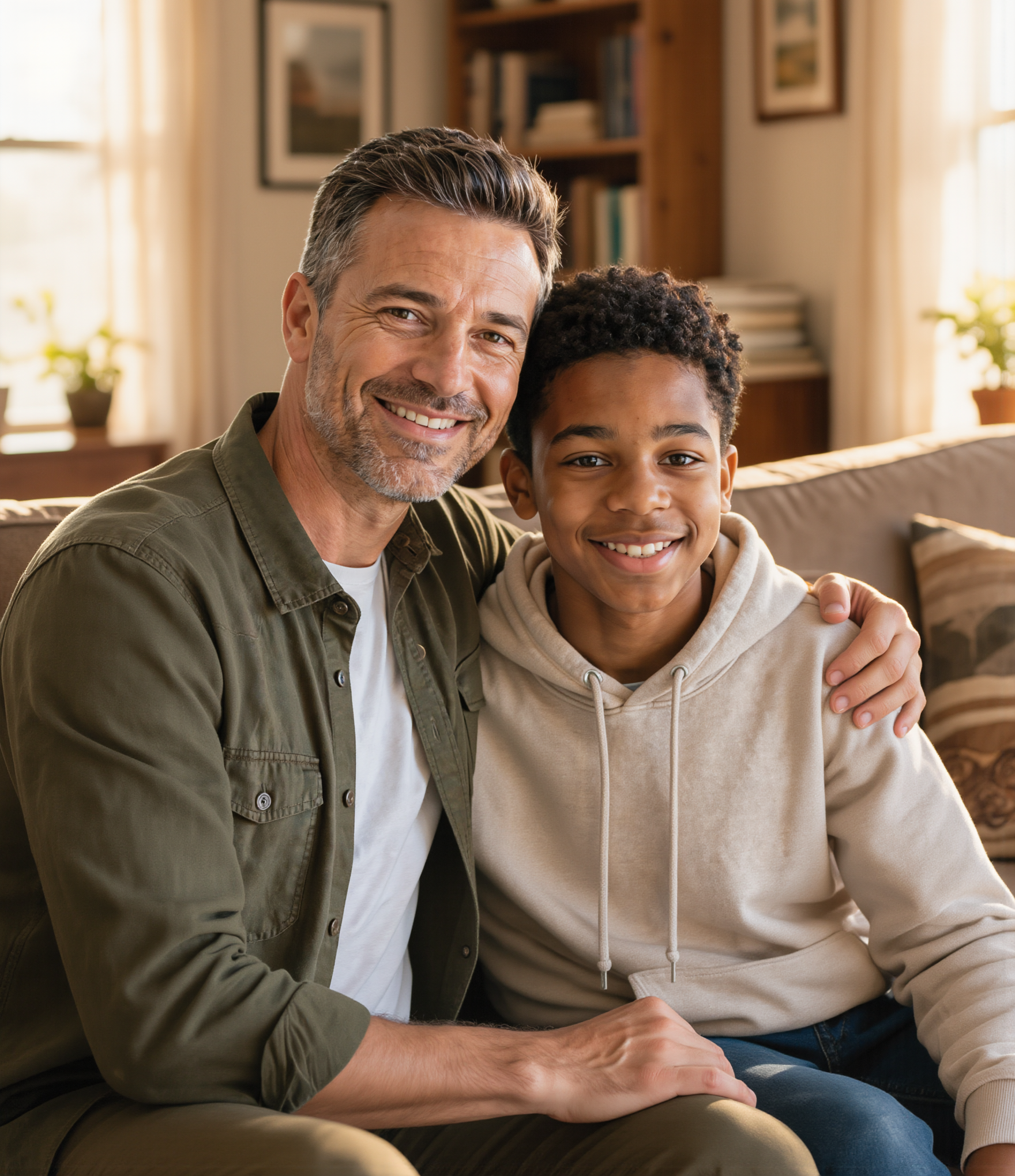
Years passed, and grief softened into memory. Leo grew into a bright, thoughtful, funny boy. He loved astronomy, hated broccoli, and had a habit of biting his lip when he was concentrating. He called me Dad before he was five, and the first time he did, I had to lock myself in the bathroom and cry where he couldn’t see.
He became my whole world.
I dated here and there over the years, but nothing serious lasted. Most women didn’t really understand what it meant that Leo came first, always. Then, a year ago, I met Amelia.

She was warm without being performative, kind without forcing it. She listened more than she spoke, and when she laughed, it felt like a room had opened up. I was cautious at first. I had built my life carefully, and I wasn’t going to let anyone disturb Leo’s sense of security.
But Amelia didn’t disturb it.
She fit.
More importantly, Leo liked her almost immediately, which shocked me. He was polite with everyone, but genuinely opening up took time. Yet within weeks, Amelia was helping him with homework, debating superhero rankings with him over dinner, and cheering the loudest at his school debate competition. She never tried to replace Nora. She never tried to prove anything. She simply loved him in the steady, quiet way that matters most.
When we got married six months later, I felt something I hadn’t dared hope for before:
Wholeness.
For the first time, our house felt like a complete home.
Then came the night everything shifted again.
I had been exhausted after a brutal week at work and fell asleep earlier than usual. Sometime close to midnight, I felt someone gripping my shoulder and shaking me hard.
I opened my eyes and saw Amelia standing beside the bed.
She looked pale. Her hair clung damply to her forehead, and her breathing was fast and shallow, like she had run upstairs.
In her hands she held a thick brown envelope.
“Oliver,” she whispered, her voice trembling. “Wake up. You need to wake up right now.”
I sat up instantly, my heart thudding. “What happened? Is Leo okay?”
“He’s asleep,” she said quickly. “But I found something terrible. Something he’s been hiding from you. This can’t go on any longer.”
For a second, I couldn’t breathe.
My mind went to every horrifying possibility at once—drugs, blackmail, violence, someone hurting him, him hurting someone else. Leo was twelve. Old enough to have secrets. Old enough, suddenly, to live in corners of life I couldn’t fully see.
Amelia sat on the edge of the bed and handed me the envelope.
My fingers felt numb as I opened it.
Inside were dozens of papers.
Printouts.
Handwritten notes.
Receipts.
And photographs.
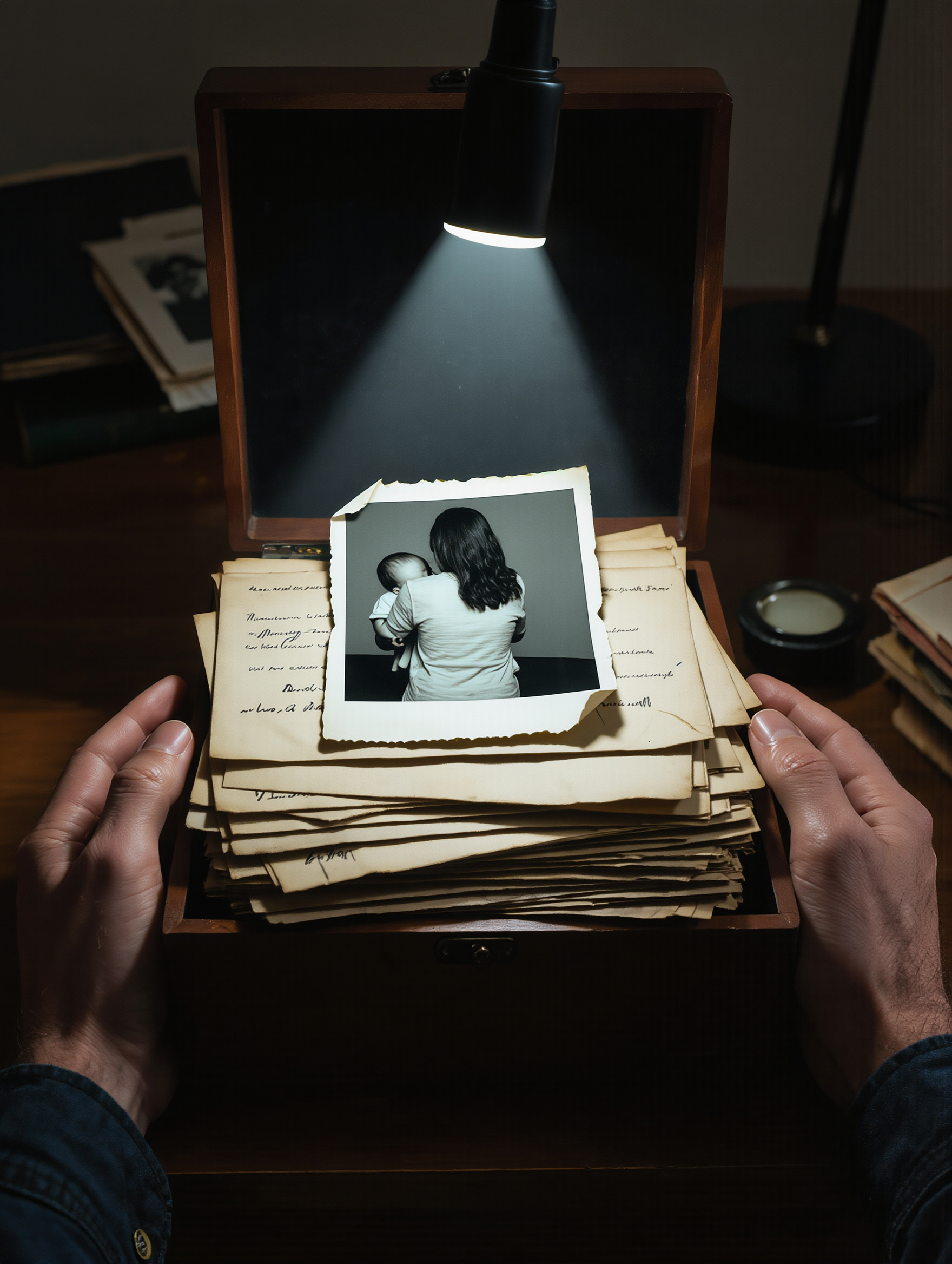
At first, none of it made sense. Then I saw the name that appeared again and again across the pages.
Nora.
Mixed in with those papers were other documents: old newspaper clippings about the car accident, public records, social media screenshots, maps, and even a few pages from what looked like Leo’s journal.
I stared at Amelia. “What is this?”
She swallowed. “I was putting clean towels in the bathroom closet and found a loose panel in the wall behind the shelves. This was hidden there. Oliver… Leo has been investigating his mother’s death.”
I looked back down at the papers, stunned.
There were dates circled in red, names underlined, addresses scribbled in the margins. Leo’s handwriting was all over the pages—messy, emotional, determined.
This wasn’t random curiosity.
This was obsession.
One journal page hit me harder than the rest.
Dad says it was an accident. Everyone says it was an accident. But what if nobody ever checked hard enough? What if Mom was alone and scared and I’m the only one who cares enough to find out what really happened?
My chest tightened.
Another page read:
I’m not hiding this because I don’t trust Dad. I’m hiding it because if I’m wrong, I don’t want to hurt him. And if I’m right… I don’t know what happens then.
I lowered the paper slowly.
“Why wouldn’t he tell me?” I whispered.
Amelia’s eyes softened. “Because he loves you. And because he’s carrying something too heavy for a child.”
I kept going through the folder, and gradually a clearer picture emerged.
About six months earlier, one of Leo’s classmates had made a cruel comment during an argument—that maybe his “real mother” had abandoned him on purpose. It had rattled him more than he admitted. He’d gone looking for answers online, found old articles about the crash, and discovered details that didn’t line up neatly in his mind. Why had Nora been on a road so far from home that night? Why had there been no mention of where she was going? Why were there almost no records beyond the short newspaper report?
So he kept digging.
And digging.
And digging.
By the time I reached the bottom of the envelope, I felt sick—not because of what he’d found, but because of what I hadn’t seen.
I hadn’t noticed.
Or maybe I had noticed the surface signs and explained them away. The extra quiet at dinner. The late nights. The way he flinched whenever his mother was mentioned, not with grief exactly, but with tension. I had told myself it was adolescence. Mood swings. Growing pains.
But my son had been grieving all over again, in secret, and I had missed it.
“We need to talk to him tomorrow,” Amelia said gently.
I nodded, though sleep was impossible after that. We sat awake for hours, the envelope spread across our bed between us like evidence from a trial no one wanted.
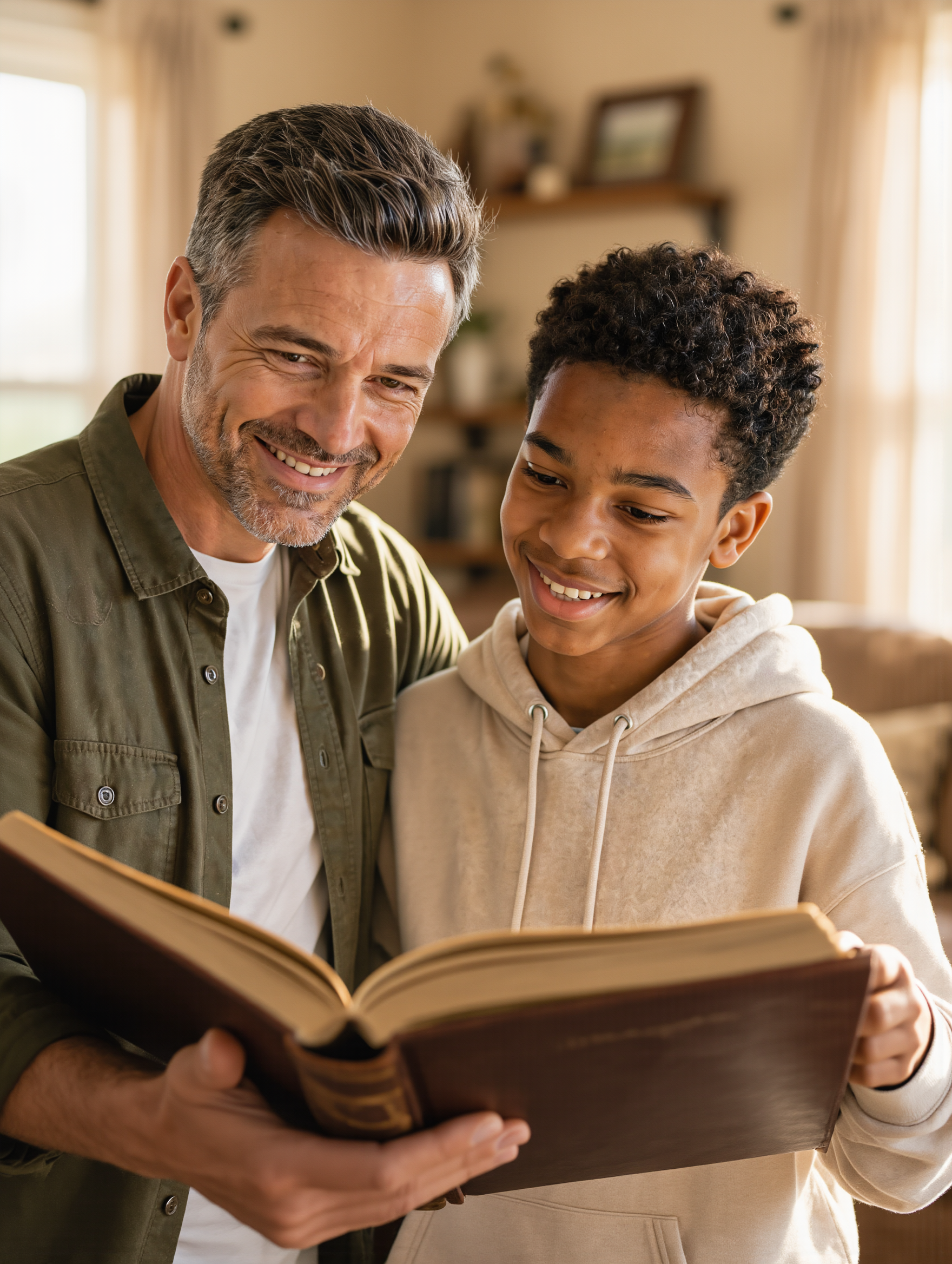
The next morning, Leo came downstairs expecting an ordinary Saturday.
Instead, he found Amelia and me at the kitchen table, the brown envelope resting in front of me.
He froze.
All the color drained from his face.
For one long second, none of us moved.
Then Leo whispered, “You opened it.”
I stood slowly. “Yes.”
His expression crumpled—not into anger, but fear. “I didn’t want you to find it like that.”
“Come here,” I said.
He didn’t.
His chin trembled, and suddenly the words came rushing out. “I just needed to know! I needed to know if what happened to her was really what everyone said. I know you told me it was an accident, and I know you wouldn’t lie, but you weren’t there, and nobody ever talks about her, and sometimes it feels like she just disappeared and I’m the only person who still—”
His voice snapped.
“—who still belongs to her.”
The room went silent.
That was the real wound.
Not the accident.
Not the hidden papers.
The fear that loving the mother he lost somehow made him less my son.
I crossed the kitchen before he could retreat and pulled him into my arms. He stiffened for half a second, then broke completely, sobbing against my chest with the desperate force of years held in.
“Oh, Leo,” I said, my own voice shaking. “You never had to carry this alone.”
He cried so hard his whole body trembled. Amelia came over and wrapped her arms around both of us.
When he finally calmed enough to speak, we sat together, and I told him everything I knew. Which wasn’t much more than what he had already found: Nora had been driving back from a short trip connected to work. The road had been slick. Another driver lost control. There had been an investigation, and it had been ruled an accident. No hidden conspiracy. No secret betrayal. Just one cruel, senseless moment that shattered three lives.
Leo listened, wiping his eyes.
“I still miss her,” he said quietly.
“I know,” I answered. “You’re allowed to. You always will.”
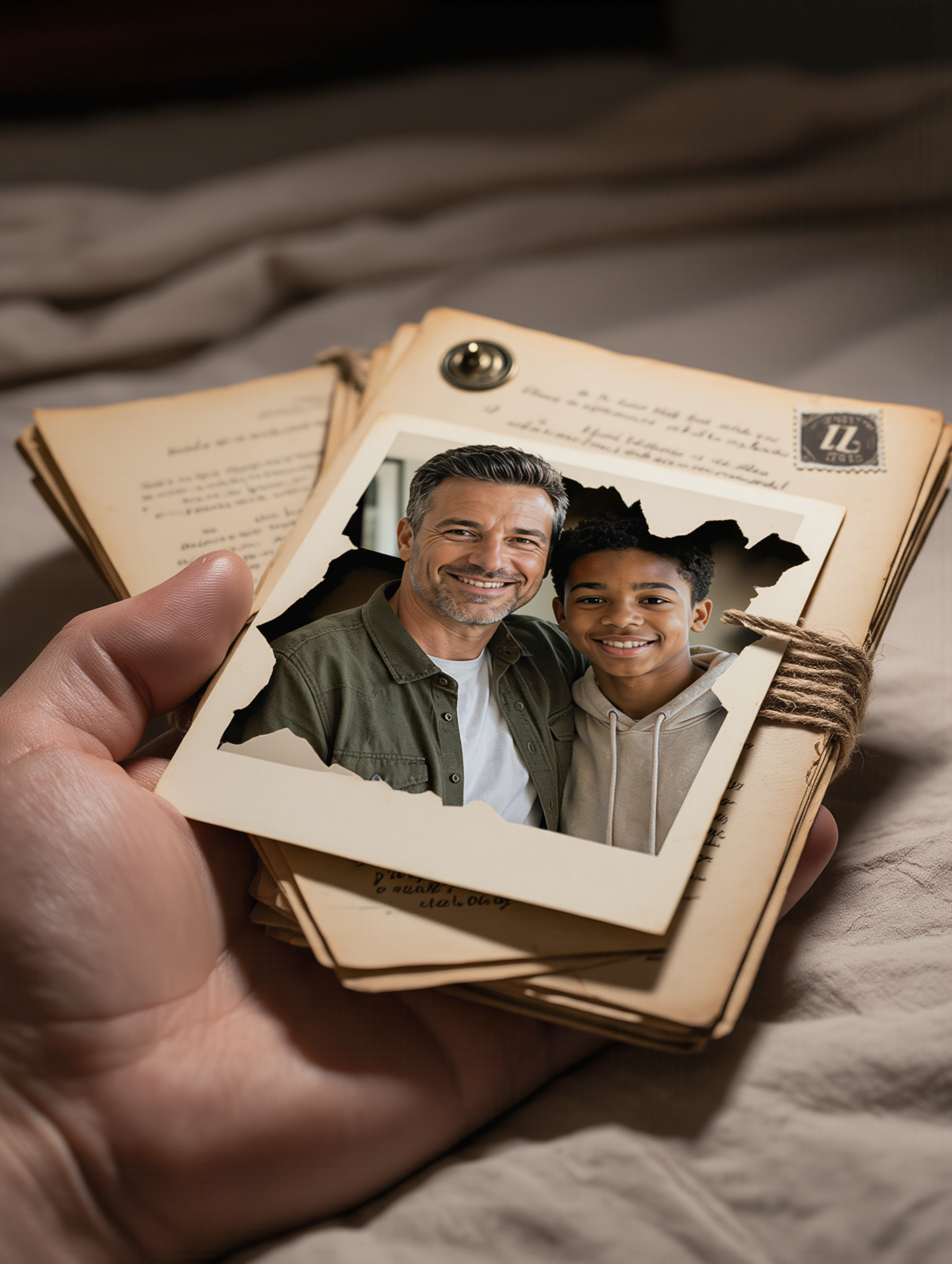
That afternoon, the three of us drove to the cemetery.
We brought fresh flowers. Leo stood in front of Nora’s grave for a long time, hands shoved into his jacket pockets, shoulders slightly hunched. Then he knelt and placed a folded letter at the base of the headstone.
When he stood again, he looked older somehow. Not heavier. Just clearer.
On the way home, he sat in the back seat, quiet but peaceful, and for the first time in months, I didn’t feel distance coming from him.
I felt trust.
That night, after Leo went to bed, I found Amelia in the kitchen.
“You saved us,” I told her.
She shook her head. “No. We just found him in time.”
Maybe that was true.
But as I looked upstairs toward my son’s room, I understood something I should have remembered long ago: love doesn’t erase the past. It makes room for it. It says, Bring your grief, your questions, your fear. You don’t have to hide them here.
Twelve years after I took Leo’s hand in that hospital room, I thought I had already become his father.
That was the night I learned how to become the kind of father he truly needed.
Note: This story is a work of fiction inspired by real events. Names, characters, and details have been altered. Any resemblance is coincidental. The author and publisher disclaim accuracy, liability, and responsibility for interpretations or reliance. All images are for illustration purposes only.
