
Uncategorized
My Mother Watched My Baby Cry In The Rain And Said “I Don’t Raise Bastards”… That Night Changed Everything
Apr
The first sound I heard when I pulled into my mother’s driveway was Noah crying.
Not fussing. Not whining.
Panicked, desperate crying—the kind that makes your blood run cold before your mind even understands why.
I dropped everything and ran around the house.
There he was.
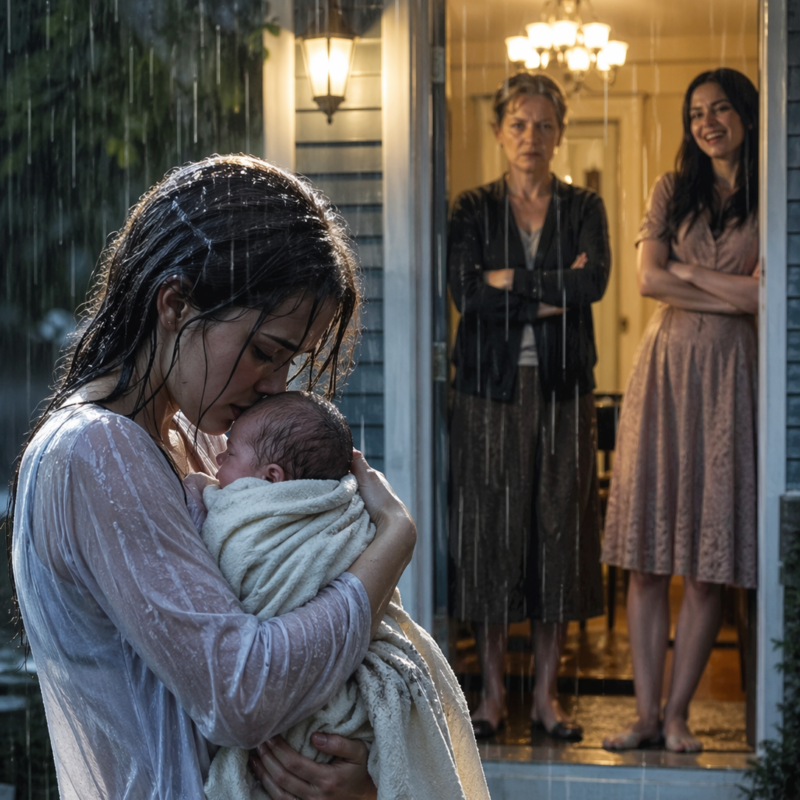
Sitting in the grass by the front steps. In the rain. Completely soaked. His tiny blue jacket clung to his skin, curls plastered to his forehead, hands red from the cold. He was trying to crawl toward the porch, sobbing so hard he could barely breathe.
For one second, I froze.
Then I rushed forward, scooped him up, and held him tight against my chest. His body trembled violently.
“Oh my God… baby, Mommy’s here,” I whispered, wrapping my cardigan around him even though it was already drenched. “Mommy’s here.”
My mother stood in the doorway—dry, still, emotionless. One hand rested on the knob like she had simply stepped out to observe the rain.
Behind her, my younger sister Melanie leaned against the wall, arms crossed.
“What the hell is wrong with you?” I shouted.
My mother didn’t flinch.
“I told you,” she said coldly. “I don’t raise bastards.”
Melanie laughed.
Actually laughed.
“Serves you right, filthy little whore.”
I stared at them, stunned.
Three months earlier, after my ex disappeared and rent doubled, I had swallowed my pride and come back to this house. My mother made it clear I was a burden. Still, I worked double shifts, bought my own groceries, stayed quiet, kept my head down.
I told myself I just needed time.
But this?
This was something else.
“You left him outside,” I said, my voice shaking. “He’s a baby.”
My mother shrugged.
“Maybe next time you’ll remember what shame costs.”
Noah whimpered against me, his lips pale from the cold.
And something inside me snapped—clean in two.
I ran inside, grabbed the diaper bag, my purse, and the envelope of cash I’d hidden in an old boot.
Melanie stepped in front of me.
“Where do you think you’re going?”
I shoved past her so hard she slammed into the wall.
Then my mother said, calm and sharp,
“If you walk out that door tonight, don’t ever come back.”
I turned, Noah shaking in my arms, rain pounding behind me.
“After what you did to my son,” I said, “I’d rather sleep in my car.”
I opened the door—
—and saw a police cruiser pulling into the driveway.
For a second, I thought my mother had called them to stop me.
My stomach dropped.
Not now. Please not now.
The cruiser stopped. A tall officer stepped out, pulling his hat down against the rain.
Suddenly, my mother came alive.
“Officer!” she called. “Thank God you’re here. My daughter is unstable. She’s trying to take that baby in the middle of the night.”
I almost laughed.
The officer looked at her, then at me—then at Noah.
His crying had faded into weak, exhausted hiccups. His clothes were soaked. His body still shaking.
The officer’s expression changed instantly.
“Ma’am,” he said to me, “is the child injured?”
“My son was left outside in the rain,” I replied, teeth chattering from cold and rage. “He needs warmth. Dry clothes. Maybe a doctor.”
His jaw tightened.
“How long was he outside?”
“I don’t know. I just got home and found him there.”
A car slowed by the curb.
Mrs. Harper, our neighbor, stepped out with an umbrella.
“Officer,” she said, nervous but firm, “I saw the baby out there. At least twenty minutes. Maybe longer. I heard him crying while I was cooking. I thought someone would come… but no one did.”
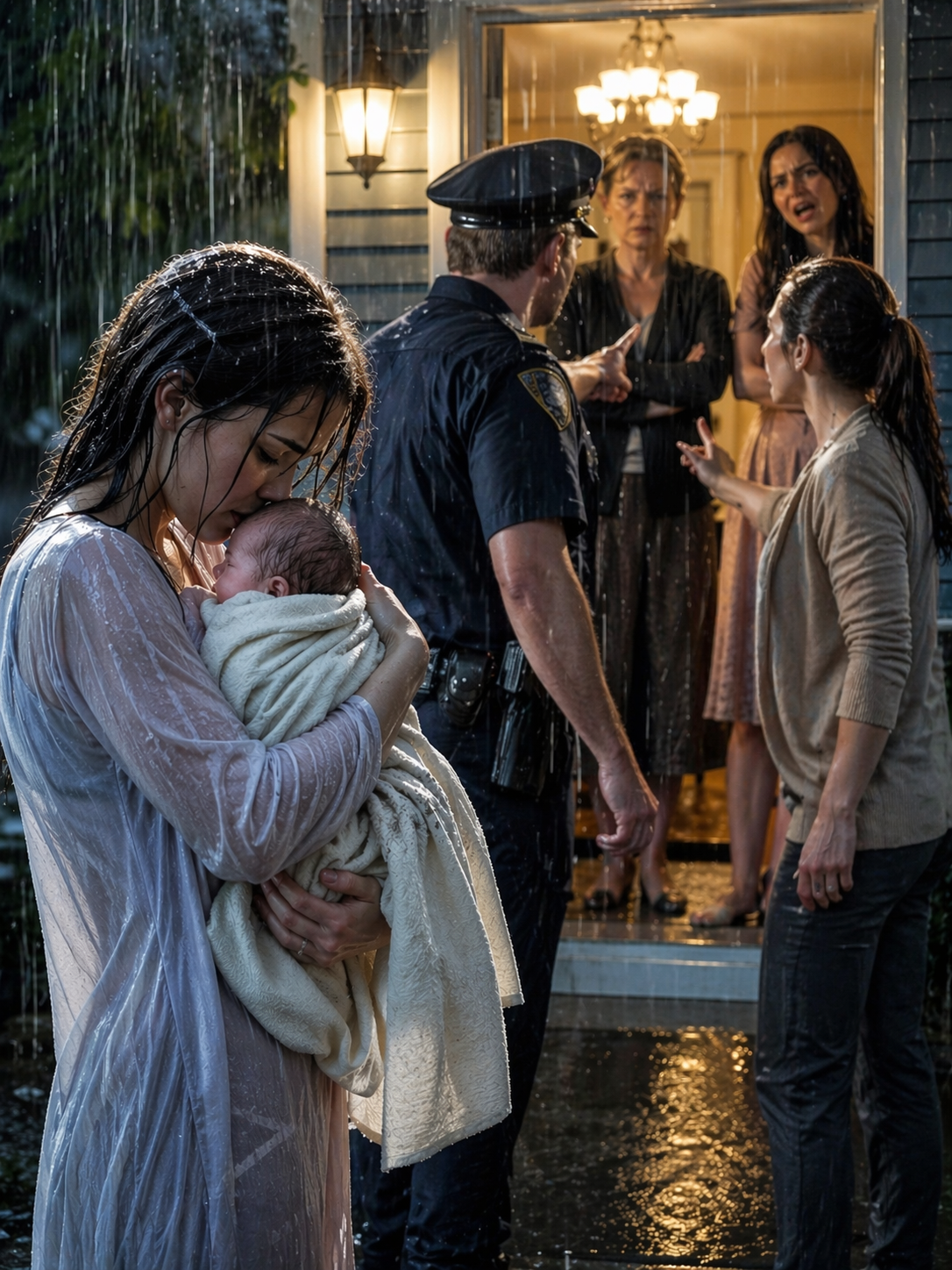
My mother’s face went pale.
“She’s lying.”
Mrs. Harper straightened.
“No, Lorraine. I’m finally telling the truth.”
Everything shifted.
The officer called for paramedics. Asked questions. My mother kept interrupting—calling me irresponsible, immoral, ungrateful. Melanie muttered that I was playing victim.
But their voices sounded smaller now.
For the first time, someone saw them clearly.
Paramedics wrapped Noah in warm blankets inside the ambulance. A tired but kind woman checked his temperature and said softly,
“You did the right thing by leaving. Has this happened before?”
I hesitated.
Not like this.
But there had been the insults. The rejection. The way my mother refused to touch Noah when he was born. The way Melanie mocked me for being abandoned. The way things I bought disappeared while they claimed I contributed nothing.
“Yes,” I said quietly. “Not exactly like this. But enough.”
The officer handed me a card.
“You may want to file a report. And don’t go back into that house alone.”
Then he added, lowering his voice,
“There’s something else. We were responding to a bank alert tied to your name.”
I blinked. “What?”
“Possible fraudulent activity. Someone may have opened credit in your name.”
I turned slowly toward the house.
Melanie looked away first.
That’s when I understood.
Leaving wasn’t the end.
It was just the beginning.
They hadn’t only tried to break me emotionally.
They were trying to destroy me financially too.
That night, Noah and I slept in a women’s shelter fifteen miles away.
It’s a kind of humiliation you can’t explain—asking strangers for a blanket, a crib, a safe place to breathe.
But those women showed me more kindness in one night than my family had in years.
A volunteer named Denise found dry pajamas for Noah and stayed beside me while I fed him with trembling hands.
When I finally stopped pretending I was okay, I cried until my chest hurt.
The next morning, I called the bank.
Then another.
Then another.
By noon, I knew the truth.
Two credit cards. A personal loan. Unpaid utility accounts.
All under my name.
All linked to my mother’s address.
One signature looked exactly like Melanie trying to copy mine.
The shelter connected me with legal aid. I filed identity theft reports, froze my credit, and gave a full statement.
Mrs. Harper did too.
She even handed over security footage.
It showed my mother opening the door… placing Noah outside in his stroller… and walking back in while he cried.
That video changed everything.
Child Protective Services closed their case on me—and opened one against my mother.
A week later, the detective confirmed both my mother and sister were under investigation.
My mother left sixteen voicemails. Crying. Screaming. Blaming me.
Melanie sent one message:
“You really chose strangers over blood?”
I looked at Noah sleeping in my arms.
And for the first time, I felt no guilt at all.
Yes.
Because blood had left my child in the rain.
Three months later, we moved into a small apartment above a hardware store.
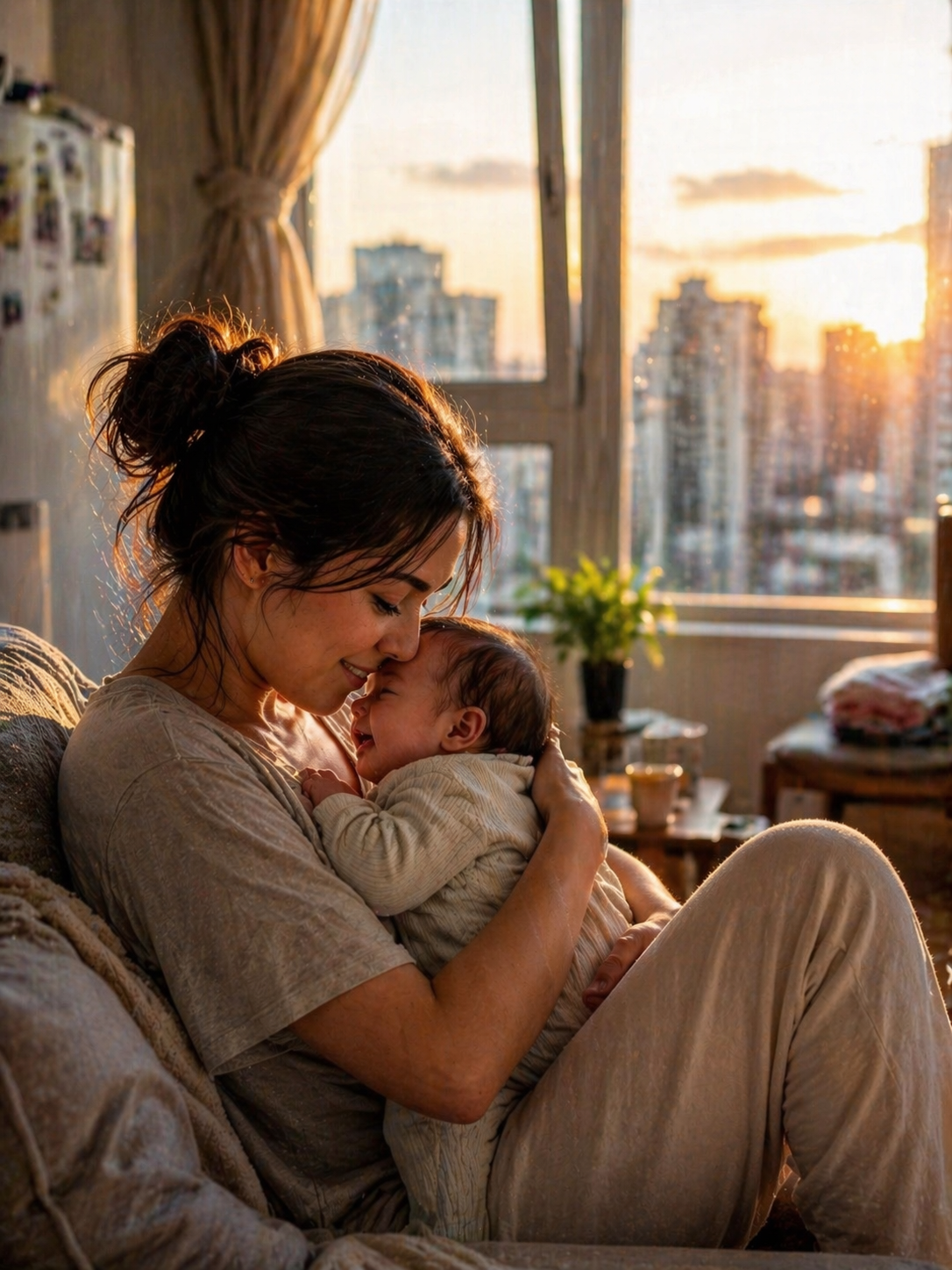
It wasn’t pretty.
The radiator clanked. The kitchen was tiny.
But it was safe.
Warm.
Ours.
Noah took his first real steps there—laughing as he walked from my knees to the couch.
Like the world had always been kind.
My mother was charged with child endangerment.
Melanie was charged for fraud.
What happens to them is up to the court.
But they lost me.
Permanently.
That part was my choice.
People say, “But she’s still your mother.”
What they really mean is: forgive what should never have happened.
I don’t believe that anymore.
I believe in protecting the child in your arms—even if it means burning the bridge behind you.
I believe family is proven by love, not titles.
And I believe the night I ran into that storm with my son…
was the night I stopped being their victim.
It was the night I became his safe place.
Note: This story is a work of fiction inspired by real events. Names, characters, and details have been altered. Any resemblance is coincidental. The author and publisher disclaim accuracy, liability, and responsibility for interpretations or reliance.
