
Stories
At My Stepsister’s 500-Guest Wedding, I Was Treated Like Trash—Until She Slapped Me in Front of Everyone
Apr
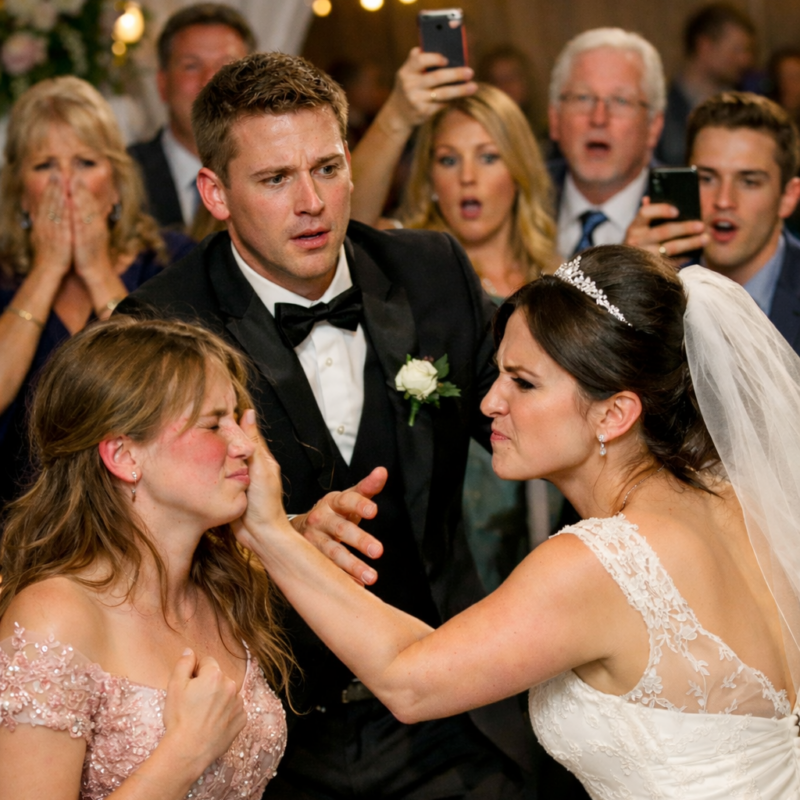
The impact snapped my head toward the towering champagne display. For a split second, golden light from the chandeliers blurred across my vision, reflecting off mirrored walls.
Heat flared beneath my eye, sharp and stinging.
Someone gasped.
Others laughed behind silk napkins.
The laughter spread—worse than cruelty. It was effortless, casual… the kind that came from people who found my humiliation more entertaining than the wedding itself.
Tessa stood in front of me, her hand still raised, almost as if she surprised herself with how satisfying it had been.
“You do not belong in a place like this,” she said, loud enough for everyone.
She had always known how to command a room. At thirty-one, dressed in a gown worth more than my yearly rent, she still carried the same talent—turning her cruelty into my shame.
I didn’t touch my face.
I didn’t step back.
I stayed silent.
And silence had always unsettled her.
The string quartet faltered, then stopped. Even the waiters froze, sensing something bigger than a scene—something unforgettable.
Tessa stepped closer, diamonds catching the light, anger bleeding through her makeup.
“Look at you,” she sneered. “Do you really think you can stand here with people of our status?”
A few guests laughed again.
I held my glass steady, realizing how easily people follow cruelty when the bride leads it.
Then a voice cut through the room.
“Do you even have the slightest idea who she is?”
Silence fell instantly.
Dominic Rhodes—her fiancé—stepped forward, his expression no longer joyful but shaken, like a man seeing the truth too late.
He looked straight at me.
“Miss Thorne.”
A murmur rippled through the crowd.
Tessa let out a nervous laugh. “What are you doing?”
Dominic didn’t look at her.
“Miss Thorne,” he repeated.
For a moment, I considered ending it—to spare him. But the sting on my cheek reminded me what they had taken.
He turned to Tessa.
“Do you have any idea what you’ve just done?”
“It’s nothing,” she snapped. “She’s nobody.”
“Stop right there,” he said quietly—and she fell silent.
Then he faced the room.
“The woman you just assaulted is Cassidy Thorne. Founder and sole owner of Thorne International Holdings.”
The air shifted.
Five hundred people who had laughed now stared at my simple dress with unease.
They knew the name.
Tessa looked between us, her confidence draining.
My name is Cassidy Thorne. I was thirty-one when I realized the people who treated me like nothing had finally lost their power over me.
But this didn’t begin at a wedding in Charleston.
It began years ago—in a house in Richmond where I learned what it meant to be unwanted.
My mother, Sarah, died when I was fifteen. She was gentle, the kind who showed love in quiet ways—ironing clothes, humming while she cooked.
When she got sick, the house turned cold.
My father, Geoffrey, disappeared into grief.
He only knew how to love when life was easy.
By Christmas, he had already replaced her.
I heard Brenda’s laughter in our kitchen before I ever saw her.
And I knew.
Brenda was polished, calculating. She brought her daughter Tessa—my age, but raised with entitlement.
The first time we met, she smiled like she had already won.
Within a year, my father married Brenda.
And I became invisible in my own home.
Tessa made sure I was left out of every photo.
My father ignored everything—her stealing, Brenda replacing my mother’s things.
It was easier for him to look away.
Tessa would tell me, “If you were more pleasant, maybe people would want you around.”
I tried.
Perfect grades.
Every chore.
It was never enough.
The end came on a rainy night.
Tessa walked in crying, holding a ruined dress, accusing me of spilling wine on it.
I hadn’t.
My father didn’t ask.
“Get out,” he said.
No one stopped him.

I packed a small bag while rain hit the window, then walked out at sixteen, knowing no one would follow.
The years after weren’t inspiring.
They were survival.
I worked in diners. Cleaned floors. Studied at night in a tiny room above a laundromat in Baltimore.
I learned business. Patterns. Money.
Thorne International Holdings began on a broken laptop.
I helped struggling companies fix logistics—and built a reputation no one could ignore.
By thirty, I sat with the most powerful executives in the country.
That’s how I met Dominic Rhodes.
His family needed my company.
He recognized me the moment he saw me at the wedding.
I only attended to see if I was strong enough to stand there again.
Tessa invited me to feel small.
She didn’t realize I could decide her future.
Dominic stepped away from her.
“I can’t marry someone who enjoys hurting others.”
“It was a misunderstanding!” Tessa pleaded, grabbing his arm.
“It’s not about the slap,” he said, pulling away. “It’s who you are when you think no one’s watching.”
My father tried to intervene.
Dominic looked at him with disgust.
He understood.
Tessa turned to me, tears falling.
“Tell him everything’s fine… please help me.”
For the first time, she needed me.
I looked at her—and felt nothing.
“This has nothing to do with me,” I said. “This is the life you chose.”
I walked through the crowd.
This time, their eyes weren’t mocking.
They were… respectful.
Outside, the night air smelled of wet grass.
My father followed me, apologizing—saying he didn’t know how successful I’d become.
It sounded hollow.
“You were never what they said,” he told me.
I said nothing.
There was nothing left.
Dominic came out minutes later.
“I’ve called off the wedding,” he said. “And the partnership.”
He looked at me. “You’re a formidable woman. I’m sorry.”
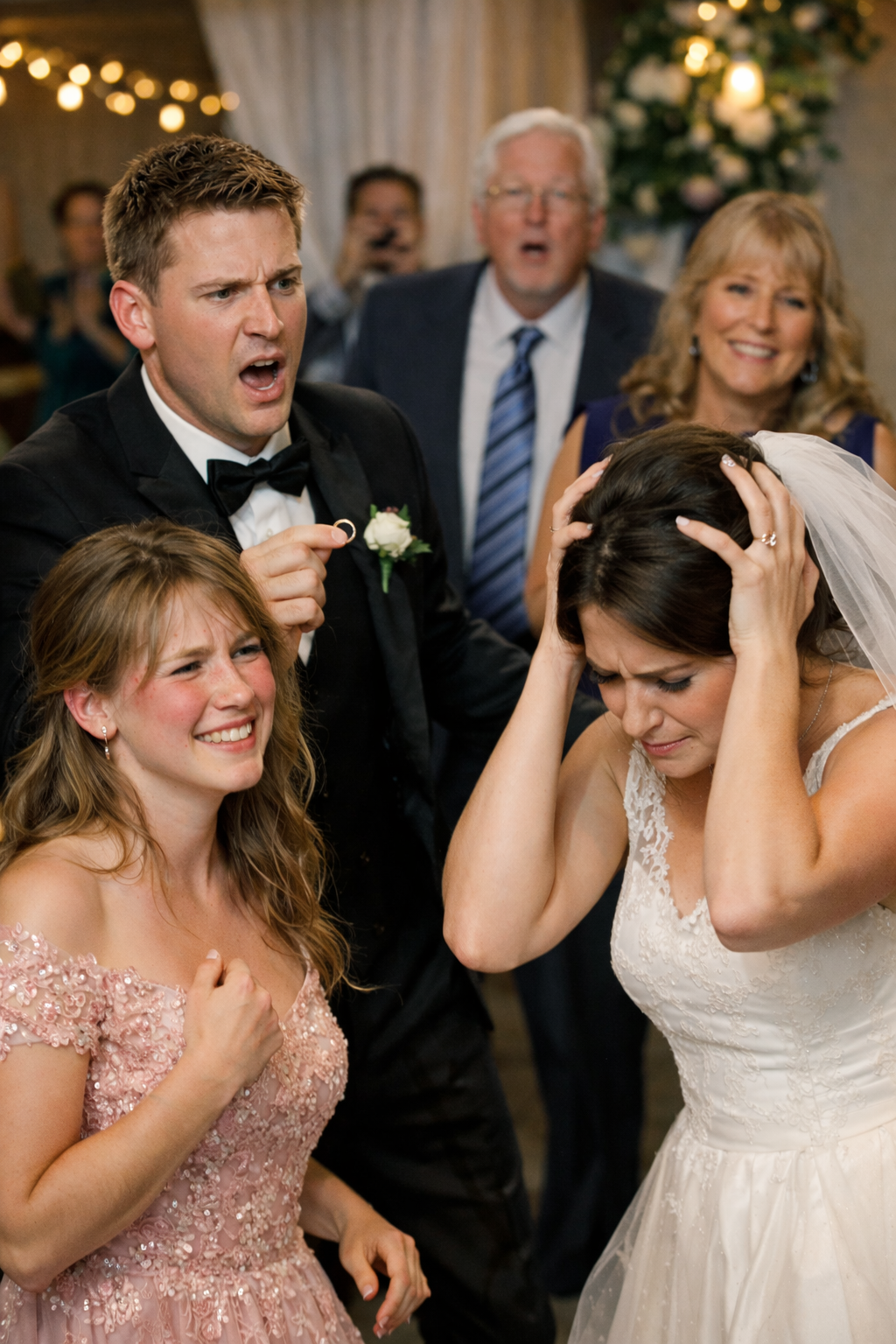
I drove away without looking back.
I wasn’t the girl they threw into the rain anymore.
And I no longer needed their love to feel whole.
Note: This story is a work of fiction inspired by real events. Names, characters, and details have been altered. Any resemblance is coincidental. The author and publisher disclaim accuracy, liability, and responsibility for interpretations or reliance.
