
Stories
She Thought She Was Coming Home to Rest… Until Her Daughter-in-Law Locked Her Out—and a Dark Secret Came to Light
Apr
She arrived at her seaside home hoping to rest, only to be met by her daughter-in-law’s cold smile: “There’s no room for extra guests.” What followed exposed a betrayal far deeper than simple disrespect.
Part 1
“There’s no more room for you here, Rosalind. The house is full, and we don’t want any inconvenience.”
Those were the first words Tiffany—my son’s wife—said when she saw me standing at the doorway of my own home overlooking the Atlantic.
I had arrived in Newport that Friday in January with one goal: to rest. At seventy, a widow living in a small Philadelphia apartment, I had spent months exhausted from work—tired in a way sleep could not fix.
This house wasn’t a gift. It was built from twenty years of sewing cheap wedding dresses, altering uniforms, and mending clothes for people who always bargained over pennies.
When my husband Winston died, I was fifty. From that moment on, every extra dollar went into what I called my “little breath of air.”
Years later, that savings bought me a worn-down coastal house with damp walls and an overgrown garden. I repaired it myself—painting, fixing locks, planting hydrangeas, learning skills I never thought I’d need.
It became my refuge. My proof that I could still build something of my own.
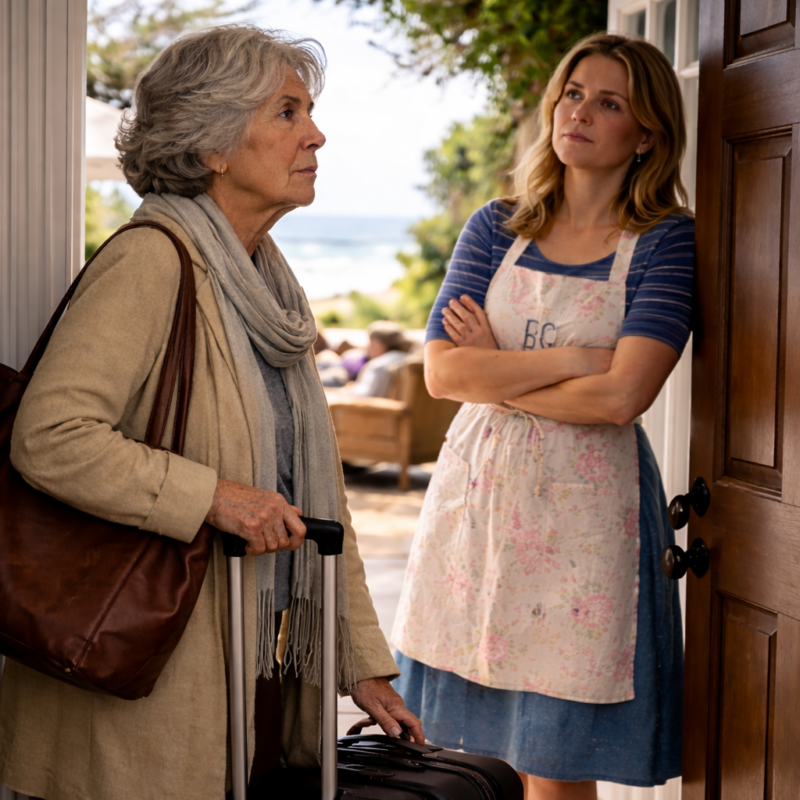
So when I stepped onto the street and saw three unfamiliar SUVs, loud music blasting, and wet towels draped over my chairs, confusion quickly turned into anger. The front door stood open.
Children ran across my terrace, kicking a ball near my ceramic pots. The television blared inside, voices spilling from my kitchen.
Then Tiffany appeared—wearing my hand-stitched apron, the one embroidered with my initials.
“Oh, mother-in-law,” she said sweetly, her smile edged with something sharp. “I thought you weren’t coming until February. Since Peter said we could use the house this week, I brought my family for a vacation.”
Behind her, her sister lounged on my couch while her mother rummaged through my cupboards like they belonged to her.
Teenagers ran barefoot upstairs. A baby slept on the window seat where I usually spent my afternoons.
“I told Peter I was coming today,” I said, forcing calm into my voice.
Tiffany shrugged. “He must’ve forgotten—he’s been so busy. But we’re already settled in, and honestly, there’s no space for extra guests.”
Extra guests.
In my own home.
Everyone stopped and stared at me, as if waiting for a scene. I gave them none.
“Alright,” I said gently. “I’ll find somewhere else to stay.”
Her eyes flickered with satisfaction.
I drove to a small motel a few miles away. From there, I could just barely see the roof of my house.
I didn’t sleep that night—not from sadness, but from clarity.
This wasn’t just rudeness.
It was a message.
And by morning, I realized it was something worse.
Part 2
My key didn’t work.
Not because it was wrong—but because the lock had been replaced.
I stood there, the sound of waves behind me, a cold weight settling in my chest. Then I knocked.
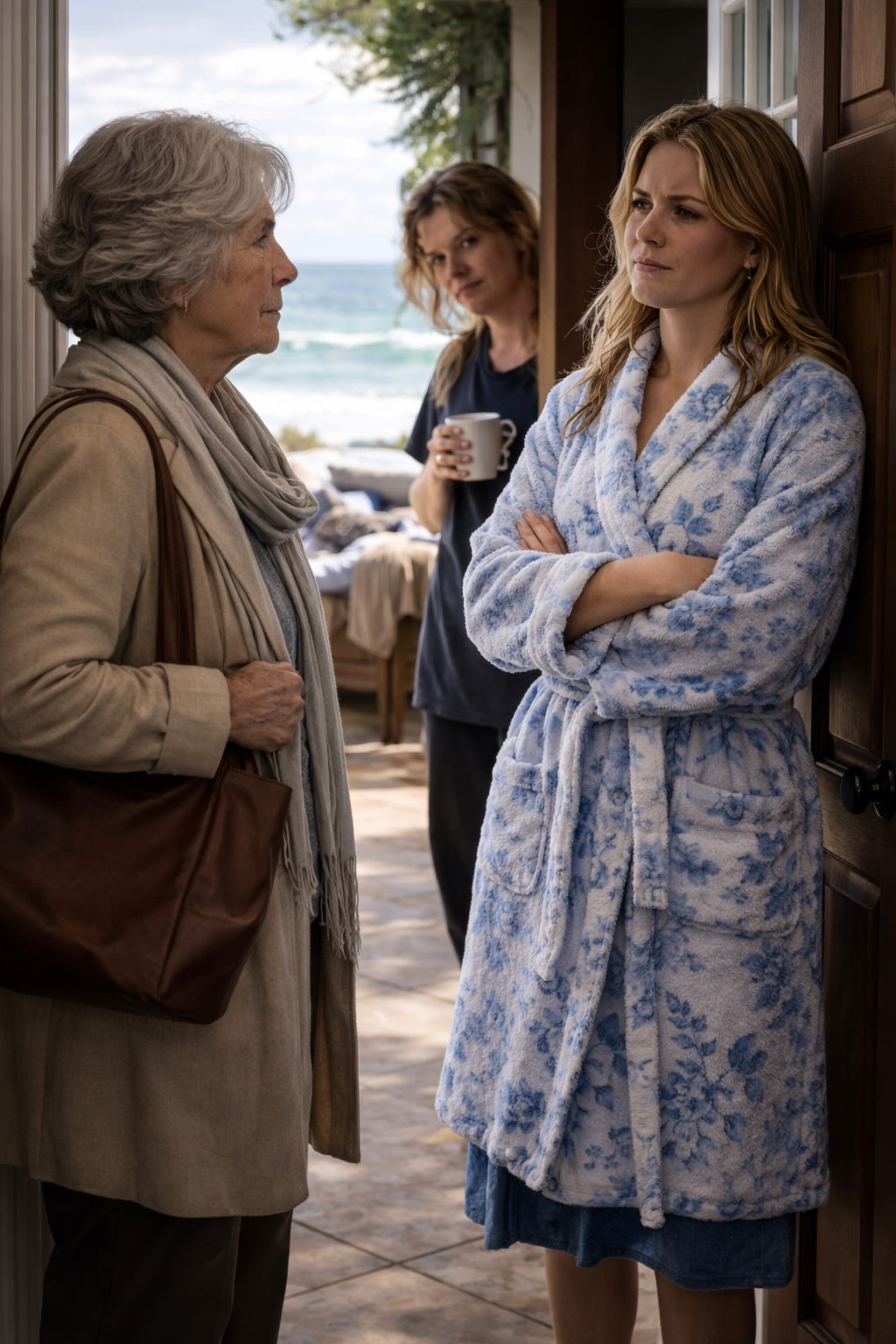
Mindy—Tiffany’s sister—opened the door, messy-haired, holding a coffee mug.
“Oh, Mrs. Sterling,” she said casually. “Did you forget something?”
“Yes. My clothes. My documents. My belongings,” I replied.
She hesitated, then shut the door in my face to ask Tiffany.
Five minutes later, Tiffany appeared—wearing my favorite bathrobe, hair still damp.
“What is it now?” she asked, pretending concern.
“I need my things,” I said.
“It’s chaos inside. We’ve moved everything around. Maybe come back next week?”
“No. I’m going in today.”
She stepped aside reluctantly, as though granting a favor.
Upstairs, the master bedroom was unrecognizable—unmade bed, чужие cosmetics scattered across my dresser.
I went straight to the closet.
Behind old winter coats was a hidden panel Winston had installed years ago. I pressed the spot, and it opened.
Inside was my fireproof box—deeds, tax receipts, every document proving ownership.
I pulled them out, flipping through—until one paper froze me in place.
An assignment of rights.
With my name. My signature.
Transferring fifty percent of my house to Peter and Tiffany.
Dated six months earlier.
I had never signed it.
My hands went numb.
I took photos, packed my real documents, and left the forged one exactly where it was.
When I came downstairs, Tiffany stood waiting, arms crossed.
“Done already?” she asked.
Part 3
“Thank you for letting me in,” I said calmly.
“We changed the locks for security,” she replied. “You know, for the children.”
I nodded. “Very responsible.”
Then I walked out.
Back at the motel, I called my lawyer, Simon Vance, who had handled the house purchase. I sent him the photos.
Two hours later, he called—his tone grave.
“Rosalind, that signature isn’t yours. And worse—the document was filed months ago and is under review.”
“So this is fraud?”
“Yes. Forgery and attempted property theft.”
I hung up and called my son.
“Mom? Is everything okay?” Peter asked.
“I’m in a Newport motel. Your wife locked me out of my house. And I found a document saying I gave you half of it.”
Silence.
“Send it,” he said.
Thirty seconds later, he called back, shaken.
“That’s not my signature.”
“I know.”
He swore he had no idea, though Tiffany had once mentioned “fixing the house situation.”
“She changed the locks on me too,” I added.
He cursed softly and said he’d confront her.
That night, I didn’t sleep.
At 11:30, he called again.
She had confessed.
She admitted hiring someone to forge both our signatures and file the document, believing that once it was registered, I’d have no choice but to accept it.
She said I was old. That I didn’t need the house.
That she was “protecting the family future.”
It wasn’t just greed.
It was contempt.
“I told her if she doesn’t withdraw it tomorrow, I’ll file for divorce,” Peter said.
The next morning, Tiffany called—irritated.
“This could’ve been handled privately,” she snapped. “You didn’t have to make it legal.”
“You made it legal when you forged documents to steal my home,” I replied.
“I was thinking about the future.”
“The future doesn’t give you the right to steal my present.”
That same day, Simon filed a fraud complaint to block the transfer.
Before it reached court, Tiffany withdrew everything.
Her lawyer sent a letter calling it a “misunderstanding” and a “document prepared in error.”
No apology.
Not a word of remorse.
I chose not to press criminal charges—for my son.
I didn’t want my grandchildren growing up knowing their grandmother sent their mother to prison.
But forgiveness doesn’t mean access.
I replaced the locks again. Installed security cameras.
I rewrote my will—ensuring the house would go to Peter under strict conditions that prevent Tiffany from ever claiming it. If he dies before me, it goes to a coastal preservation trust.
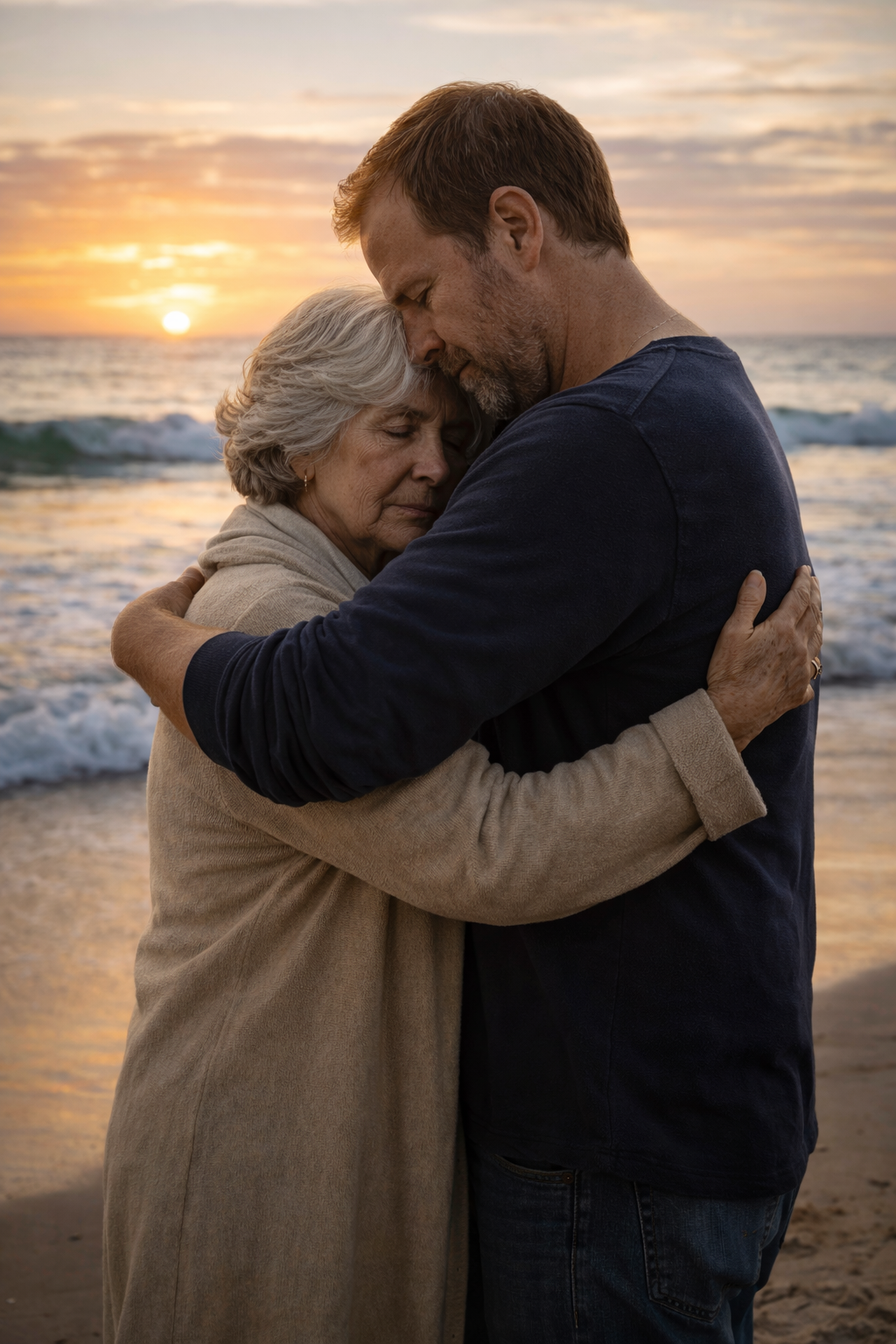
In February, Peter visited alone.
We walked the beach in silence before he asked for forgiveness.
I hugged him—but I didn’t offer empty comfort.
Months have passed.
Tiffany and I exchange only cold greetings when necessary.
Peter is trying to save his marriage, though he admits the trust is gone.
As for me—I return to the sea often now.
Sometimes I invite friends—people who, like me, spent their lives building something of their own.
We sit on the terrace, drink wine, and watch the sunset.
Last week, one asked if I regretted being so firm.
I looked out at the Atlantic.
“No,” I said. “Because unlimited kindness isn’t kindness—it’s permission.”
That night, sitting alone on my terrace, I felt something steady and unshakable.
Sometimes, the bravest way to protect your life… is simply refusing to leave it.
Note: This story is a work of fiction inspired by real events. Names, characters, and details have been altered. Any resemblance is coincidental. The author and publisher disclaim accuracy, liability, and responsibility for interpretations or reliance.
