
Stories
My Sister Was Given a $960,000 Home — She Sold It Fast and Turned It Into a Costly Mistake
Apr
My father bought my sister a $960,000 house—and she sold it almost immediately to fund a reckless, extravagant lifestyle.
Months later, after burning through every dollar, they showed up at my door demanding I hand over the home I had built for myself. When I refused, things escalated fast. They tried to force their way in, leaving me no choice but to call the police. What followed exposed just how deep their entitlement ran—and it changed everything.
The first time my father called my younger sister “an investor,” I nearly choked on my coffee.
Her name was Madeline Pierce, and at thirty-one, the only thing she had consistently invested in was the belief that someone else would save her. Usually, that someone was our father, Richard Pierce, a wealthy commercial contractor in Orange County who confused rescuing her with love. My mother, Sandra, called it generosity. I called it conditioning.
Three years earlier, I bought my own home in Pasadena—a restored Spanish-style house with arched windows, a courtyard fountain, and a mortgage I paid every month as a litigation attorney. My parents barely acknowledged it. My father glanced around once and said, “You always were practical.” That was his version of praise.
Then, last spring, he bought Madeline a $960,000 house in Newport Beach. Not assistance—he paid for it outright. White stucco, ocean views, designer kitchen, infinity-edge plunge pool. He threw her a housewarming party with catered sushi and a champagne tower, proudly telling guests she had “finally found her footing.” I stood in that kitchen watching my sister pose in silk pajamas and oversized sunglasses, talking about “curating space,” and saw exactly what favoritism looks like when it comes with recessed lighting.
Six months later, the house was gone.
Madeline sold it quietly, telling almost no one until the deal closed. At first, my parents framed it as a strategic move. Then the truth surfaced. She spent the money fast—leasing a Bentley, renting a West Hollywood penthouse, following a DJ boyfriend to Ibiza for six weeks, paying off his debt, launching a skincare brand that existed mostly as mood boards—and still falling behind on rent by winter.
By January, she was back in my parents’ guesthouse, crying about how “money disappears when people keep taking from you.” My father nodded as if she were describing the market, not her own decisions.
Then they came for my house.
It started on a Sunday afternoon when all three showed up unannounced. My security camera alerted me as my parents’ black Mercedes pulled up, followed by Madeline’s white Range Rover. I opened the door before they could knock, already irritated.
My father walked in like he owned the place. “We need to have a family discussion,” he said.
That phrase never meant anything good.
Madeline dropped onto my sofa, crossed her legs, and scanned the room. “This place is bigger than I remember.”
I folded my arms. “Why are you here?”
My mother answered in that falsely calm tone she used for unreasonable demands. “Your sister needs stability. You don’t have children. You don’t need this much space.”
The words landed cold.
Then my father said it. “We’ve decided it makes more sense for this house to remain in the family under Madeline’s name. We’ll compensate you.”
I stared at him.
Not a temporary arrangement. Not help. Ownership.
When I said no, everything shifted.
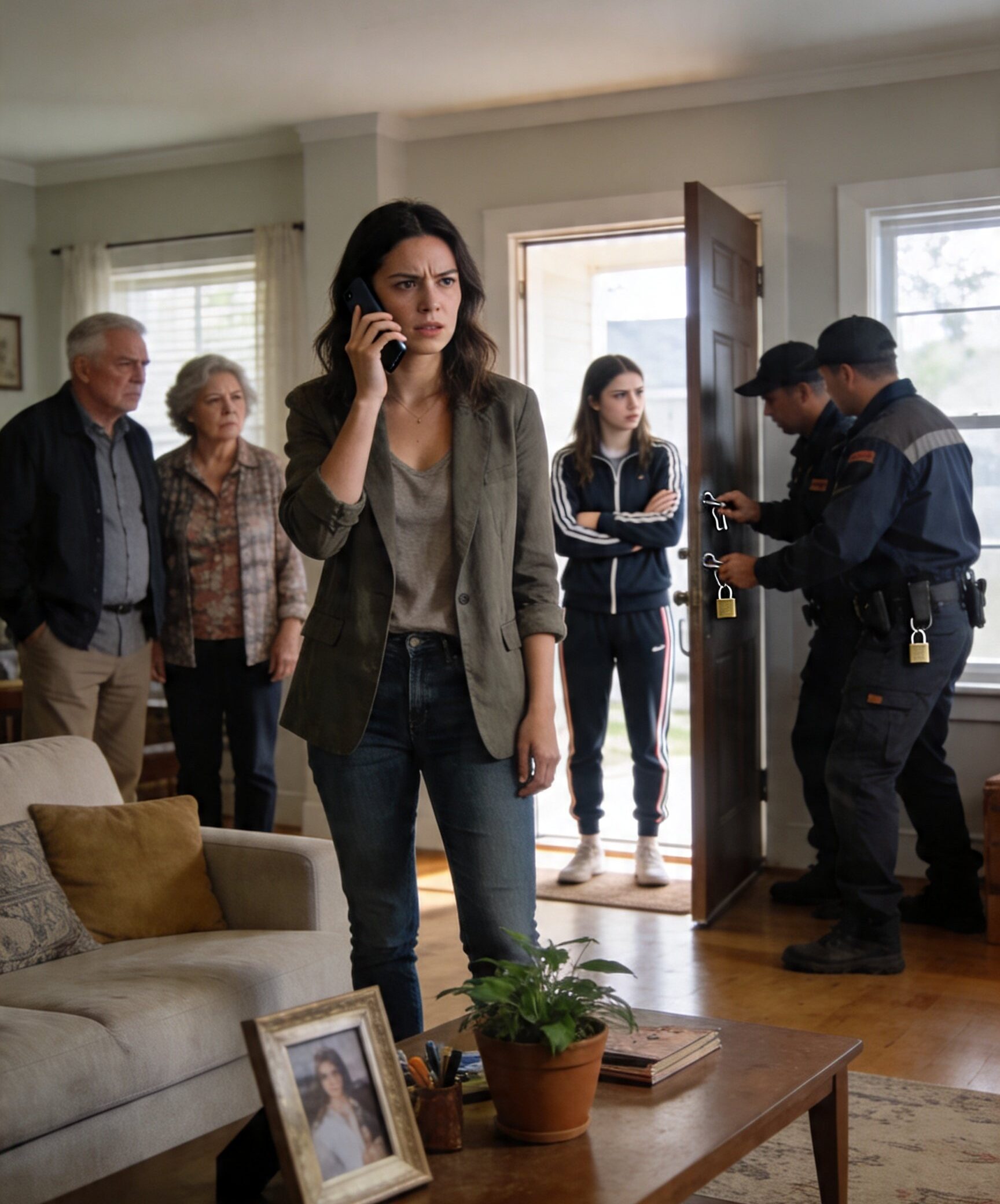
An hour later, after I told them to leave and locked the doors, my father returned—with Madeline and a locksmith.
That’s when I realized this wasn’t pressure anymore.
It was an attempted takeover.
From the upstairs camera, I watched my father standing on the porch with the locksmith, a middle-aged man who looked deeply uncomfortable, while Madeline leaned against a column scrolling her phone like she was waiting for valet service.
I called my father.
“Tell him to leave,” I said.
“You’re being ridiculous, Claire,” he replied, glancing toward the camera.
“No. You’re trespassing.”
“It’s a family asset.”
I laughed. “I bought this house. My name is the only one on the deed.”
My mother stepped in. “Don’t escalate this. Your father is trying to fix a problem.”
“For Madeline.”
“For family,” she corrected.
Madeline sighed. “Can we not make this dramatic? Dad said he’d reimburse you.”
“With what money?” I asked.
Silence.
Because we all knew there was none left.
The locksmith shifted. “Sir… if this isn’t your property, I can’t proceed.”
My father waved a folder. “I am her father.”
The locksmith didn’t move.
I activated the intercom. “This is the homeowner. You do not have permission to enter or change the locks. Please leave immediately.”
Madeline muttered under her breath.
My father stepped closer to the door. “Come talk like an adult.”
“I am,” I said. “Adults don’t try to take property because one sibling wasted hers.”
That was when my mother snapped. “Your sister made mistakes. You always act superior because you worked hard.”
Something inside me went still.
This wasn’t desperation.
It was resentment.
My independence had always made me inconvenient. Madeline got to be fragile and adored. I got to be capable—and blamed for it.
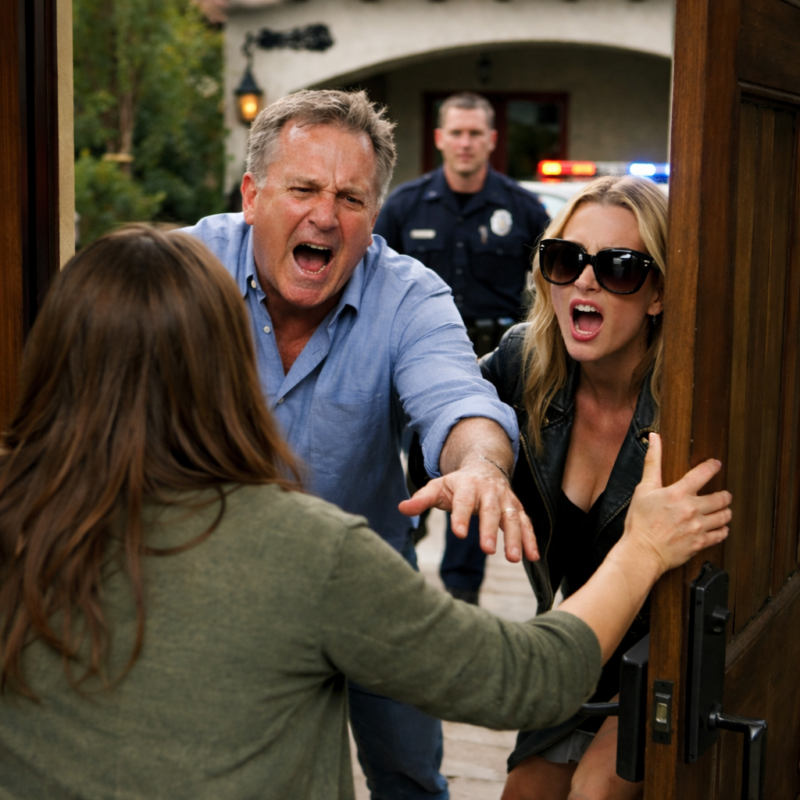
Then my father grabbed the gate latch and shook it. “This is still my family’s property!”
No, it wasn’t.
And for the first time, I didn’t argue.
I called 911.
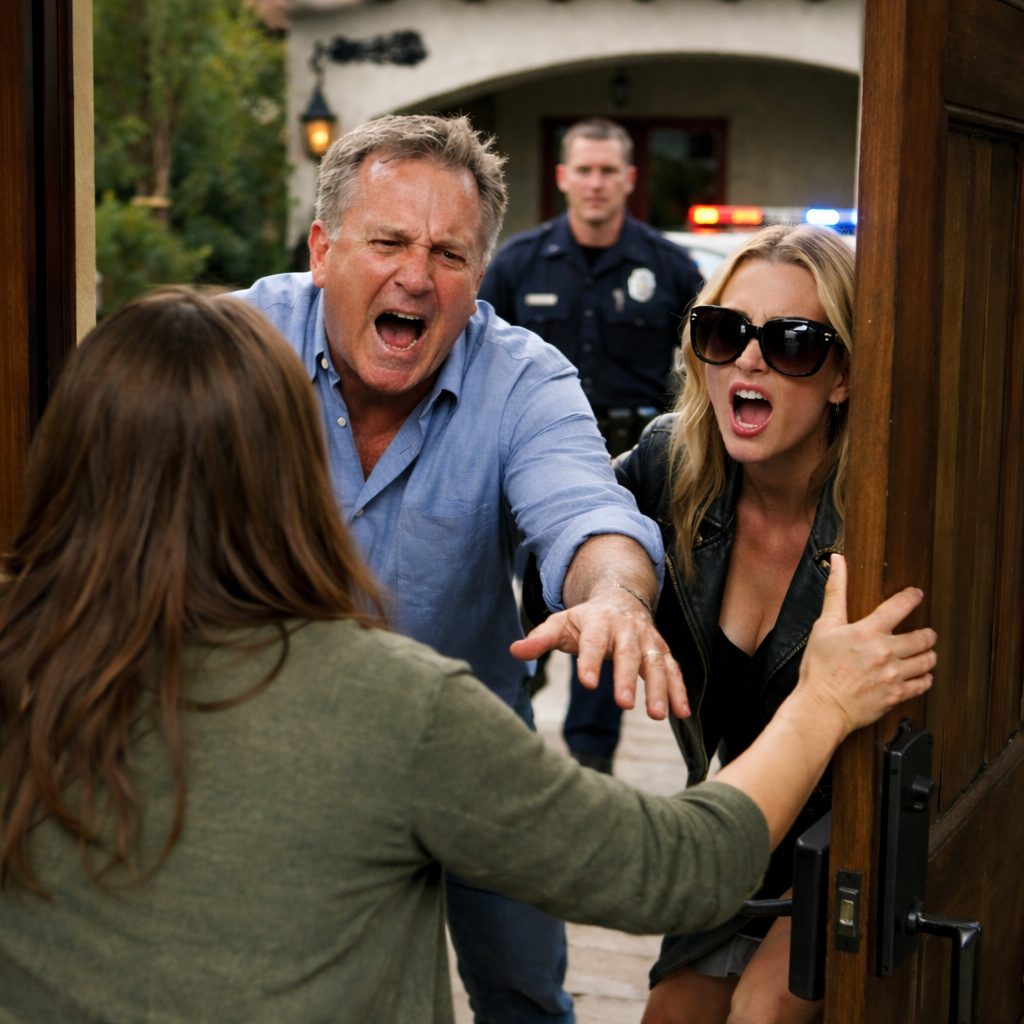
“My family is attempting to force entry onto my property. I need officers here.”
Everything changed.
The locksmith stepped back. Madeline went pale. My mother stared at the camera in disbelief. My father raised his voice. “You called the police?”
“Yes,” I said. “And I saved the footage.”
Officers arrived in seven minutes.
I met them with my ID, property records, and video ready. Officer Ramirez listened to me first, which clearly irritated my father.
“This is a private matter,” he interrupted.
“Not if someone is trying to enter a home they don’t own,” she replied.
I handed her the documents. “My name only. They demanded I transfer ownership. I refused. They came back with a locksmith.”
Madeline softened her tone. “We just needed to talk.”
“You brought a locksmith to talk?” Ramirez asked.
No answer.
Then she watched the footage—every second.
My father insisting it was “family property.” My mother calling me dramatic. Madeline talking about repayment. My father shaking the gate.
When it ended, there was nothing left to argue.
He tried anyway. “I paid for her college. I supported her for years—”
“Financial support does not equal ownership,” Ramirez said.
That hit harder than anything.
The officers issued a formal trespass warning. If they returned, they would be arrested. The attempted unlawful entry was documented.
My mother looked humiliated. Madeline looked furious. My father looked uncertain.
Before leaving, he said quietly, “You’d do this to your own family?”
I met his eyes. “No. I’d do this to people trying to take my home.”
That was the last direct conversation we had for months.
The fallout was immediate. Once records existed, the story spread through the same circles my mother cared about. The locksmith filed a statement. One of my father’s business partners questioned his judgment. Madeline discovered sympathy fades quickly when the story becomes “my sister won’t give me her house.”
Three weeks later, my attorney sent cease-and-desist letters to all three of them. Any further harassment would lead to legal action.
They backed off.
Not because they understood.
Because they had to.
Later, an aunt told me, “Your parents always thought you’d be the one to give in. You never made scenes.”
She was wrong.
Calling the police wasn’t a scene.
It was the first adult boundary I had ever set.
My sister lost a $960,000 house chasing attention and calling it freedom.
My parents tried to fix it by taking mine.
They thought guilt would succeed where logic failed. That blood mattered more than ownership, contracts, and reality.
They were wrong.
The day they showed up demanding my home, I was still the version of me they expected—the one who kept the peace.
The day I called the police, that version disappeared.
And my house stayed exactly where it belonged:
In my name.
Behind my locks.
Out of their reach.
Note: This story is a work of fiction inspired by real events. Names, characters, and details have been altered. Any resemblance is coincidental. The author and publisher disclaim accuracy, liability, and responsibility for interpretations or reliance.
