
Stories
My Parents Gave My Sister $100,000 for Her Wedding — Told Me I “Didn’t Deserve a Penny”… Years Later, She Stood Outside My House Crying
Apr
Part 1
“You don’t deserve for us to spend a single penny on you.”
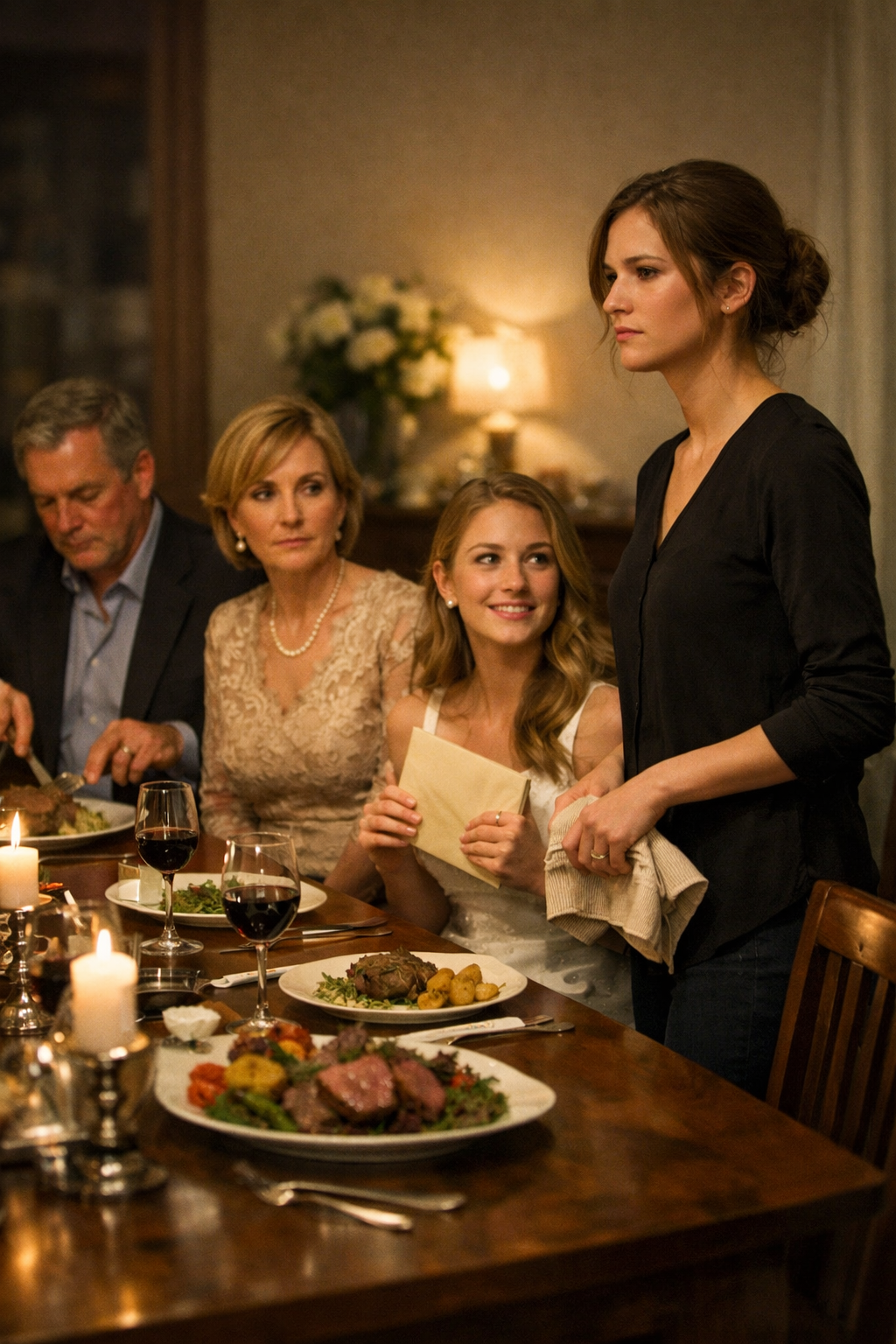
The scent of rosemary roast beef filled the dining room, mixing with my mother Sandra’s heavy perfume—the kind that always made me feel like I was being judged before I even spoke.
Everything was perfect. The table was spotless, the silverware aligned with precision under the warm light. My father, Winston, sat at the head. My mother was beside him. Across from her, my younger sister Brianna beamed in an expensive ivory dress.
And me—Audrey—sat at the far end. The usual place.
I was twenty-six, exhausted from a sixty-hour workweek at a consulting firm in Palo Alto. Every muscle in my body ached.
Brianna, twenty-four, had just gotten engaged to Sterling—a man whose greatest achievement was his wealthy background. Dinner followed the same pattern: polite words masking subtle praise, all directed at her.
Then my father reached into his jacket and pulled out a thick, cream envelope. Slowly, deliberately, he slid it across the table.
“For the wedding,” he said, smiling. “One hundred thousand dollars. We want something elegant. Memorable.”
Brianna squealed, clutching it to her chest. “This covers the imported flowers—and the string quartet!”
I froze, fork in hand. I hadn’t expected anything for myself… but hearing that number made the distance between me and them feel like a canyon.
My mother turned to me, smiling coldly.
“Before you even think about asking—you don’t deserve a single penny.”
“Excuse me?” I asked quietly.
My father didn’t look up.
“You jump from job to job. You never listen. Brianna is building a real life—with a decent man. Why should we invest in you?”
He kept cutting his food, already done with the conversation.
While they discussed dresses and guest lists, my mind replayed everything I had done for them.
Helping cover my dad’s car loan. Fixing Brianna’s endless crises. Always giving—quietly, invisibly.
None of it counted.
That’s when I understood: the system only worked if my sacrifices stayed unseen.
I folded my napkin carefully, placed it beside my plate, and stood.
“Where are you going?” my father asked, irritated.
“I’m finished.”
My mother pointed out dessert hadn’t been served yet.
I didn’t raise my voice. Didn’t slam the door. I just walked away—feeling something heavy finally fall off my shoulders.
That night, I sat on my living room floor and erased them from my life.
Blocked my parents. Blocked Brianna. Blocked every relative who might carry messages between us.
No explanations. No drama.
I simply disappeared.
They would call me jealous. Difficult. Ungrateful.
But for the first time, something inside me had broken—and it wasn’t going to be fixed.
Part 2
The first week without them felt strange—like my body didn’t know how to exist without constant criticism.
But the silence slowly turned into clarity.
My father had always called me unstable for changing jobs. What he never understood was that I was learning—intentionally—how businesses worked.
Eight months later, I quit my job and used my savings to start my own consulting firm.
I began alone, in my apartment, with a laptop and a quiet determination fueled by everything they had said about me.
The first year was brutal. Long days. Doubt creeping in constantly.
But every time I felt like stopping, I heard my father’s voice:
Why should we invest in you?
So I invested in myself.
A small contract turned into a recommendation. That recommendation led to bigger clients.
Soon, I was hiring staff. Opening an office.
Meanwhile, Brianna had her dream wedding—lavish, extravagant, held at a Napa vineyard with imported flowers and a full orchestra.
Three years later, I stood in my new home in Carmel, unpacking boxes.
A gated property. Two hectares of land. A pool overlooking the trees.
Not for show. Just something I had earned.
Then my phone rang.

Unknown number.
I didn’t answer—but the voicemail played.
Brianna.
Crying.
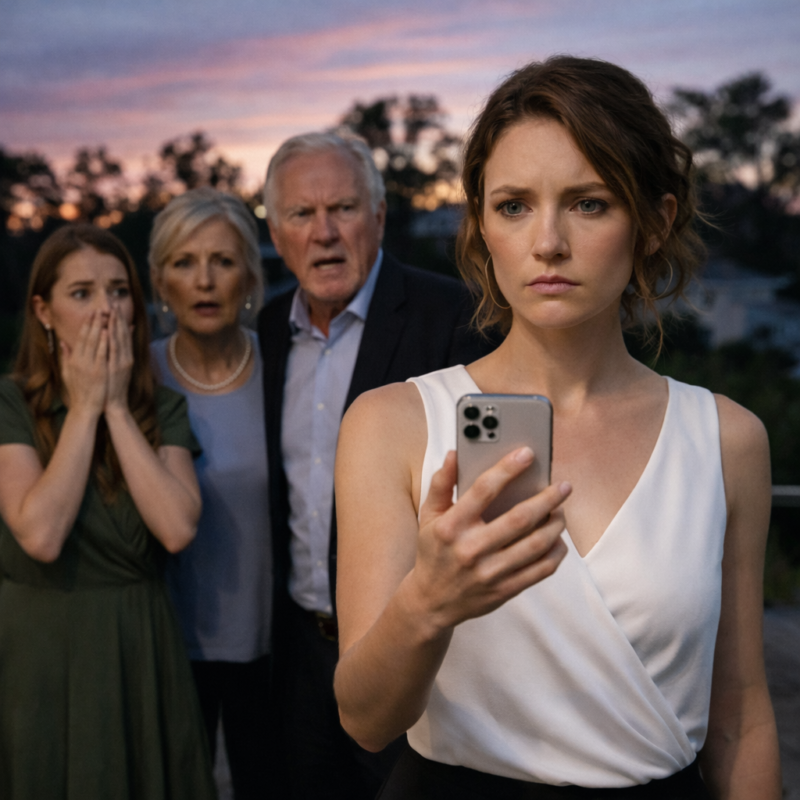
“Mom, I’m outside Audrey’s house… it’s an estate. There are cameras everywhere!”
Her voice cracked.
“We’re struggling with our mortgage… and she’s living like this? Dad said she was a failure—so how does she have all of this?”
I listened in silence.
They didn’t care how I got here.
They only cared that I had more.
The phone rang again.
Different number.
I answered.
“Hello, Audrey! We’ve been so worried about you,” my mother said brightly.
“Hello, Sandra,” I replied.
She mentioned Brianna had seen my house. Said my “little business” must be doing well.
“They never asked how I was doing,” I said calmly.
She ignored that.
“Brianna is having a difficult time with the mortgage,” she continued. “Maybe you could help. Family supports each other.”
I smiled—though there was no warmth in it.
Because I already knew how this conversation would end.
Part 3
I held my glass up to the sunlight before answering.
“Do you remember that dinner three years ago?”
Silence.
“Let’s not start that again,” she said sharply.
“You looked me in the eye and told me I didn’t deserve help,” I continued. “Dad asked why he should invest in me.”
“That was motivation,” she snapped. “You needed it.”
“It worked,” I said. “It motivated me to remove people who made me feel small.”
Her tone hardened.
“You can’t sit in a millionaire’s house while your sister loses hers.”
“I have this house because I stopped pouring energy into people who never valued me.”
She exploded.
“How dare you speak like that after everything we’ve done for you?”
“No,” I cut in. “I’m talking about everything I did for you—while you decided I wasn’t worth investing in.”
I reminded her of the years I carried them. Quietly solving problems they never acknowledged.
She called me ungrateful. Envious.
“I just stopped accepting the role you gave me,” I said.
“Your sister could lose her home!” she shouted.
“And I left yours knowing I deserved nothing,” I replied. “If I survived, she can too.”
“You’ll regret this. Blood is thicker than water.”
“Sometimes it’s so heavy it drowns you,” I said softly. “I’ve already learned how to swim.”
Then I hung up.
No guilt.
Just clarity.
I walked to the intercom and instructed security:
Sandra and Winston were permanently denied access.
A week later, my father showed up at the gate.
He wasn’t let in.
Six months after that, I hosted a small gathering—friends and colleagues who had actually stood by me.
We celebrated a major acquisition that doubled my company’s market share.

I stepped onto the terrace, looking out over the distant lights, a glass of champagne in hand.
My parents thought their rejection would define me.
Instead, it built me.
They kept their perfect table and appearances.
I built a life.
A real one.
I raised my glass—not to them, but to myself—and went back inside to the people who understood love without humiliation.
Because in the end, the greatest victory wasn’t proving them wrong.
It was realizing I had always been worth everything they refused to see.
Note: This story is a work of fiction inspired by real events. Names, characters, and details have been altered. Any resemblance is coincidental. The author and publisher disclaim accuracy, liability, and responsibility for interpretations or reliance.
