
Stories
I Lost One of My Twin Girls—But What I Saw at School Years Later Made Me Question Everything
Apr
I buried one of my twin daughters three years ago, and since then, I’ve lived each day wrapped tightly around that deep, devastating loss. So when her sister’s teacher casually said, “Both of your girls are doing great” on the very first day of first grade, I quite literally forgot how to breathe.
What I remember most is the fever. Ava had been irritable for two days, nothing too alarming at first. But on the third morning, her temperature spiked to 104, and suddenly, she went limp in my arms.
In that moment, I knew—deep in my bones, in that instinct only mothers truly understand—that this was something far more serious.
The hospital felt overwhelming. The lights were too bright, the constant beeping unbearable. And then came the word “meningitis.” It arrived the way the worst words always do—quietly, gently—like the doctor was trying to soften the blow as he handed it to us.
John gripped my hand so tightly my knuckles throbbed. Meanwhile, Ava’s twin sister, Lily, sat in a waiting room chair, her feet not quite touching the floor. She didn’t fully understand what was happening. She just ate the crackers a nurse had given her.
Four days later, Ava was gone.
After that, everything blurred. I remember IV fluids. I remember staring at the ceiling for what felt like weeks. I remember Debbie—John’s mother—whispering to someone in the hallway. I remember signing papers placed in front of me, though I have no idea what they said.
And I remember John’s face—hollowed out in a way I had never seen before, and haven’t seen since.
There are entire moments missing. I never saw the casket lowered. I never held my daughter one last time after the machines fell silent. There is a wall in my memory where those days should exist—and behind it, nothing.
But Lily still needed me. She needed me to keep breathing. So I did.
Three years is a long time to keep breathing through grief.
I returned to work. I took Lily to preschool, to gymnastics, to birthday parties. I cooked meals, folded laundry, and smiled when I was supposed to.
From the outside, I probably seemed fine. But inside, it felt like carrying a stone in my chest every single day. Over time, I didn’t heal—I just learned how to carry it better.
One morning, sitting at the kitchen table, I told John I needed us to move.
He didn’t argue. He already understood.
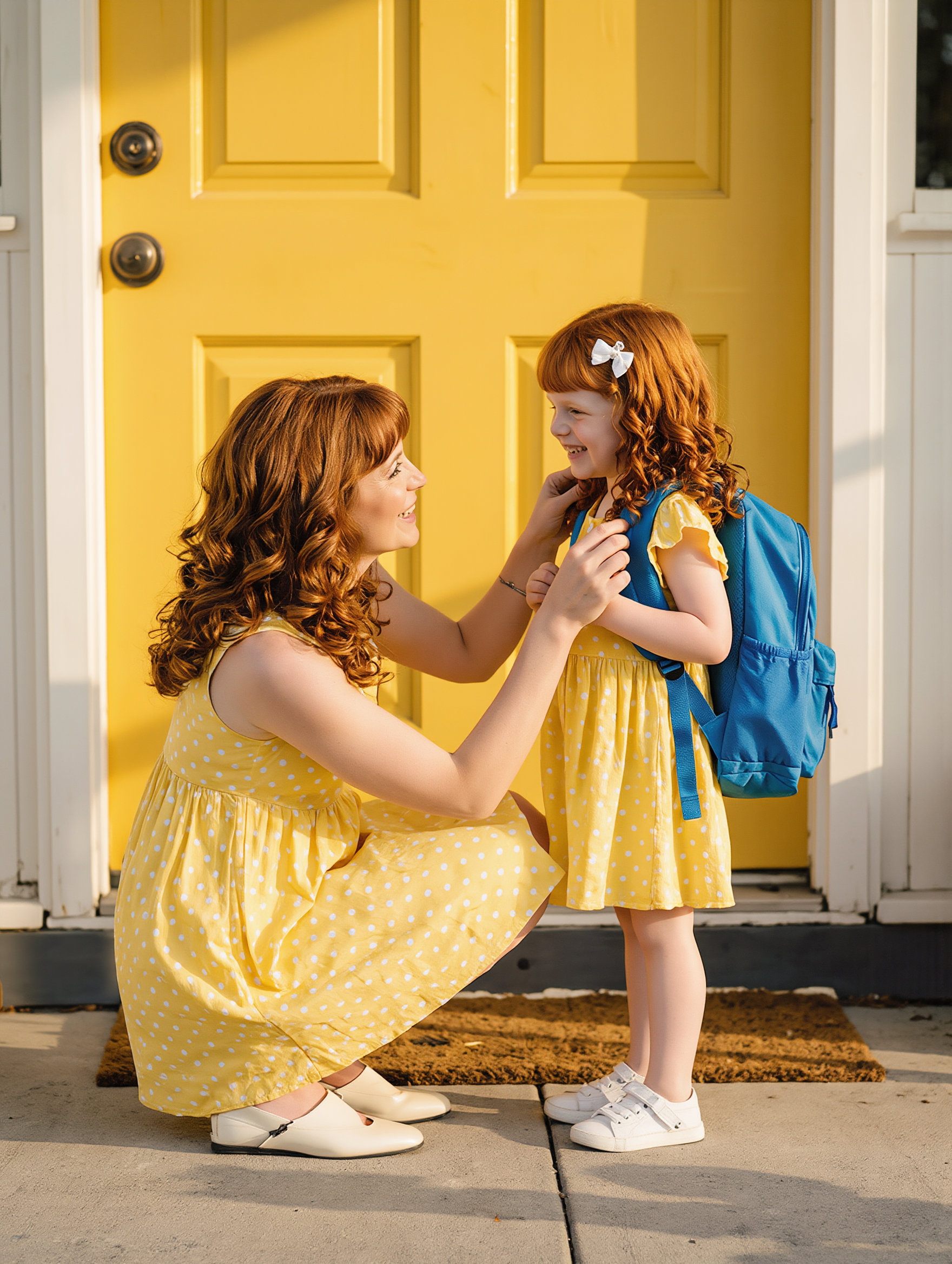
We sold the house, packed everything, and drove a thousand miles away to a place where no one knew us. We bought a small house with a yellow door, and for a while, the unfamiliarity helped.
Lily was about to start first grade. That morning, she stood at the front door in brand-new sneakers, her backpack straps pulled tight, practically bouncing with excitement.
She had been talking about first grade nonstop for three weeks—about her classroom, her teacher, and whether she’d sit next to someone nice.
“You ready, sweetie bug?” I asked.
“Oh, yes, Mommy!” she chirped.
And for one brief, genuine moment, I laughed.
I drove her to school, watched her walk through the doors without even glancing back, and then returned home, where I sat quietly for a long time.
That afternoon, when I went to pick her up, a woman in a blue cardigan approached us.
She wore the kind of warm, efficient smile of someone trying her best to greet dozens of parents at once.
“Hi there, you’re Lily’s mom?” she asked.
“I am,” I replied. “Grace.”
“Ms. Thompson.” She shook my hand. “I just wanted to say, both your girls are doing really well today.”
I blinked. “I think there might be some confusion. I only have one daughter, just Lily.”
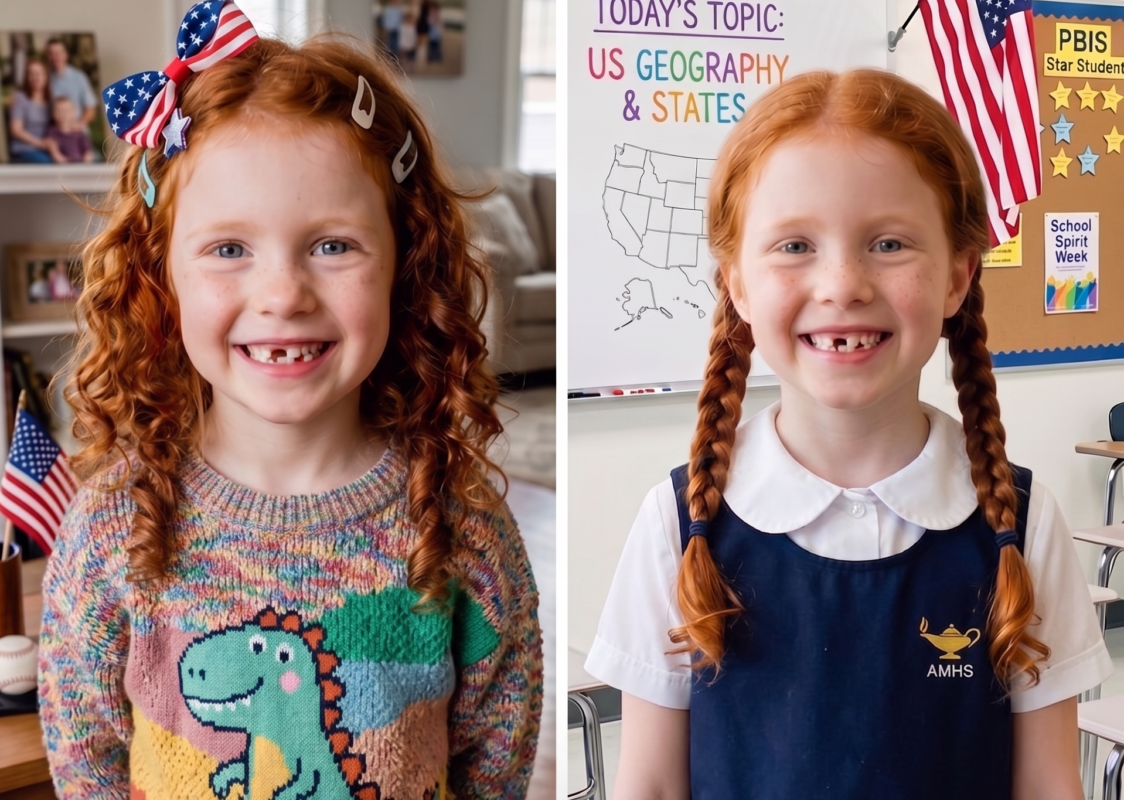
Her expression shifted slightly. “Oh, I’m sorry. I just joined yesterday, and I’m still learning everyone. But I thought Lily had a twin sister. There’s this girl in the other group… she and Lily look so alike. I just assumed.”
“Lily doesn’t have a sister,” I said firmly.
She tilted her head, still puzzled. “We split the class into two groups for the afternoon session. The other group’s lesson is just finishing up.” She paused. “Come with me. I’ll show you.”
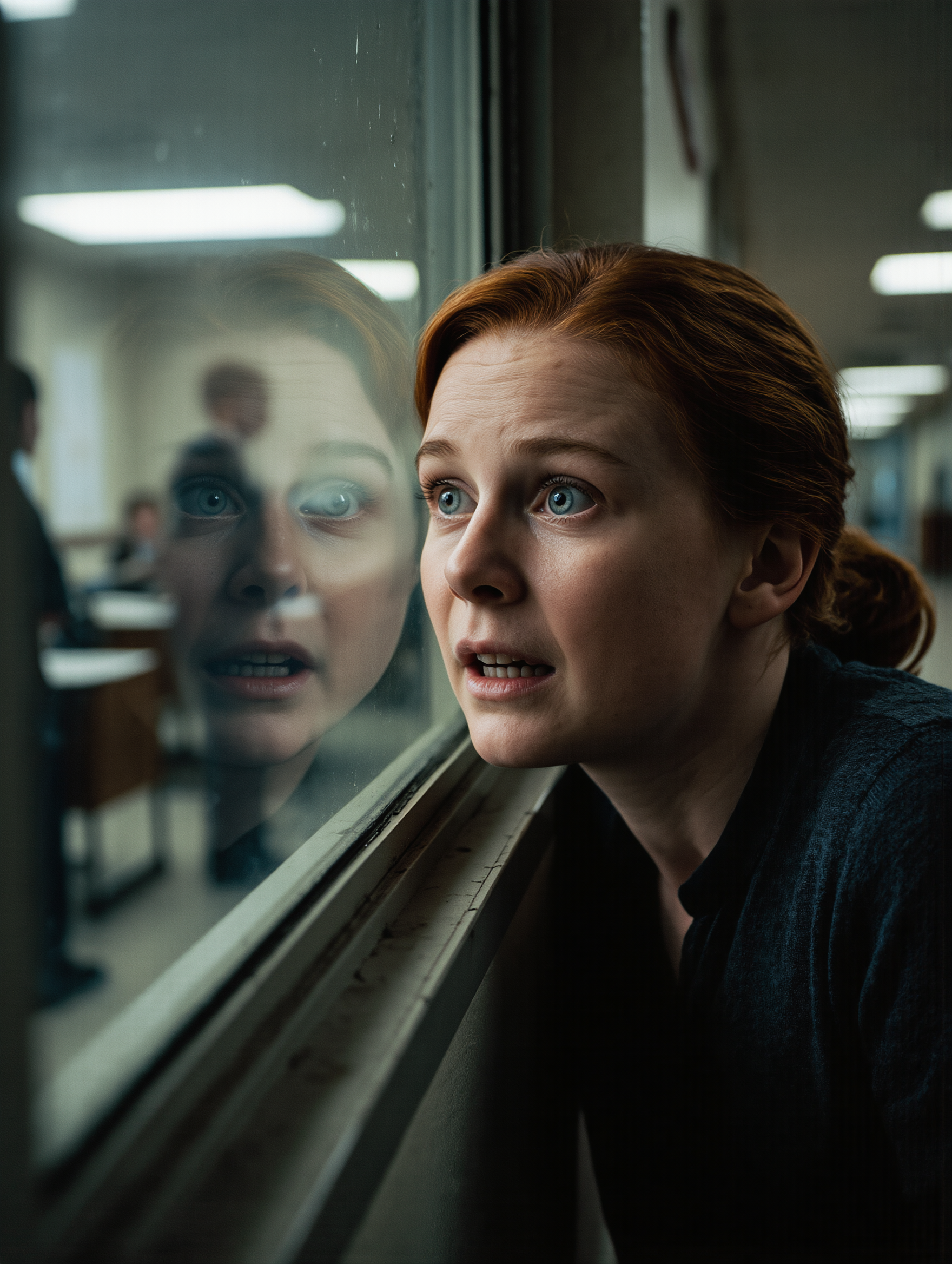
My heart began to race as I followed her down the hallway. I told myself it was just a mix-up. A child who resembled Lily. A simple mistake from a new teacher. I repeated that to myself with every step.
The classroom at the end of the corridor was winding down—chairs scraping, lunchboxes zipping, the familiar restless energy of six-year-olds being released from focus.
Ms. Thompson stepped inside and pointed toward a table by the window.
“There she is, Lily’s twin.”
I looked.
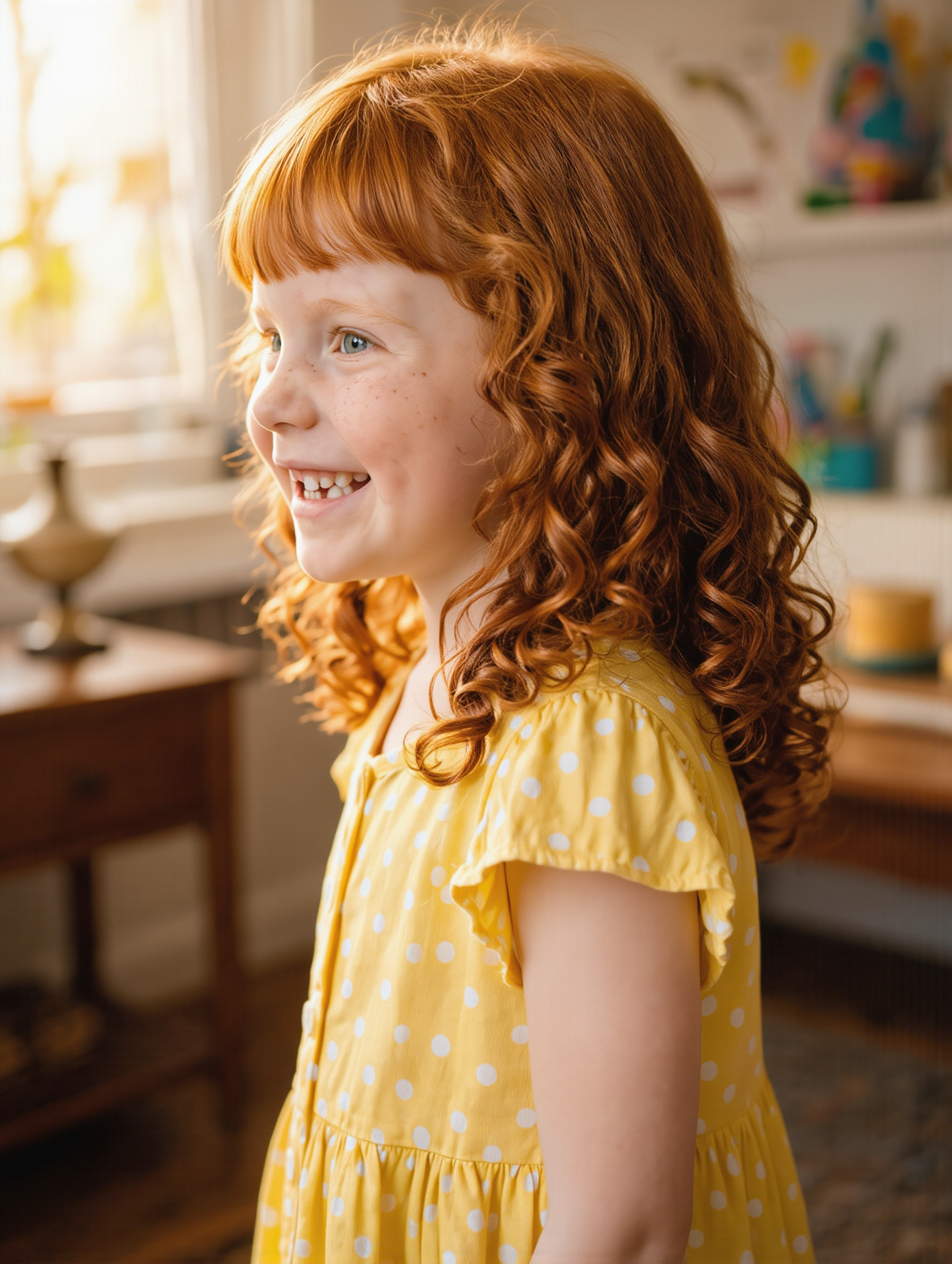
A little girl sat there, stuffing crayons into her backpack. Dark curls fell forward across her face. She tilted her head slightly as she worked—and that exact angle, that tiny movement, made my vision blur at the edges.
Then she laughed.
It was soft and bright, her whole face crinkling at the corners—and that sound crossed the room and struck me directly in the chest like something I hadn’t heard in three years.
“Ma’am?” Ms. Thompson’s voice sounded distant. “Are you all right?”
The floor rushed up to meet me.
The last thing I saw before everything went black was that little girl looking up—and for one impossible second, looking straight at me.
I woke up in a hospital room. Again.
John stood near the window. Lily stood beside him, clutching her backpack straps tightly, her eyes wide and cautious as she looked at me.
“The school called,” John said, his voice steady in that controlled way that meant he’d already been scared and worked through it before I woke.
I pushed myself upright. “I saw her. John, I saw Ava.”
“Grace.”
“She has the same features,” I insisted. “The same laugh. I heard her laugh, John, and it was… Ava.”
“You were barely conscious for three days after we lost her. You don’t remember those days clearly. Ava’s gone. You know that.”
“I know what I saw, John.”
“You saw a child who looked like her, Grace. It happens.”
I stared at him. “Do you realize you’ve never let me talk about this? Any of it?”
That hit him—but he didn’t respond.
I leaned back against the pillow, letting the silence settle. Because he was right about one thing: there were gaps. Missing pieces I could never recover.
The IV. The ceiling. Debbie handling arrangements. Papers I signed. John’s hollow expression. The funeral that felt like moving underwater.
I never saw Ava’s casket lowered. And that absence had never stopped feeling wrong.
“I’m not unraveling,” I said finally. “I just need you to come see her. Please.”
After a long pause, he nodded.
The next morning, after dropping Lily off, we went straight to the other classroom.
The teacher told us the girl’s name was Bella. She sat by the window, already focused on her work, casually twirling her pencil between her fingers—the same absentminded habit Lily had developed years ago.
John stopped walking.
I watched him take it all in—the curls, the posture, the concentrated expression. I saw certainty drain from his face, replaced by something far more unsettling.
“That’s…” he began, then trailed off.
The teacher explained that Bella had transferred two weeks earlier. She was bright and adjusting well. Her parents, Daniel and Susan, dropped her off every morning at exactly 7:45.
We waited. John kept insisting it could still be coincidence.
At 7:45 the next morning, they arrived—Daniel and Susan—walking hand in hand with Bella between them. They looked warm, ordinary… and completely confused when John asked if they could speak.
We stood in the schoolyard while Lily and Bella stared at each other from ten feet away, drawn together by that strange, cautious curiosity of identical-looking strangers.
Daniel exhaled slowly. “That is genuinely uncanny,” he admitted. But then he quickly added, “Kids look alike sometimes.”
But Susan’s hand tightened slightly on Bella’s shoulder, and I knew she had felt it too—that flicker of doubt she was trying to push away.
That night, I couldn’t sleep.
I lay in the dark, replaying everything again and again, pressing at the memory like a bruise just to confirm it was real.
Ava had been three years old. She was gone. That was what I had forced myself to accept.
But grief doesn’t follow logic. And mine had found its way through the smallest crack.
“I need a DNA test,” I said quietly into the darkness.
John was silent long enough that I thought he had fallen asleep.
Then he said softly, “Grace…”
“I know what you’re going to say,” I replied. “That I’m spiraling. That this is grief. That I’ll hurt myself more. But I’ll hurt more not knowing. And you know that too.”
He stared at the ceiling for a long time.
“If it comes back negative,” he said at last, “you have to let her go. Truly let her go. Can you promise me that?”
I reached for his hand beneath the covers.
“Yes, I can.”
Asking Daniel and Susan was the hardest conversation of my life.
Daniel’s expression shifted from confusion to anger in seconds—and I couldn’t blame him. I was asking him to question his child’s identity.
But John told our story quietly and honestly—the fever, the hospital, the days I couldn’t stand, and the empty space where a goodbye should have been.
Daniel looked at Susan. Something passed silently between them—an entire conversation without words.
Then he turned back to us.
“One test,” he said. “That’s it. And whatever it says, you accept it. Both of you.”
“Yes,” John answered.
The wait lasted six days.
I barely ate. I watched Lily sleep at night, standing in her doorway, comparing her face to every photo I had saved.
I questioned my own memories so much they began to feel unfamiliar.

The results arrived on a Thursday morning.
John opened the envelope. His hands were steadier than mine. He read it once… then looked at me.
“What is it?” I asked, my voice shaking.
He handed me the paper.
“Negative,” he said gently. “She’s not Ava, Grace.”
I cried for two hours.
Not just from devastation—though that was there—but from release.
The kind of crying that comes when you’ve been holding grief too tightly for too long and it finally loosens its grip.
John held me the entire time without speaking. And that silence was exactly what I needed.
Bella wasn’t my daughter. She was someone else’s bright, loved child who simply shared a resemblance with the one I had lost. Nothing more. Nothing hidden.
Just coincidence—both cruel and strangely kind.
And somehow, seeing that truth written clearly in black and white gave me something I had been missing for three years: a goodbye.
A week later, I stood at the school gate, watching Lily run toward Bella with her arms already open.
They collided in laughter, immediately beginning to braid each other’s hair in that fast, messy way six-year-olds do.
They walked into the building side by side—identical from behind. Same curls. Same bounce. Same small frames.
My chest tightened the way it had that first day.
Then slowly, it eased.
Standing there in the morning light, watching them disappear together, I felt something quietly shift inside me.
It wasn’t pain. It wasn’t panic.
If I had to name it, I would call it peace.
I didn’t get my daughter back.
But at last… I got my goodbye.
Grief doesn’t always look like tears.
Sometimes, it looks like a little girl across a classroom—one who carries your broken heart home.
And sometimes, that is exactly what you need to begin healing.
Source: amomama.com
Note: This story is a work of fiction inspired by real events. Names, characters, and details have been altered. Any resemblance is coincidental. The author and publisher disclaim accuracy, liability, and responsibility for interpretations or reliance. All images are for illustration purposes only.
